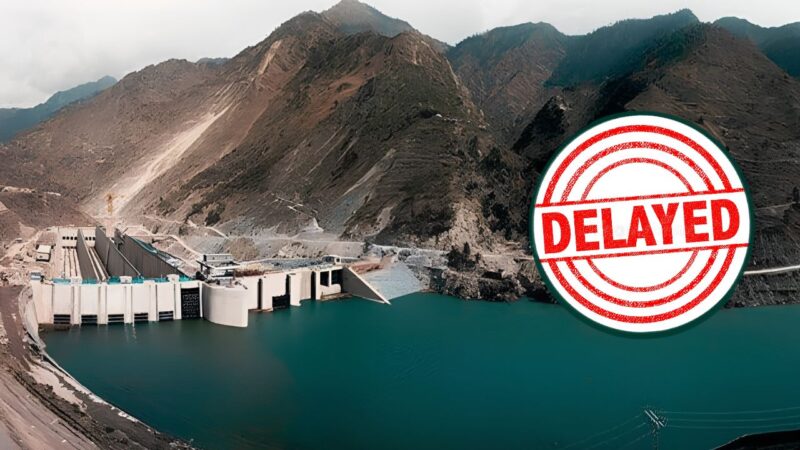
Pakistan’s Rs508 billion (nearly $5 billion) Neelum-Jhelum Hydropower Project (NJHP) will remain out of service until at least March 2028, extending its shutdown to almost four years and prompting senators to demand a transparent investigation into the tunnel failure that crippled one of the country’s largest public infrastructure projects.
The disclosure was made during a meeting of the Senate Standing Committee on Water Resources, where Wapda Chairman Lt Gen (retd) Muhammad Saeed said that repairs to the 969-megawatt hydropower plant were under way following a rock burst that severely damaged its headrace tunnel in May 2024. He expressed confidence that the project will resume operations by March 2028.
Committee members questioned whether the damage was caused solely by geological conditions or whether design, construction or operational failures had contributed to the incident. They called for a comprehensive inquiry, insisting that any negligence be identified and those responsible held accountable.
Saeed said pre-construction geological studies had identified the area as seismically active and that investigations into the tunnel failure were continuing. He described the project as unique because its operation depends entirely on its tunnel system and noted that Pakistan had pursued the scheme to safeguard its water rights over the Neelum River.
The Wapda chairman said the project had already recovered around 80 per cent of its cost through electricity generation before the shutdown. “Had it continued operating for another two years, its full cost would have been recovered,” he told the committee.
Commissioned in August 2018 after nearly a decade of construction, the hydropower project has remained idle since May 2024, depriving the national grid of one of its cheapest electricity sources and increasing reliance on more expensive thermal power, further adding to Pakistan’s circular debt.