
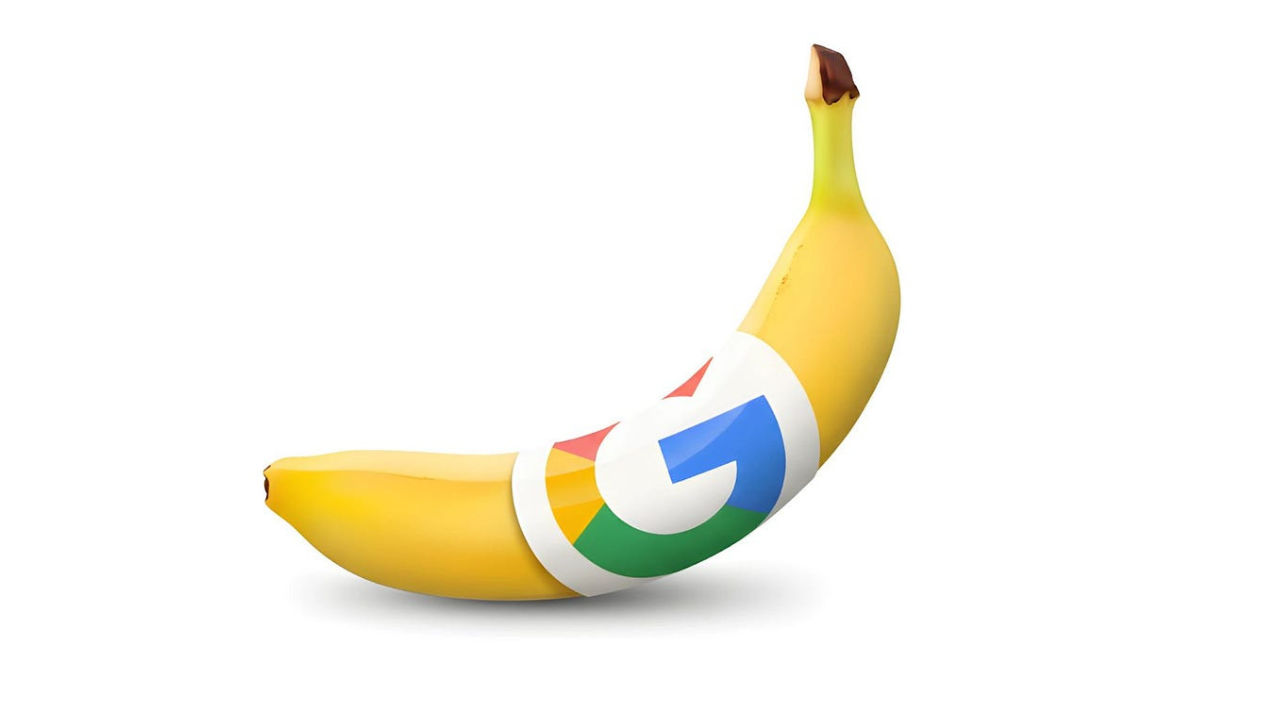


Google has taken the AI image generation field up by several notches with its Nano Banana, a new AI-driven image editing model integrated into its Gemini platform. Internally referred to as 'Gemini 2.5 Flash Image', this tool is designed for multi-turn editing while ensuring precision and consistency throughout the modifications.
Nano Banana allows users to edit images by providing simple text commands. For instance, a picture of a room can be modified with prompts like “change the couch to red” or “transform this into a rainy night scene,” with results produced in seconds. Unlike previous AI editing tools that often distorted images after multiple alterations, Google claims this model maintains identity, context, and intent even after more than ten changes.
In initial demonstrations, users supplied stick figure drawings with character images, and Nano Banana produced anime-style illustrations that corresponded to both templates. The tool can merge as many as thirteen distinct elements into one unified image. It can also revive old photographs and execute face-swaps while preserving likeness.
The model’s user interface depends on natural language prompts, making it user-friendly for people lacking design expertise. Users can create a scene from scratch, insert objects, or progressively tweak details without the need for professional editing software. By tracking earlier adjustments, it sidesteps the typical issue of images becoming warped or inconsistent after multiple edits.
Beyond individual use, Google is starting to incorporate Nano Banana into its broader ecosystem. It is accessible via the Gemini app on both web and mobile platforms, as well as through enterprise solutions like Vertex AI, Google AI Studio, and Gemini APIs. Developers can use it for projects that range from e-commerce catalogs to virtual set design.
Google has showcased examples where the model has been successfully applied in real-life situations. An online retailer utilized it to create 3D product mockups, while an architecture firm significantly reduced revision cycles through iterative room visualizations. A school district produced tailored science visuals for classrooms, reporting that it enhanced comprehension among student pilots.
To tackle concerns surrounding AI-generated content, all images created with Nano Banana come with SynthID, an invisible watermark developed by Google DeepMind. Visible watermarks are also placed where necessary to indicate authenticity.
'%3e%3crect%20y='0.445312'%20width='48'%20height='48'%20rx='24'%20fill='white'%20fill-opacity='0.5'/%3e%3crect%20x='0.5'%20y='0.945312'%20width='47'%20height='47'%20rx='23.5'%20stroke='%23808080'/%3e%3cpath%20d='M34.625%2024.4453L14%2024.4453'%20stroke='%23808080'%20stroke-width='0.920053'/%3e%3cpath%20d='M23.375%2034.4453L13.375%2024.4453L23.375%2014.4453'%20stroke='%23808080'%20stroke-width='0.920053'/%3e%3c/g%3e%3cdefs%3e%3cfilter%20id='filter0_b_489_44344'%20x='-12'%20y='-11.5547'%20width='72'%20height='72'%20filterUnits='userSpaceOnUse'%20color-interpolation-filters='sRGB'%3e%3cfeFlood%20flood-opacity='0'%20result='BackgroundImageFix'/%3e%3cfeGaussianBlur%20in='BackgroundImageFix'%20stdDeviation='6'/%3e%3cfeComposite%20in2='SourceAlpha'%20operator='in'%20result='effect1_backgroundBlur_489_44344'/%3e%3cfeBlend%20mode='normal'%20in='SourceGraphic'%20in2='effect1_backgroundBlur_489_44344'%20result='shape'/%3e%3c/filter%3e%3c/defs%3e%3c/svg%3e)
'%3e%3crect%20y='0.445312'%20width='48'%20height='48'%20rx='24'%20fill='white'%20fill-opacity='0.5'/%3e%3crect%20x='0.5'%20y='0.945312'%20width='47'%20height='47'%20rx='23.5'%20stroke='%23808080'/%3e%3cpath%20d='M13.375%2024.4453L34%2024.4453'%20stroke='%23808080'%20stroke-width='0.920053'/%3e%3cpath%20d='M24.625%2014.4453L34.625%2024.4453L24.625%2034.4453'%20stroke='%23808080'%20stroke-width='0.920053'/%3e%3c/g%3e%3cdefs%3e%3cfilter%20id='filter0_b_489_44344'%20x='-12'%20y='-11.5547'%20width='72'%20height='72'%20filterUnits='userSpaceOnUse'%20color-interpolation-filters='sRGB'%3e%3cfeFlood%20flood-opacity='0'%20result='BackgroundImageFix'/%3e%3cfeGaussianBlur%20in='BackgroundImageFix'%20stdDeviation='6'/%3e%3cfeComposite%20in2='SourceAlpha'%20operator='in'%20result='effect1_backgroundBlur_489_44344'/%3e%3cfeBlend%20mode='normal'%20in='SourceGraphic'%20in2='effect1_backgroundBlur_489_44344'%20result='shape'/%3e%3c/filter%3e%3c/defs%3e%3c/svg%3e)