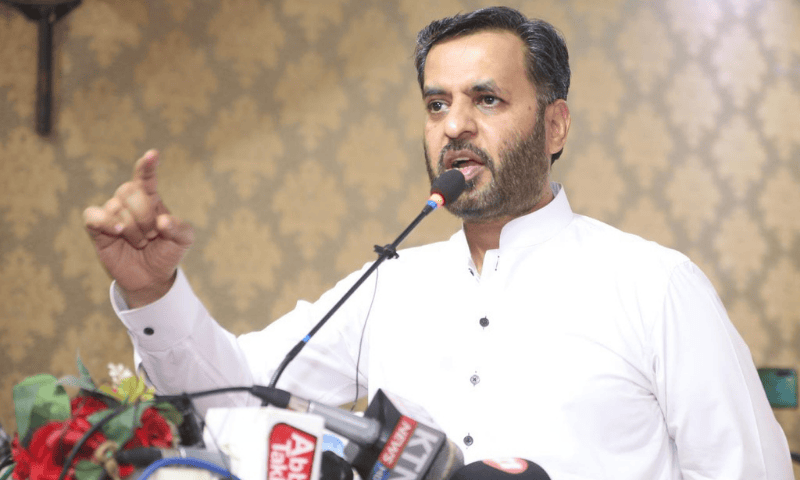
Federal Health Minister Mustafa Kamal has said that Pakistan has 84,000 registered HIV cases, though he maintained that no new cases have surfaced in Taunsa during the current year.
The statement comes on Tuesday after a BBC investigation alleged that malpractices continued in the children’s ward of a government hospital in Taunsa months after an HIV outbreak was linked to the facility.
While reports of a surge at the Taunsa Tehsil Headquarters Hospital first emerged in late 2024, the Punjab health department stated that cases mentioned in recent reports dated back to December 2024 or 2025, noting that administrative action had already been taken.
Addressing a press conference, Kamal highlighted a shift in how international funding is managed.
He stated that the Global Fund (GF) is providing over 90 percent of its HIV-related funding for Pakistan to Non-Governmental Organisations (NGOs). According to the minister, the GF allocated $65 million for the 2024-2026 programme, but the government received only $3.9 million.
The remaining $61.1 million went to the United Nations (UN) Development Programme and an NGO named Nai Zindagi.
Kamal claimed that these organisations do not share data with the health ministry. “NGOs have refused to share details,” he said, adding that the government “has no say” in how that $61.1 million is spent.
He argued that these entities use confidentiality as a pretext to avoid being answerable to the state.
Regarding the national data, Kamal reported that screening centres increased from 49 in 2020 to 97 by 2025. In 2020, 37,944 people were screened with 6,910 testing positive. By 2025, 374,126 tests were conducted, resulting in 14,182 positive detections.
Of the 84,000 registered cases in the country, 61,000 patients are currently receiving treatment. The minister noted that the remaining patients have not been traced. While Taunsa reported zero cases this year, Islamabad has registered 618.
Experts estimate that the actual number of HIV cases in Pakistan could reach 369,000. Despite this, the minister pointed out that the prevalence rate of 0.1 percent remains lower than the global average of 0.5 percent. A team from the Global Fund is expected to visit Pakistan to examine the rise in cases.