
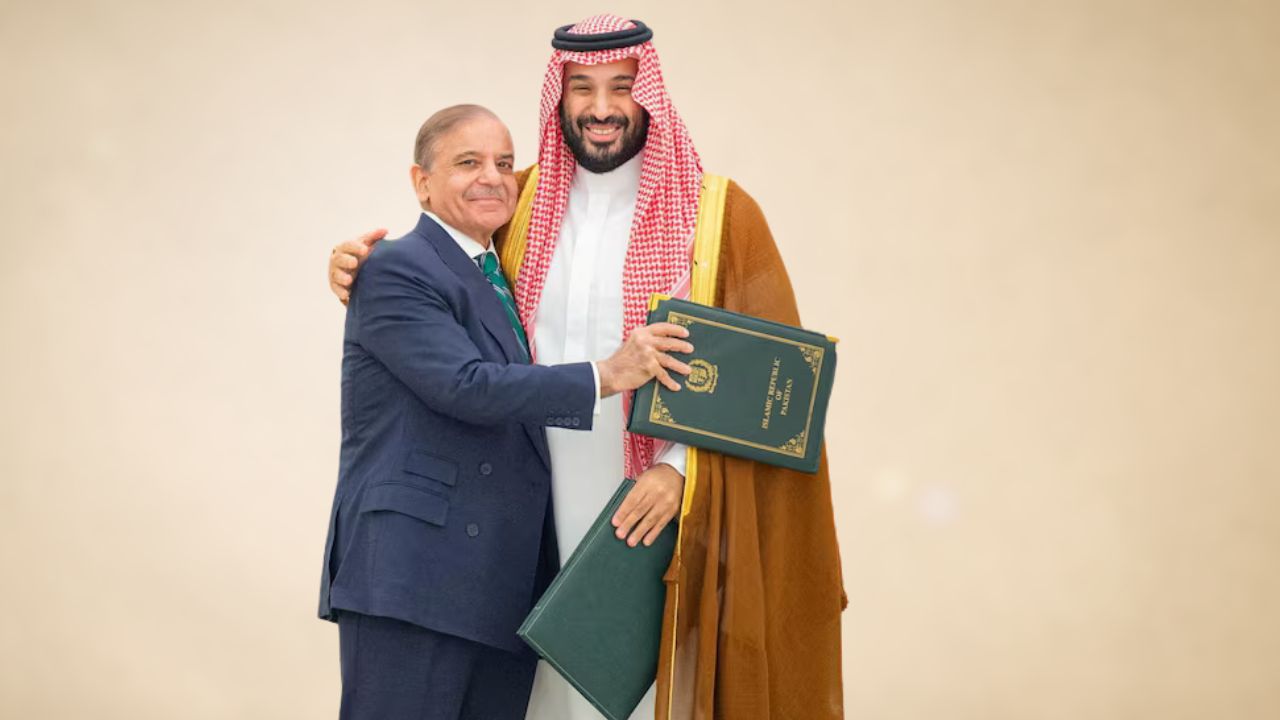


A South Asia security researcher at the University of Technology Sydney, Muhammad Faisal, has said that the Strategic Mutual Defence Agreement (SMDA) between Pakistan and the Kingdom of Saudi Arabia (KSA) could serve as a template for Islamabad to engage in similar bilateral defence cooperation pacts with the United Arab Emirates (UAE) and Qatar.
“In the immediate term, this agreement will consolidate and formalise multi-prong defence cooperation already underway, and new avenues to expand it via joint trainings, defence production and potential expansion of Pakistani troops contingent in Saudi Arabia will be explored,” Al Jazeera quoted Faisal as saying.
“These events [Israeli strikes in Iran and Doha] have exacerbated security anxieties of the Gulf states while jeopardising confidence in the US security umbrella as the ultimate shield. As Gulf states look to bolster their security, regional countries such as Pakistan, Egypt and Turkiye emerge as natural partners,” he added.
The statement came as Pakistani Defence Minister Khawaja Asif said “the door had not been closed” and there was a possibility of other countries joining the Pakistan-Saudi Arabia security pact.
“It is too early to speak of other countries joining the agreement; the door has not been closed,” the defence czar said.
Asif was appearing on a private media outlet a day after the Prime Minister’s Office (PMO) late Wednesday night announced the signing of the agreement, stating that “any aggression against either country shall be considered an act of aggression against both”.
“This agreement, which reflects the shared commitment of both nations to enhance their security and to achieve security and peace in the region and the world, aims to develop aspects of defence cooperation between the two countries and strengthen joint deterrence against any aggression,” read a statement issued by the PMO.
It may be noted that the agreement was signed after Israel’s illegal strikes on Qatar, bordering Saudi Arabia, on September 9, mounting security concerns and a lack of trust in the US’ ability to keep Israel on a leash by Gulf countries.
'%3e%3crect%20y='0.445312'%20width='48'%20height='48'%20rx='24'%20fill='white'%20fill-opacity='0.5'/%3e%3crect%20x='0.5'%20y='0.945312'%20width='47'%20height='47'%20rx='23.5'%20stroke='%23808080'/%3e%3cpath%20d='M34.625%2024.4453L14%2024.4453'%20stroke='%23808080'%20stroke-width='0.920053'/%3e%3cpath%20d='M23.375%2034.4453L13.375%2024.4453L23.375%2014.4453'%20stroke='%23808080'%20stroke-width='0.920053'/%3e%3c/g%3e%3cdefs%3e%3cfilter%20id='filter0_b_489_44344'%20x='-12'%20y='-11.5547'%20width='72'%20height='72'%20filterUnits='userSpaceOnUse'%20color-interpolation-filters='sRGB'%3e%3cfeFlood%20flood-opacity='0'%20result='BackgroundImageFix'/%3e%3cfeGaussianBlur%20in='BackgroundImageFix'%20stdDeviation='6'/%3e%3cfeComposite%20in2='SourceAlpha'%20operator='in'%20result='effect1_backgroundBlur_489_44344'/%3e%3cfeBlend%20mode='normal'%20in='SourceGraphic'%20in2='effect1_backgroundBlur_489_44344'%20result='shape'/%3e%3c/filter%3e%3c/defs%3e%3c/svg%3e)
'%3e%3crect%20y='0.445312'%20width='48'%20height='48'%20rx='24'%20fill='white'%20fill-opacity='0.5'/%3e%3crect%20x='0.5'%20y='0.945312'%20width='47'%20height='47'%20rx='23.5'%20stroke='%23808080'/%3e%3cpath%20d='M13.375%2024.4453L34%2024.4453'%20stroke='%23808080'%20stroke-width='0.920053'/%3e%3cpath%20d='M24.625%2014.4453L34.625%2024.4453L24.625%2034.4453'%20stroke='%23808080'%20stroke-width='0.920053'/%3e%3c/g%3e%3cdefs%3e%3cfilter%20id='filter0_b_489_44344'%20x='-12'%20y='-11.5547'%20width='72'%20height='72'%20filterUnits='userSpaceOnUse'%20color-interpolation-filters='sRGB'%3e%3cfeFlood%20flood-opacity='0'%20result='BackgroundImageFix'/%3e%3cfeGaussianBlur%20in='BackgroundImageFix'%20stdDeviation='6'/%3e%3cfeComposite%20in2='SourceAlpha'%20operator='in'%20result='effect1_backgroundBlur_489_44344'/%3e%3cfeBlend%20mode='normal'%20in='SourceGraphic'%20in2='effect1_backgroundBlur_489_44344'%20result='shape'/%3e%3c/filter%3e%3c/defs%3e%3c/svg%3e)