
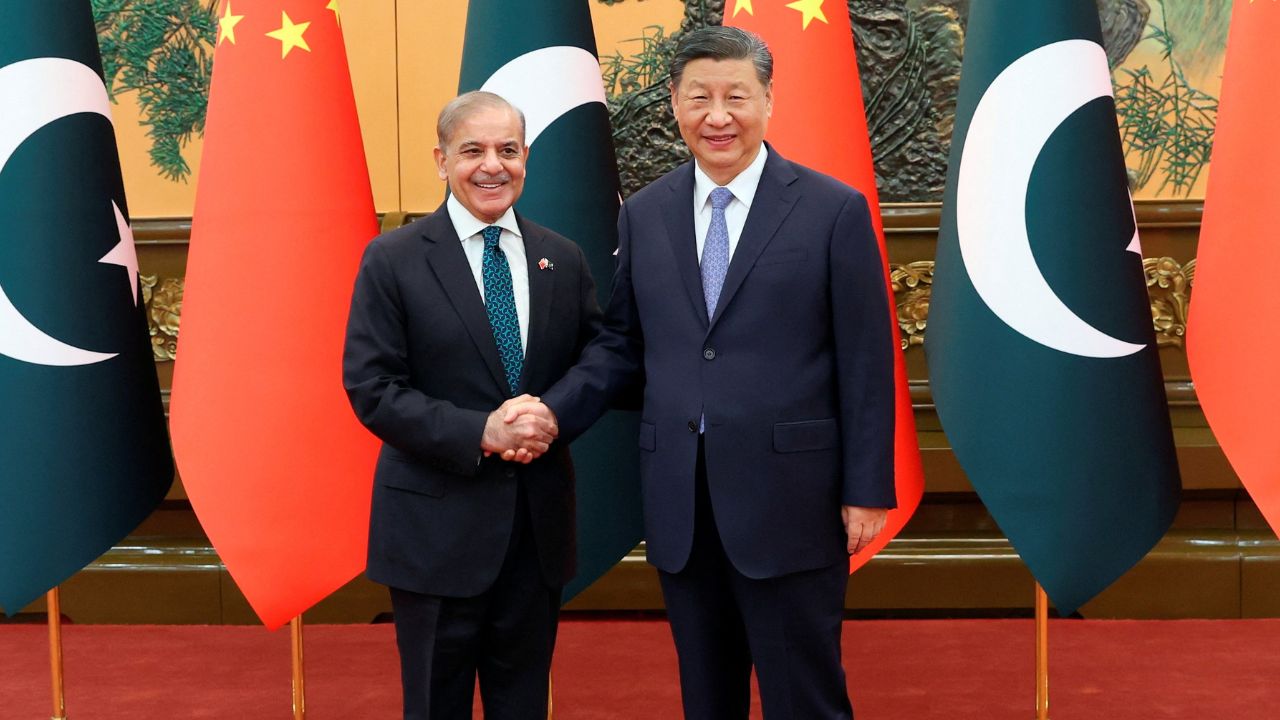


Prime Minister (PM) of Pakistan Shehbaz Sharif and Chinese President Xi Jinping have reaffirmed their strong resolve to further deepen and strengthen the bilateral partnership between the two countries founded on strategic cooperation.
During their meeting on the sidelines of the Shanghai Cooperation Organisation (SCO) summit on Tuesday, PM Shehbaz congratulated President Xi on successfully hosting the SCO Heads of State Summit, praising the Chinese leader’s vision and leadership.
PM Shehbaz said, “Pakistan is very proud of China's achievements,” noting that Islamabad will always be ready to work with Beijing on the great journey.
Deputy PM and Foreign Minister Ishaq Dar, Chief of Army Staff (COAS) Field Marshal General Asim Munir and other delegates attended the high-level meeting, during which the PM and President Xi reaffirmed their commitment to further strengthen the bilateral strategic cooperative partnership.
Lauding President Xi for his vision and leadership, PM Shehbaz felicitated him on the 80th anniversary of the “World Anti-Fascist War”.
Underscoring the significance of the Chinese president's Belt and Road Initiative (BRI) as a major project, the premier reiterated his desire to continue working with China for the next phase of the China-Pakistan Economic Corridor (CPEC).
“Pakistan fully supports President Xi's historic initiatives [which] include global governance, global development, global security and global solarisation initiatives,” he said, adding, “These initiatives will contribute to regional and global peace, stability and development.”
Meanwhile, the Chinese president reaffirmed Beijing’s commitment to stand by Pakistan in all areas of economic growth. “Focus is being placed on Pakistan's most important economic sectors," President Xi told the premier while saying that the CPEC had entered its second phase. PM Shehbaz reiterated the invitation to President Xi to visit Pakistan next year.
Founded in 2001, the SCO is an intergovernmental organisation with the main objectives is to strengthen relations among member states and safeguard regional peace, security, and stability.
'%3e%3crect%20y='0.445312'%20width='48'%20height='48'%20rx='24'%20fill='white'%20fill-opacity='0.5'/%3e%3crect%20x='0.5'%20y='0.945312'%20width='47'%20height='47'%20rx='23.5'%20stroke='%23808080'/%3e%3cpath%20d='M34.625%2024.4453L14%2024.4453'%20stroke='%23808080'%20stroke-width='0.920053'/%3e%3cpath%20d='M23.375%2034.4453L13.375%2024.4453L23.375%2014.4453'%20stroke='%23808080'%20stroke-width='0.920053'/%3e%3c/g%3e%3cdefs%3e%3cfilter%20id='filter0_b_489_44344'%20x='-12'%20y='-11.5547'%20width='72'%20height='72'%20filterUnits='userSpaceOnUse'%20color-interpolation-filters='sRGB'%3e%3cfeFlood%20flood-opacity='0'%20result='BackgroundImageFix'/%3e%3cfeGaussianBlur%20in='BackgroundImageFix'%20stdDeviation='6'/%3e%3cfeComposite%20in2='SourceAlpha'%20operator='in'%20result='effect1_backgroundBlur_489_44344'/%3e%3cfeBlend%20mode='normal'%20in='SourceGraphic'%20in2='effect1_backgroundBlur_489_44344'%20result='shape'/%3e%3c/filter%3e%3c/defs%3e%3c/svg%3e)
'%3e%3crect%20y='0.445312'%20width='48'%20height='48'%20rx='24'%20fill='white'%20fill-opacity='0.5'/%3e%3crect%20x='0.5'%20y='0.945312'%20width='47'%20height='47'%20rx='23.5'%20stroke='%23808080'/%3e%3cpath%20d='M13.375%2024.4453L34%2024.4453'%20stroke='%23808080'%20stroke-width='0.920053'/%3e%3cpath%20d='M24.625%2014.4453L34.625%2024.4453L24.625%2034.4453'%20stroke='%23808080'%20stroke-width='0.920053'/%3e%3c/g%3e%3cdefs%3e%3cfilter%20id='filter0_b_489_44344'%20x='-12'%20y='-11.5547'%20width='72'%20height='72'%20filterUnits='userSpaceOnUse'%20color-interpolation-filters='sRGB'%3e%3cfeFlood%20flood-opacity='0'%20result='BackgroundImageFix'/%3e%3cfeGaussianBlur%20in='BackgroundImageFix'%20stdDeviation='6'/%3e%3cfeComposite%20in2='SourceAlpha'%20operator='in'%20result='effect1_backgroundBlur_489_44344'/%3e%3cfeBlend%20mode='normal'%20in='SourceGraphic'%20in2='effect1_backgroundBlur_489_44344'%20result='shape'/%3e%3c/filter%3e%3c/defs%3e%3c/svg%3e)