
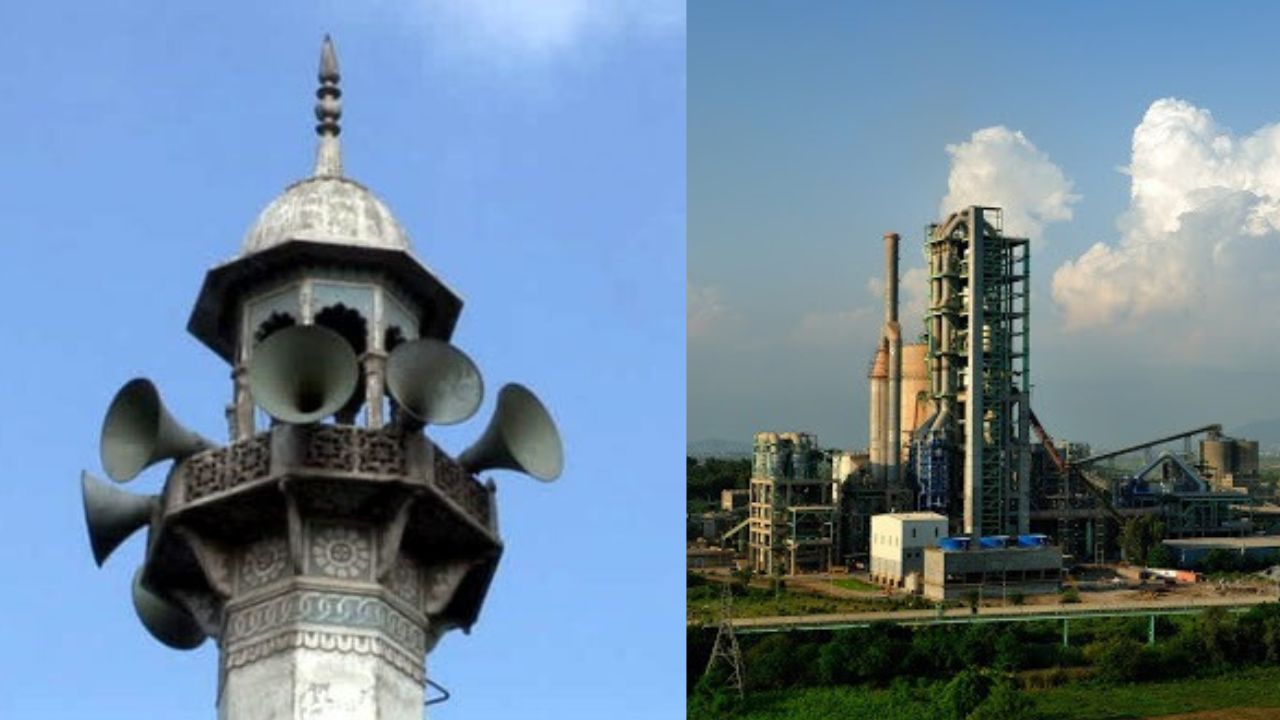


The findings of Pakistan’s first-ever economic census reveal that the country has over 600,000 mosques (masjids), 36,000 religious seminaries (madrassahs), and 23,000 factories, along with 643,000 small production units.
The report was released by Federal Minister for Planning, Development and Special Initiatives Ahsan Iqbal during a ceremony organised by the Pakistan Bureau of Statistics (PBS) on August 21 this year.
The findings indicate that the services sector accounts for 45 per cent of the total workforce, debunking the myth that industry is the primary source of employment in the country.
The economic census also revealed that out of a total of 40 million permanent units in Pakistan, there were about 7.2 million employment structures where 25.4 million people were working as of 2023.
Out of a total workforce of 25.4 million, the largest proportion is engaged in the services sector, accounting for 45 per cent or 11.3 million, making it the largest proportion of the workforce engaged in the sector, according to the report.
The workforce in the social sector is 30 per cent or 7.6 million. The production sector employed only 22 per cent of the total workforce, which is half the number of people working in the services sector.
Punjab tops the list with a workforce of 13.6 million, leading in both the services and production sectors. Sindh ranks second with 5.7 million workers, followed by Khyber Pakhtunkhwa (KP) with 4 million, while Balochistan lags behind with just 1.4 million workers.
The number of firms employing between 51 and 250 is merely 35,351, while there are only 7,086 units that employ more than 250 people, according to the report.
The report also showed that there were 242,000 schools, mostly government-run; 11,568 colleges, with a slightly higher share in the private sector; 214 universities; 604,000 mosques; 19,645 banks; 29,836 public offices; and 10,452 semi-government offices in the country. Overall, Punjab leads in both public and private institutions.
The report further shows that Pakistan’s infrastructure is predominantly residential, with limited focus on mixed-use or exclusively commercial buildings, while Sindh holds the largest share of multi-story residential structures.
'%3e%3crect%20y='0.445312'%20width='48'%20height='48'%20rx='24'%20fill='white'%20fill-opacity='0.5'/%3e%3crect%20x='0.5'%20y='0.945312'%20width='47'%20height='47'%20rx='23.5'%20stroke='%23808080'/%3e%3cpath%20d='M34.625%2024.4453L14%2024.4453'%20stroke='%23808080'%20stroke-width='0.920053'/%3e%3cpath%20d='M23.375%2034.4453L13.375%2024.4453L23.375%2014.4453'%20stroke='%23808080'%20stroke-width='0.920053'/%3e%3c/g%3e%3cdefs%3e%3cfilter%20id='filter0_b_489_44344'%20x='-12'%20y='-11.5547'%20width='72'%20height='72'%20filterUnits='userSpaceOnUse'%20color-interpolation-filters='sRGB'%3e%3cfeFlood%20flood-opacity='0'%20result='BackgroundImageFix'/%3e%3cfeGaussianBlur%20in='BackgroundImageFix'%20stdDeviation='6'/%3e%3cfeComposite%20in2='SourceAlpha'%20operator='in'%20result='effect1_backgroundBlur_489_44344'/%3e%3cfeBlend%20mode='normal'%20in='SourceGraphic'%20in2='effect1_backgroundBlur_489_44344'%20result='shape'/%3e%3c/filter%3e%3c/defs%3e%3c/svg%3e)
'%3e%3crect%20y='0.445312'%20width='48'%20height='48'%20rx='24'%20fill='white'%20fill-opacity='0.5'/%3e%3crect%20x='0.5'%20y='0.945312'%20width='47'%20height='47'%20rx='23.5'%20stroke='%23808080'/%3e%3cpath%20d='M13.375%2024.4453L34%2024.4453'%20stroke='%23808080'%20stroke-width='0.920053'/%3e%3cpath%20d='M24.625%2014.4453L34.625%2024.4453L24.625%2034.4453'%20stroke='%23808080'%20stroke-width='0.920053'/%3e%3c/g%3e%3cdefs%3e%3cfilter%20id='filter0_b_489_44344'%20x='-12'%20y='-11.5547'%20width='72'%20height='72'%20filterUnits='userSpaceOnUse'%20color-interpolation-filters='sRGB'%3e%3cfeFlood%20flood-opacity='0'%20result='BackgroundImageFix'/%3e%3cfeGaussianBlur%20in='BackgroundImageFix'%20stdDeviation='6'/%3e%3cfeComposite%20in2='SourceAlpha'%20operator='in'%20result='effect1_backgroundBlur_489_44344'/%3e%3cfeBlend%20mode='normal'%20in='SourceGraphic'%20in2='effect1_backgroundBlur_489_44344'%20result='shape'/%3e%3c/filter%3e%3c/defs%3e%3c/svg%3e)
