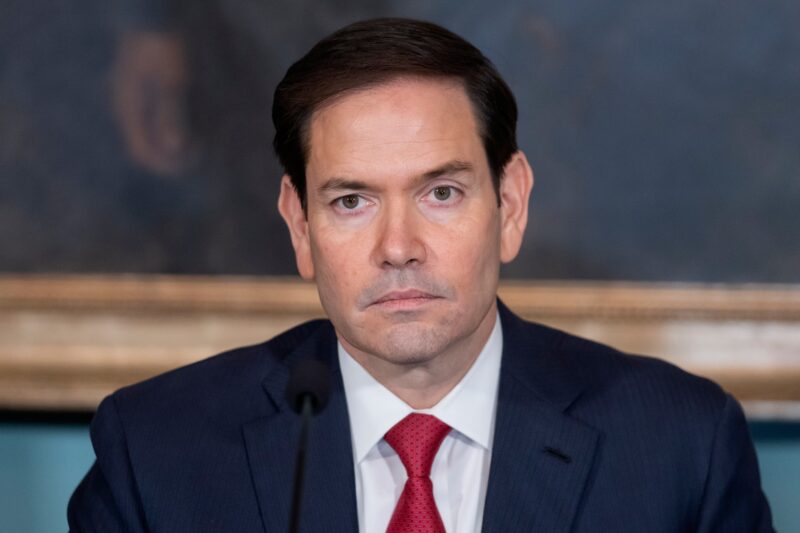
The Secretary of State of the US Marco Rubio has stated that Washington sees signs of progress toward ending the war with Iran, pointing to mediation efforts managed by Pakistani officials.
Pakistan Interior Minister Mohsin Naqvi concluded his second visit to Iran within one week, holding talks with Iranian Foreign Minister Abbas Araghchi and Interior Minister Eskandar Momeni to prevent a breakdown in communications.
The diplomatic intervention drew an immediate reaction from Washington DC.
“There’s some good signs… I don’t want to be overly optimistic … So, let’s see what happens over the next few days,” Rubio told reporters. Commenting on the diplomatic momentum, he added, “I believe the Pakistanis will be travelling to Tehran today. So hopefully that’ll advance this further.”
Reports from the Reuters wire service and Iran’s ISNA news agency indicate that Pakistan Chief of Defence Forces (CDF) Field Marshal Asim Munir may travel to Tehran if Naqvi’s preliminary discussions close the diplomatic gap sufficiently.
The Inter-Services Public Relations (ISPR) has not issued an official schedule regarding the army chief’s travel.
Meanwhile, Iranian Foreign Ministry spokesperson Esmaeil Baghaei confirmed that Tehran received the latest American proposal via Pakistani channels, which is being evaluated against a 14-point Iranian framework. “We have received US views and are reviewing them,” Baghaei stated.
However, the future status of the Strait of Hormuz remains the primary bottleneck. Iran’s establishment of a formal “management and supervisory zone” to regulate transit through the waterway has met resistance from the US, which demands unrestricted maritime passage.
Rubio explicitly ruled out a diplomatic settlement if Tehran implements a tolling or supervisory mechanism in the strait.
Alongside his comments on Pakistan’s mediation, Rubio directed criticism toward NATO allies for failing to support the US war effort ahead of alliance talks in Sweden.
Rubio stated that US President Donald Trump is “not asking them to send their fighter jets in. But they refuse to do anything,” adding, “We were very upset about that”.