
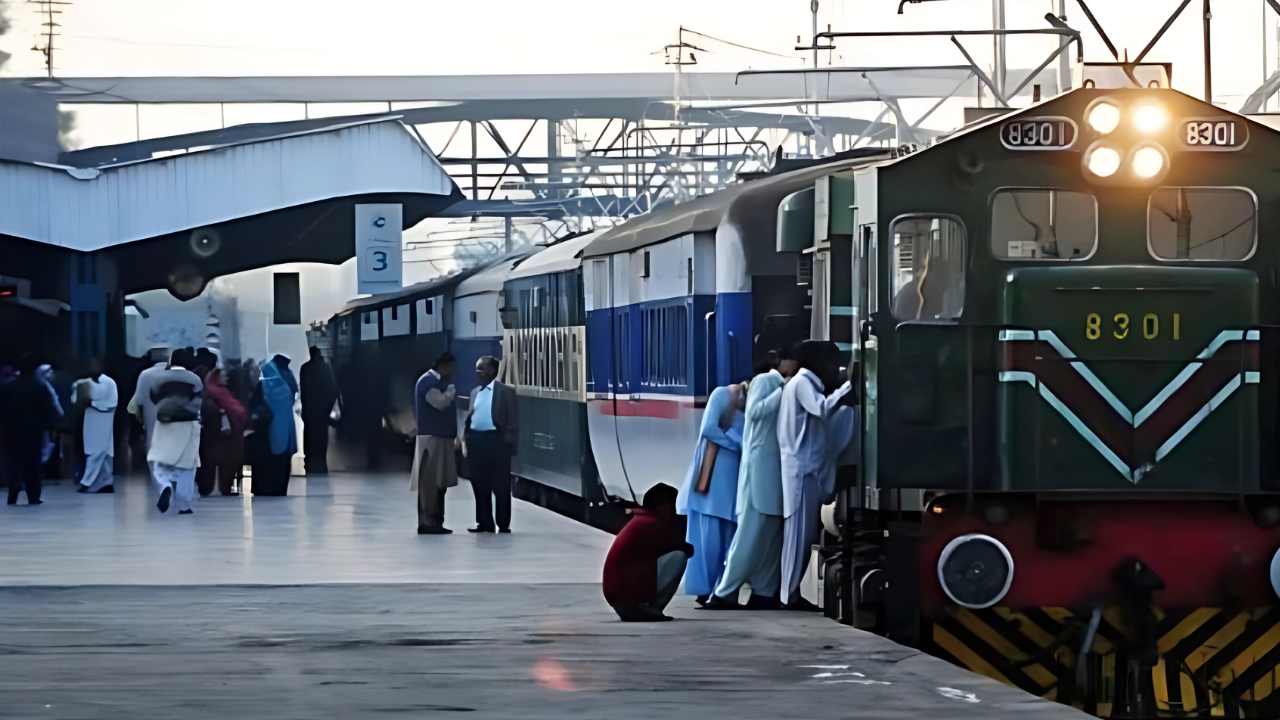


Pakistan Railways (PR) is considering increasing customer fares amid large operational losses. According to reports, the losses resulted from an uptick in diesel prices, a primary fuel used to transport customers and cargo.
Data from reports indicates that PR has to cover an average financial burden of Rs3.6 million per day as the railway network consumes approximately 350,000 litres of diesel every day.
Reports reveal that PR now faces a staggering monthly deficit of Rs109 million. To reduce operational losses, a committee is reportedly considering the extent of the upcoming hike in train ticket prices.
It merits a mention that PR increased fares as recently as June 18 2025. The aforementioned hike in fares resulted in passengers facing a three percent increase in ticket prices. Rates for freight increased by four percent in the previous price revisions as well.
However, reports suggest that the incoming increase in fares may result in a disproportionate increase in freight rates. According to PR officials, the new hike will serve to protect passengers from a large increase in ticket prices.
Reports indicate that passing the majority of the financial burden onto freight operations is unlikely to cause public resentment. As such, officials have outlined that passengers will face only a minor increase in prices.
As per the details, officials have not yet decided on the exact increase in fares. However, it will have to increase revenues to break even as fuel costs continue to balloon.
Data from the New York Mercantile Exchange reveals that Brent crude oil futures have shot up by 2.43 percent and 7.2 percent in the past five days and the past month, respectively. With the overall trend indicating that fuel prices will continue to climb, PR may continue to suffer staggering losses.
According to reports, Iran’s refusal to cooperate with the International Atomic Energy Agency (IAEA) caused Brent crude oil futures to rise. Iran is the Organization of the Petroleum Exporting Countries’ (OPEC) third-largest crude oil producer, and any developments suggesting a possible drop in oil supply, such as a tightening of sanctions on Iran for not cooperating with the IAEA, cause fuel prices and ultimately train ticket prices to rise.
'%3e%3crect%20y='0.445312'%20width='48'%20height='48'%20rx='24'%20fill='white'%20fill-opacity='0.5'/%3e%3crect%20x='0.5'%20y='0.945312'%20width='47'%20height='47'%20rx='23.5'%20stroke='%23808080'/%3e%3cpath%20d='M34.625%2024.4453L14%2024.4453'%20stroke='%23808080'%20stroke-width='0.920053'/%3e%3cpath%20d='M23.375%2034.4453L13.375%2024.4453L23.375%2014.4453'%20stroke='%23808080'%20stroke-width='0.920053'/%3e%3c/g%3e%3cdefs%3e%3cfilter%20id='filter0_b_489_44344'%20x='-12'%20y='-11.5547'%20width='72'%20height='72'%20filterUnits='userSpaceOnUse'%20color-interpolation-filters='sRGB'%3e%3cfeFlood%20flood-opacity='0'%20result='BackgroundImageFix'/%3e%3cfeGaussianBlur%20in='BackgroundImageFix'%20stdDeviation='6'/%3e%3cfeComposite%20in2='SourceAlpha'%20operator='in'%20result='effect1_backgroundBlur_489_44344'/%3e%3cfeBlend%20mode='normal'%20in='SourceGraphic'%20in2='effect1_backgroundBlur_489_44344'%20result='shape'/%3e%3c/filter%3e%3c/defs%3e%3c/svg%3e)
'%3e%3crect%20y='0.445312'%20width='48'%20height='48'%20rx='24'%20fill='white'%20fill-opacity='0.5'/%3e%3crect%20x='0.5'%20y='0.945312'%20width='47'%20height='47'%20rx='23.5'%20stroke='%23808080'/%3e%3cpath%20d='M13.375%2024.4453L34%2024.4453'%20stroke='%23808080'%20stroke-width='0.920053'/%3e%3cpath%20d='M24.625%2014.4453L34.625%2024.4453L24.625%2034.4453'%20stroke='%23808080'%20stroke-width='0.920053'/%3e%3c/g%3e%3cdefs%3e%3cfilter%20id='filter0_b_489_44344'%20x='-12'%20y='-11.5547'%20width='72'%20height='72'%20filterUnits='userSpaceOnUse'%20color-interpolation-filters='sRGB'%3e%3cfeFlood%20flood-opacity='0'%20result='BackgroundImageFix'/%3e%3cfeGaussianBlur%20in='BackgroundImageFix'%20stdDeviation='6'/%3e%3cfeComposite%20in2='SourceAlpha'%20operator='in'%20result='effect1_backgroundBlur_489_44344'/%3e%3cfeBlend%20mode='normal'%20in='SourceGraphic'%20in2='effect1_backgroundBlur_489_44344'%20result='shape'/%3e%3c/filter%3e%3c/defs%3e%3c/svg%3e)
