
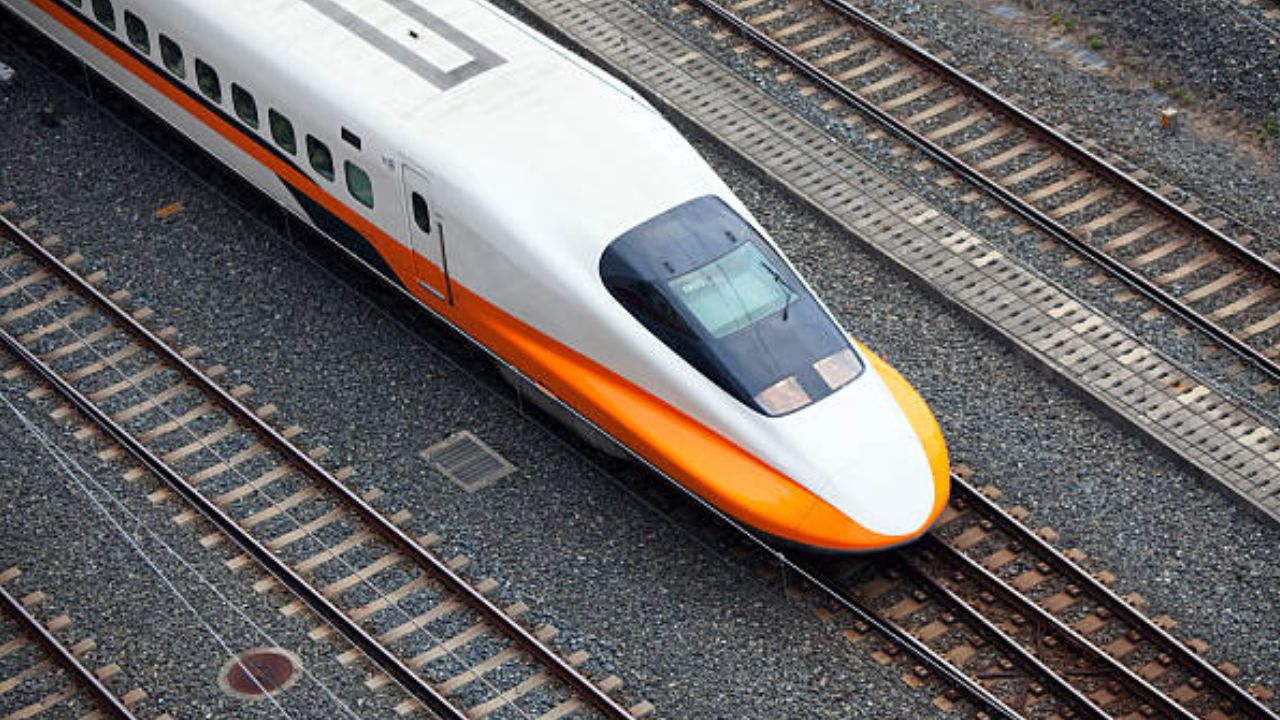


Pakistan Railways has unveiled a plan to launch a high-speed bullet train connecting Lahore and Karachi by 2030, slashing travel time between the two cities from nearly 20 hours to just five.
Railways Minister Hanif Abbasi announced that the 1,215-kilometer rail link will be developed as part of the $6.8 billion ML-1 upgrade under the China-Pakistan Economic Corridor (CPEC).
The trains, expected to run at speeds of up to 250 km/h, will make key stops at Hyderabad, Multan and Sahiwal.
The project is being executed with Chinese assistance, including expertise from the China Railway Construction Corporation.
It is anticipated that the project will increase freight capacity, create thousands of jobs during construction and operation, and increase Pakistan's rail cargo share from the current 4 percent to 20 percent by the end of the decade. In addition to saving the nation billions in fuel imports, officials say the switch from road to rail may significantly boost regional connections and trade.
The Lahore-Rawalpindi bullet train project, which intends to cut the travel time between the two cities to just two and a half hours, was also approved earlier this year by Punjab Chief Minister Maryam Nawaz.
Alongside new lines, Pakistan Railways has embarked on a broad digitisation and automation programme designed to enhance safety, cut delays, and modernise operations.
Advanced signalling and communications systems are being deployed across major sections of the network.In order to improve train routing and lower the danger of accidents, government records state that a computerized interlocking system will soon replace manual controls at the Landhi, Jumma Goth, Badal Nala, and Sarhad stations.
In the meantime, a digital microwave radio communication system is being installed in the Karachi–Lahore corridor to upgrade its telecom backbone and guarantee secure and uninterrupted data transmission.
In addition, a Push-to-Talk digital network is gradually being introduced in the Rawalpindi, Lahore, Sukkur and Karachi divisions to strengthen real-time coordination between staff and control rooms.
A private news channel cites that a senior railway official told Wealth Pakistan that more than 80 percent of the existing signalling infrastructure is still mechanical or relay-based, leaving it vulnerable to theft, weather and technical failures.
“The new automation drive will replace outdated equipment with intelligent, sensor-driven systems capable of monitoring track conditions and enforcing safety standards,” the official said.
'%3e%3crect%20y='0.445312'%20width='48'%20height='48'%20rx='24'%20fill='white'%20fill-opacity='0.5'/%3e%3crect%20x='0.5'%20y='0.945312'%20width='47'%20height='47'%20rx='23.5'%20stroke='%23808080'/%3e%3cpath%20d='M34.625%2024.4453L14%2024.4453'%20stroke='%23808080'%20stroke-width='0.920053'/%3e%3cpath%20d='M23.375%2034.4453L13.375%2024.4453L23.375%2014.4453'%20stroke='%23808080'%20stroke-width='0.920053'/%3e%3c/g%3e%3cdefs%3e%3cfilter%20id='filter0_b_489_44344'%20x='-12'%20y='-11.5547'%20width='72'%20height='72'%20filterUnits='userSpaceOnUse'%20color-interpolation-filters='sRGB'%3e%3cfeFlood%20flood-opacity='0'%20result='BackgroundImageFix'/%3e%3cfeGaussianBlur%20in='BackgroundImageFix'%20stdDeviation='6'/%3e%3cfeComposite%20in2='SourceAlpha'%20operator='in'%20result='effect1_backgroundBlur_489_44344'/%3e%3cfeBlend%20mode='normal'%20in='SourceGraphic'%20in2='effect1_backgroundBlur_489_44344'%20result='shape'/%3e%3c/filter%3e%3c/defs%3e%3c/svg%3e)
'%3e%3crect%20y='0.445312'%20width='48'%20height='48'%20rx='24'%20fill='white'%20fill-opacity='0.5'/%3e%3crect%20x='0.5'%20y='0.945312'%20width='47'%20height='47'%20rx='23.5'%20stroke='%23808080'/%3e%3cpath%20d='M13.375%2024.4453L34%2024.4453'%20stroke='%23808080'%20stroke-width='0.920053'/%3e%3cpath%20d='M24.625%2014.4453L34.625%2024.4453L24.625%2034.4453'%20stroke='%23808080'%20stroke-width='0.920053'/%3e%3c/g%3e%3cdefs%3e%3cfilter%20id='filter0_b_489_44344'%20x='-12'%20y='-11.5547'%20width='72'%20height='72'%20filterUnits='userSpaceOnUse'%20color-interpolation-filters='sRGB'%3e%3cfeFlood%20flood-opacity='0'%20result='BackgroundImageFix'/%3e%3cfeGaussianBlur%20in='BackgroundImageFix'%20stdDeviation='6'/%3e%3cfeComposite%20in2='SourceAlpha'%20operator='in'%20result='effect1_backgroundBlur_489_44344'/%3e%3cfeBlend%20mode='normal'%20in='SourceGraphic'%20in2='effect1_backgroundBlur_489_44344'%20result='shape'/%3e%3c/filter%3e%3c/defs%3e%3c/svg%3e)