The federal Ministry of Information and Broadcasting (MoIB) on Friday rejected Afghan Taliban claims of targeting terrorist camps in border areas of Khyber Pakhtunkhwa (KP) and Balochistan, calling them “false as usual”.
In a statement issued through its fact-check account, the ministry said that the Afghan Taliban regime, through its “propaganda mouthpieces and official statements,” had claimed to have targeted alleged Islamic State – Khorasan Province (ISKP) camps in border areas using rudimentary drones.
“The claims are false as usual,” the ministry declared, adding that terrorist camps, including “those of Daesh and more than two dozen other terrorist organisations,” were factually located, run, and patronised from inside Afghan Taliban-controlled territory.
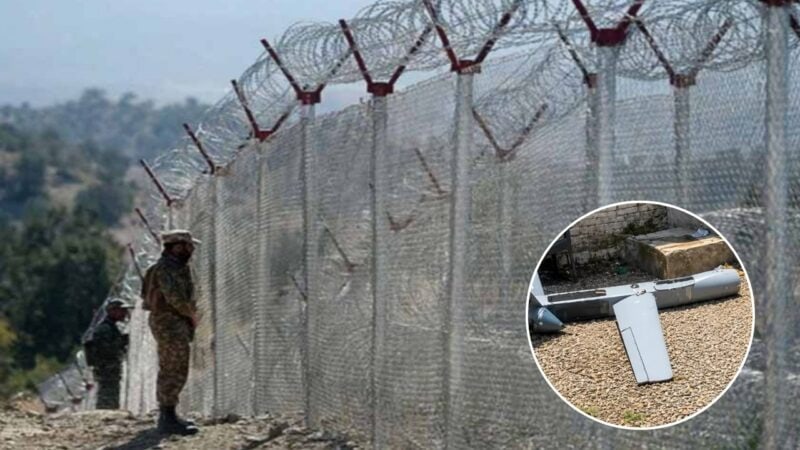
The ministry also said that one rudimentary Taliban drone had intruded into Pakistan’s airspace near Shinko, Khyber, and was “immediately identified and neutralised by the alert air defence system of the Pakistan Air Force”.
It shared a picture of the drone alongside the statement.
The ministry further asserted that the Taliban regime was “used to such fake and nefarious statements” to cover its patronisation of terror waged in neighbouring countries, including that from Daesh, Fitna Al Khawarij and Fitna Al Hindustan.
Earlier in the day, the Afghan Taliban had claimed to have launched air strikes on what it described as terrorist hideouts in KP and Balochistan.
The development came over a week after Pakistan carried out strikes on terrorist hideouts along the Afghan border, which Information Minister Attaullah Tarar said killed 26 terrorists. Those strikes followed a series of terrorist incidents targeting military and police personnel inside Pakistan.
Islamabad has repeatedly urged the Taliban administration to dismantle terrorist sanctuaries on Afghan soil, particularly those linked to the banned Tehreek-i-Taliban Pakistan (TTP), which the Pakistani government refers to as Fitna Al Khawarij. The Afghan Taliban have denied the allegations and maintained that militancy in Pakistan is an internal matter.
China’s mediation between Islamabad and Kabul, which included talks in Urumqi in April, had produced a lull in hostilities until Pakistan’s June 9 strikes. In February, following unprovoked firing by the Afghan Taliban from across the border, Pakistan had launched Operation Ghazab lil-Haq.
Pakistan’s Ambassador to the UN, Asim Iftikhar Ahmad, told the Security Council earlier this month that Afghanistan’s Taliban rulers must take “verifiable and non-reversible action” against terrorist groups operating from Afghan territory. “Regrettably, this demand remains unmet,” he said.