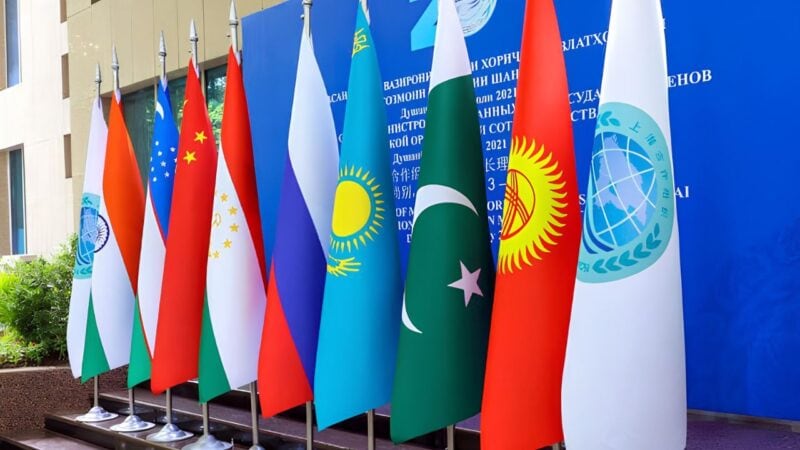
Pakistan is scheduled to assume the chairmanship of the Shanghai Cooperation Organisation’s (SCO) Council of Heads of State (CHS) this coming September. According to an official statement released by the Ministry of Foreign Affairs on Monday, Islamabad will also serve as the host nation for the prestigious CHS summit next year.
The transition comes as the regional bloc marks its 25th anniversary. Commemorating the milestone, Deputy Prime Minister and Foreign Minister Ishaq Dar acknowledged that the alliance has played an important role in “promoting regional peace, security, stability, economic cooperation, connectivity and people-to-people exchanges among its member states”.
Dar noted that Pakistan’s trajectory within the alliance has evolved significantly, progressing from an observer nation to a proactive full member since 2017, reflecting the country’s “unwavering commitment to multilateralism and confidence in the potential of our region”.
He emphasised that the upcoming chairmanship is a “reflection of trust and confidence in Pakistan’s leadership role regionally and globally”.
The foreign minister reiterated that Islamabad remains committed to advancing a “forward-looking and action-oriented agenda aimed at enhancing economic collaboration, promoting regional connectivity, and deepening mutual understanding among peoples”.
He specifically highlighted the China-Pakistan Economic Corridor (CPEC), which “serves as a model for trans-regional economic and trade integration among SCO countries”.
Furthermore, Dar highlighted Islamabad’s active structural responsibilities within the bloc, pointing out that Pakistan currently chairs the SCO Regional Anti-Terrorist Structure (SCO-RATS) for the 2025–2026 term.
He remarked that as a “frontline state that has made unparalleled sacrifices in the fight against terrorism”, Pakistan highly values the collaborative framework designed to combat the “three evils” of terrorism, separatism, and extremism.
Originally established in 2001 as a security pact, the SCO has gradually expanded its focus to encompass trade, economic development, and mutual payments in national currencies. The Euro-Asian alliance currently comprises 10 member states including India, Iran, China, Pakistan, Russia, Kyrgyzstan, Belarus, Kazakhstan, Tajikistan, and Uzbekistan, alongside Afghanistan and Mongolia serving as observer states. This year’s CHS summit is scheduled to be held in Bishkek, Kyrgyzstan.