Deputy Prime Minister (DPM) and Foreign Minister Ishaq Dar has said that the top-level committee overseeing the Makkah defence agreement between Pakistan, Saudi Arabia and Turkiye was expected to meet in Islamabad later this month, Geo News has reported.
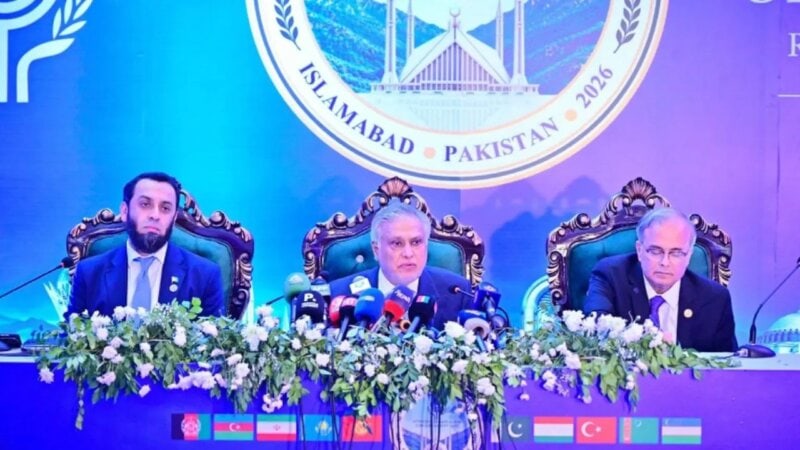
Speaking at a press briefing after the Economic Cooperation Organisation (ECO) ministerial meeting in Islamabad, Dar said: “The apex committee of this body will be actually meeting, hopefully, at the end of this month in Islamabad.”
Dar added that Pakistan was scheduled to host the meeting alongside Saudi Arabia and Turkiye, the other two signatories to the agreement, which was signed in the holy city of Makkah on August 7.
Under the pact, the three countries agreed to provide mutual assistance if any member faced an armed attack or military aggression.
Dar maintained that the agreement was based on the principle of self-defence and did not violate the United Nations Charter. He referred to Article 51, which recognises the right of countries to defend themselves individually or collectively against armed attacks.
He explained that the pact’s central provision treated an attack on one signatory as an attack on all three.
However, he added that the arrangement aimed to strengthen defence cooperation and regional security rather than signal confrontation with other countries.
Dar also called for the development of a regional security system to address challenges in the region, saying that collective security arrangements were necessary to maintain peace and stability.
He said that work was underway to establish an institutional framework for the agreement. Its first meeting took place in Istanbul on August 31, while a working committee was also planned to oversee its implementation. The committee will include a Foreign Office representative, three secretaries and one military representative.
The agreement requires signatories to use “all necessary means” to respond to threats against each other’s territorial integrity, sovereignty and internationally recognised borders.
It also states that if any member faces military aggression from another country or group of countries, the remaining parties must provide immediate assistance through available measures of mutual support.
The level of assistance will depend on an assessment of requirements and each country’s available resources, including military capabilities.
The pact also sets a minimum 10-year commitment during which none of the signatories can withdraw. After that period, a country seeking to leave must give the other members at least three months’ written notice through diplomatic channels.
The agreement also covers defence industry cooperation, intelligence sharing, logistical support, counterterrorism, joint military training and collaboration in research and advanced technologies.
Earlier this month, the three countries agreed at an emergency alliance meeting in Riyadh to ensure the rapid deployment of military forces and capabilities in Saudi Arabia following Houthi attacks.
Turkiye also condemned the attacks and offered support for Saudi Arabia’s military technology requirements. However, its formal approval of the defence agreement remains subject to parliamentary ratification.