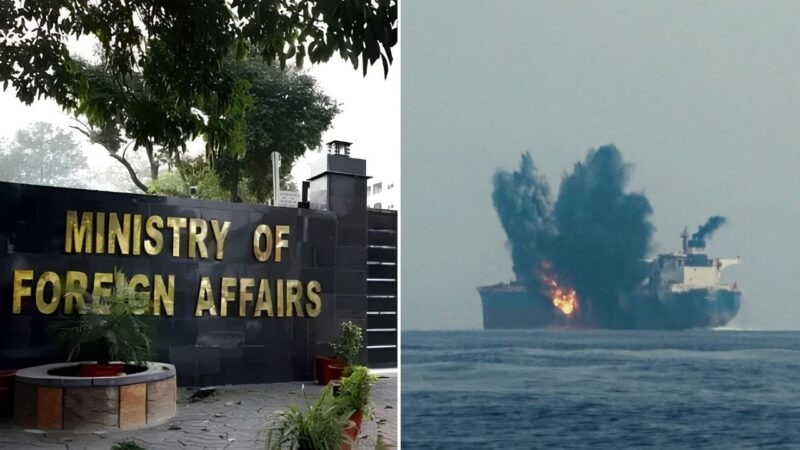
Pakistan has condemned the Houthi militia attacks on Saudi commercial vessels in the Red Sea amid rising regional tensions, with an additional warning that the state will use lawful force to protect its sovereign maritime interests if Pakistani-flagged vessels come under direct threat.
The unusually sharp diplomatic warning stems from escalating hostilities in the Middle East, particularly as Iran-aligned fighters target shipping lanes in the Bab Al-Mandab Strait. With the closure of the Strait of Hormuz following the collapse of a recent ceasefire between Washington DC and Tehran, commercial traffic has increasingly relied on the Red Sea corridor.
The foreign office stressed that such actions severely undermine freedom of navigation and global commerce. Emphasizing the gravity of the situation, the office released an official statement declaring, “Pakistan reaffirms that any hostile act against Pakistani-flagged vessels or Pakistani maritime interests will be regarded as a grave threat to Pakistan’s national security and sovereign interests.”
The government further asserted its preparedness to safeguard sovereign assets under international frameworks: “Consistent with the Charter of the United Nations and international law, Pakistan reserves its right to take all necessary measures, including lawful use of force, in the exercise of self-defense to protect its maritime assets and national interests.”
Reiterating deep solidarity with Riyadh, Islamabad criticized external pressures aimed at widening the geographic scope of the conflict.
The official release concluded by emphasizing “unwavering support for the security, sovereignty, territorial integrity and prosperity of the brotherly Kingdom of Saudi Arabia,” while urging all regional stakeholders to prioritize diplomatic de-escalation.
The statement reflects the Strategic Defence Mutual Agreement (SDMA) signed last September between Saudi Arab and Pakistan whereby both countries treat an attack on either as an attack on both. Lastly, in the statement, the Ministry stressed upon the need for regional dialogue, adherence to international law, and maritime shipping safety.