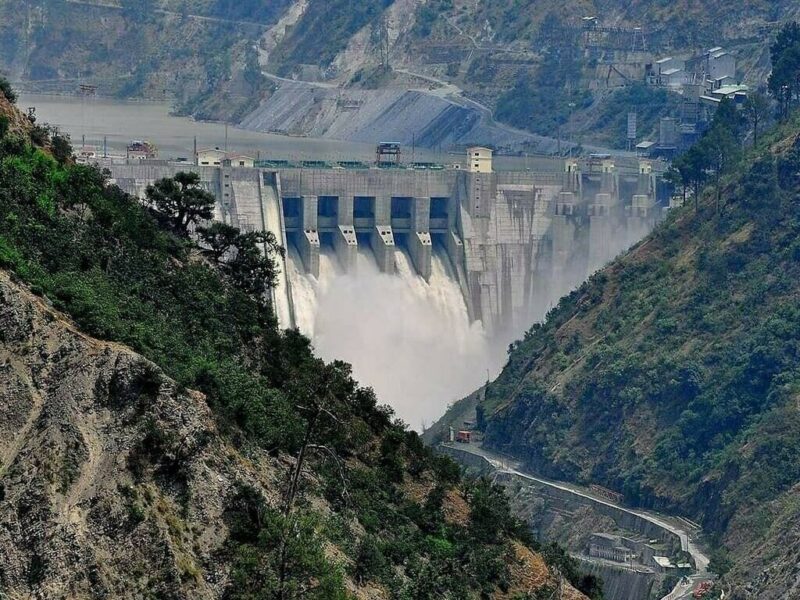
After proceedings lasting almost ten years, the Permanent Court of Arbitration (PCA) has issued a supplemental award on Pakistan’s petition challenging the design specifications of two Indian hydropower projects, the Ratle and Kishenganga plants, built on rivers allocated to Pakistan under the Indus Waters Treaty (IWT).
The tribunal ruled that the IWT remains fully binding on both nations and declared that neither state could unilaterally suspend the agreement or hold it in abeyance, as it directly addressed India’s earlier decision to suspend the treaty framework following the Pahalgam terrorist attack.
It also focused heavily on the engineering dimensions of the disputed run-of-the-river structures and ruled that any maximum pondage created by Indian infrastructure on the western rivers must be strictly justified by actual, verifiable operational necessities, specifically citing site hydrology, hydraulic conditions and power system requirements.
Additionally, the PCA award expanded Pakistan’s formal review rights under the accord. The ruling explicitly placed the legal burden of proof on New Delhi, requiring India to supply sufficient technical information to allow for independent assessments of treaty compliance.
Under established international arbitration law and the terms of the treaty itself, the court award is final and legally binding on both signatory parties.
As a result of the binding ruling, New Delhi is required to alter the existing pondage parameters for both the Kishenganga and Ratle dam designs to bring them into full alignment with treaty standards.
India must also restore the bilateral information-sharing and institutional review mechanisms that allow Pakistani authorities to independently verify infrastructure compliance, reverse its prior suspension of the pact, and formally recommit to the shared transboundary water-sharing framework.
Legal experts have noted that upholding the treaty prevents a destabilizing precedent for other transboundary river agreements, particularly concerning major upstream riparian states like China.