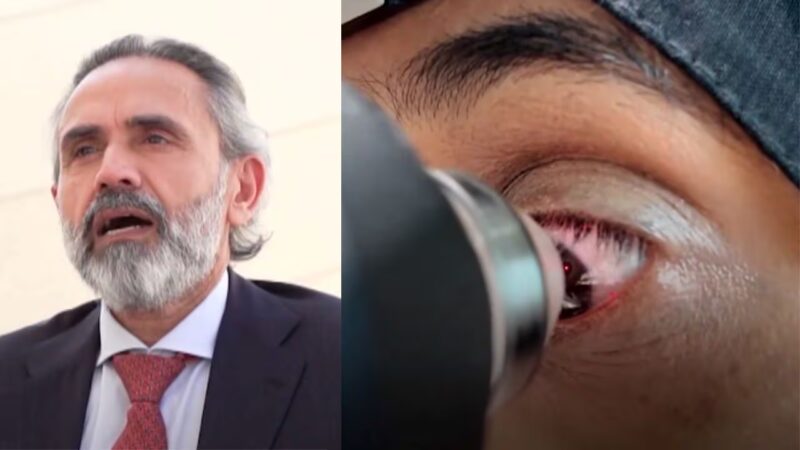
A Pakistani-born scientist based in Qatar has pioneered an innovative, Artificial Intelligence-powered eye scan capable of detecting devastating neurodegenerative diseases years before the onset of physical symptoms.
The breakthrough technology, known as Corneal Confocal Microscopy (CCM), is the result of 25 years of research led by Professor Rayaz Malik at Weill Cornell Medicine-Qatar. By utilizing the cornea as a biological “window” into the human nervous system, the non-invasive procedure allows clinicians to identify hidden peripheral nerve damage and central nervous system decline without resorting to painful skin biopsies or expensive, traditional imaging.
The rapid screening process takes only two to three minutes to capture high-resolution, live-tissue images of individual sub-basal corneal nerve fibers. Once captured, the system integrates sophisticated automated AI deep-learning algorithms to analyze the specialized nerve architecture within seconds. The AI precisely measures critical neurological indicators—including microscopic nerve fiber density, fiber length, and branch patterns to instantly differentiate healthy tissue from early-stage pathology.
Clinical data demonstrates that CCM possesses predictive capabilities for early intervention. Studies reveal the technology can identify structural signs of diabetic neuropathy at least five years before physical symptoms manifest.
Furthermore, the scan can detect signs of central cognitive decline, such as dementia, multiple sclerosis, and Parkinson’s disease, up to three years before a formal symptomatic diagnosis can be made.
Current conventional diagnostic procedures often identify neurodegenerative diseases only after severe, irreversible cellular damage has occurred and treatment efficacy is diminished. By contrast, CCM is designed to provide medical professionals with advanced warning to implement protective therapeutic interventions much earlier.
The technology operates via standard ophthalmic imaging equipment, facilitating straightforward deployment across global healthcare infrastructure. While clinical applications continue to expand, researchers are currently evaluating the utility of the AI-integrated tool to monitor therapeutic efficacy and nerve regeneration in ongoing global clinical trials.