
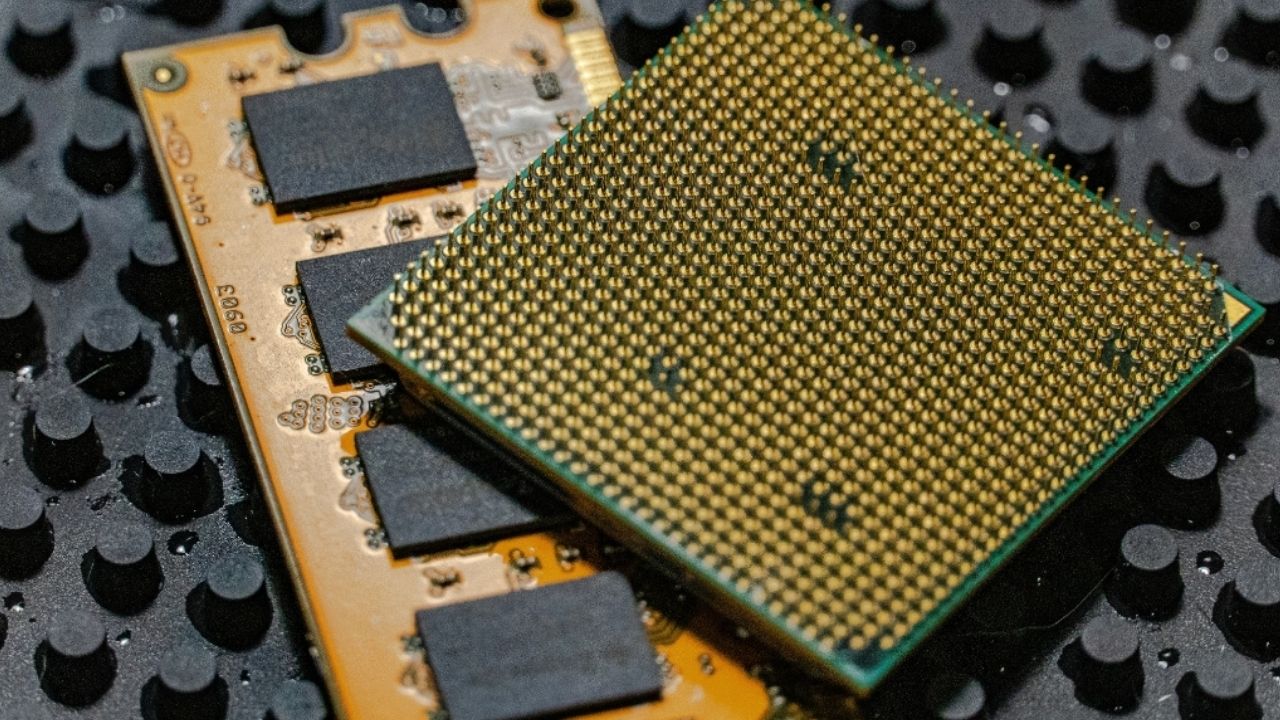


Pakistan’s first-ever computer chip manufacturing unit will be established in Faisalabad, with the Punjab government also allocating 50 acres of land for a state-of-the-art expo centre in the M-3 Industrial Estate, Provincial Minister for Industries, Commerce and Investment Chaudhary Shafay Hussain announced.
According to Hussain, the Punjab government has made important choices to expedite the colonisation of the Allama Iqbal and M-3 industrial estates.
He said a community centre would be built for foreign workers, alongside completion of boundary walls and the establishment of a dedicated monitoring cell in both estates.
He noted that similar actions are being taken to fully develop industrial estates throughout the province and that efforts are underway to give better banking and commercial facilities to industrial units operating in these zones.
Speaking about industries related to agriculture, the minister stated that the government has started a program to increase cotton production, with research and development concentrated on producing high-yield, disease-resistant seeds.
During a briefing on the Small Industrial Estate in Faisalabad, Hussain stated that interest-free loans are available via the Asan Karobar Scheme and that infrastructure-related concerns are being addressed.
Additionally, he declared that in 2026, three women's training facilities would-be built-in Gujrat, Layyah, and Sahiwal; the second phase of the facility would-be built-in Faisalabad.
He further revealed that Faisalabad and Shymkent, a major industrial city in Kazakhstan, are being declared twin cities, a move he said would open new avenues of industrial and trade cooperation.
Speaking on the occasion, FCCI President Farooq Yousaf Sheikh said the pace of colonisation at the M-3 and Allama Iqbal industrial estates had improved, but warned that a growing trust deficit between government institutions and the private sector was hurting exports.
He alleged that as many as 32 departments were harassing industrial units, adding that containers cleared by customs officials were still being stopped en route to ports.
Sheikh also highlighted the sharp rise in production costs due to soaring electricity and gas prices, and said delays in refunds now stretching to 90 days instead of the earlier 15 had triggered a liquidity crunch for exporters.
He said exports could be pushed to $100 billion if a business-friendly environment and consistent policies were ensured.
FCCI Vice President Engr Asim Munir, along with executive members and former office-bearers, participated in the question-and-answer session.
'%3e%3crect%20y='0.445312'%20width='48'%20height='48'%20rx='24'%20fill='white'%20fill-opacity='0.5'/%3e%3crect%20x='0.5'%20y='0.945312'%20width='47'%20height='47'%20rx='23.5'%20stroke='%23808080'/%3e%3cpath%20d='M34.625%2024.4453L14%2024.4453'%20stroke='%23808080'%20stroke-width='0.920053'/%3e%3cpath%20d='M23.375%2034.4453L13.375%2024.4453L23.375%2014.4453'%20stroke='%23808080'%20stroke-width='0.920053'/%3e%3c/g%3e%3cdefs%3e%3cfilter%20id='filter0_b_489_44344'%20x='-12'%20y='-11.5547'%20width='72'%20height='72'%20filterUnits='userSpaceOnUse'%20color-interpolation-filters='sRGB'%3e%3cfeFlood%20flood-opacity='0'%20result='BackgroundImageFix'/%3e%3cfeGaussianBlur%20in='BackgroundImageFix'%20stdDeviation='6'/%3e%3cfeComposite%20in2='SourceAlpha'%20operator='in'%20result='effect1_backgroundBlur_489_44344'/%3e%3cfeBlend%20mode='normal'%20in='SourceGraphic'%20in2='effect1_backgroundBlur_489_44344'%20result='shape'/%3e%3c/filter%3e%3c/defs%3e%3c/svg%3e)
'%3e%3crect%20y='0.445312'%20width='48'%20height='48'%20rx='24'%20fill='white'%20fill-opacity='0.5'/%3e%3crect%20x='0.5'%20y='0.945312'%20width='47'%20height='47'%20rx='23.5'%20stroke='%23808080'/%3e%3cpath%20d='M13.375%2024.4453L34%2024.4453'%20stroke='%23808080'%20stroke-width='0.920053'/%3e%3cpath%20d='M24.625%2014.4453L34.625%2024.4453L24.625%2034.4453'%20stroke='%23808080'%20stroke-width='0.920053'/%3e%3c/g%3e%3cdefs%3e%3cfilter%20id='filter0_b_489_44344'%20x='-12'%20y='-11.5547'%20width='72'%20height='72'%20filterUnits='userSpaceOnUse'%20color-interpolation-filters='sRGB'%3e%3cfeFlood%20flood-opacity='0'%20result='BackgroundImageFix'/%3e%3cfeGaussianBlur%20in='BackgroundImageFix'%20stdDeviation='6'/%3e%3cfeComposite%20in2='SourceAlpha'%20operator='in'%20result='effect1_backgroundBlur_489_44344'/%3e%3cfeBlend%20mode='normal'%20in='SourceGraphic'%20in2='effect1_backgroundBlur_489_44344'%20result='shape'/%3e%3c/filter%3e%3c/defs%3e%3c/svg%3e)