
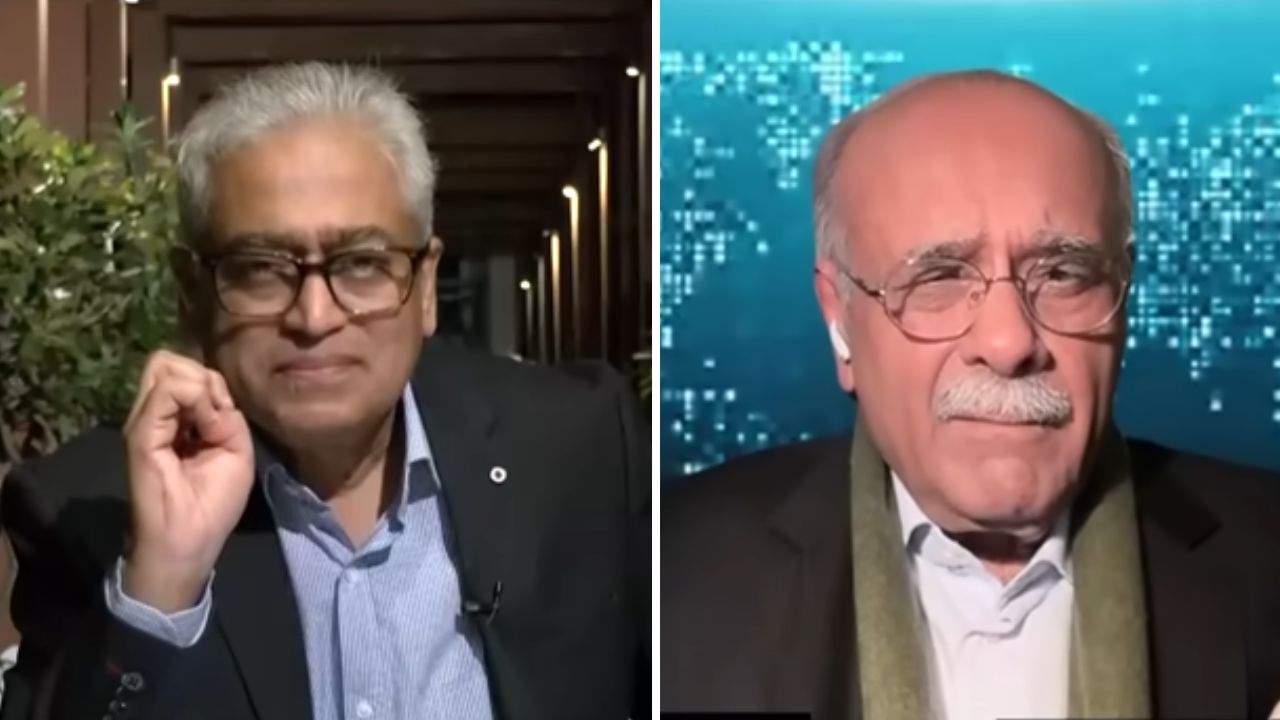


Former Pakistan Cricket Board (PCB) chairman Najam Sethi has defended Pakistan's boycott of their T20 World Cup match against India, calling it a calculated move that forced the ICC to back down rather than an impulsive decision.
Speaking to India Today's Rajdeep Sardesai, Sethi revealed that Pakistan's 15-day boycott notice was deliberately designed to create negotiating space with the ICC and Bangladesh.
"Pakistan looked at all the angles. They knew that there could be no sanctions. They consulted the top lawyers at home and abroad," Sethi said. "And there are precedents that made it clear to them that they were on a very strong wicket. And at best, they would lose a point, no more than that."
"Pakistan knew that the broadcasters had the ICC, as it were, on a cold slab," he said. "As far as the question on resources, there was a time when Pakistan used to rely on the ICC and many other boards too, but not anymore. Now the PSL has grown in a big way, and we earn more money from the PSL than from the ICC," Sethi responded.
The former PCB chief claimed the ICC quickly realised Pakistan's legal position was solid and initiated backdoor negotiations.
"The ICC has decided to back off a little bit, give Bangladesh some space," he said. "That's how Imran Khawaja, the deputy chief, got into action. That's how the Bangladeshis got into action. That's how they came to Pakistan to negotiate so that Pakistan could play this match."
Sethi explained that Pakistan's strategic notice period allowed them room to maneuver.
"One of the reasons that Pakistan gave a 15-day notice was that they wanted space with which to talk to the ICC and Bangladesh. And I think they had reason to believe that that would yield some results," he said.
Sardesai challenged this interpretation sharply, arguing that Pakistan's move was a terrible example of mixing cricket with politics. "It's almost as if Pakistan had a problem with the fact that India, like it or not, is the world capital of cricket, the superpower of cricket," he said. "The world wants to come to India and play here. They don't want to play the PSL as much as they want to play the IPL. And maybe Pakistan simply wants to try and use these fora to express its anger against India dictating terms to the world. And that becomes an example of churlishness and mixing cricket and politics, isn't it?"
Sethi pushed back hard against this characterisation. He acknowledged India's financial clout but insisted the ICC should operate independently from the BCCI.
"The world definitely wants to come to India to play the IPL and all other fixtures. There's no doubt about the fact that India is a major contributor to ICC revenues. No doubt. Nobody's questioning that," he said. "But what we are saying is this: the ICC is supposed to be an independent body. It's not the BCCI. And so therefore, you need to have a system of equity."
The former PCB chief pointed to his earlier opposition to the "Big Three" revenue formula, which eventually got scrapped.
"I have been working on this question of equity since the big three discussions. We were the only ones who didn't want to sign on the dotted line. In the end, we were proven right that the big three formulas were all unjust. And eventually they had to scrap those and come to a new agreement," he said. "And by the way, I might tell you, my sense is that there will be new formulas going forward, better, more equitable formulas."
Sethi also highlighted what he sees as double standards in how cricket operates.
"Everybody wants to play in the PSL. Those who don't get into the IPL are all too ready to play in the PSL. And so we realise that. But here's the interesting point: India has never allowed Indian players to play in any league outside India. Isn't that right?" he asked. "Pakistani players play in all the leagues outside Pakistan. We are welcoming. We want India to come and play in Pakistan in both ICC fixtures and bilateral fixtures. But India even refuses to play us in bilateral fixtures outside Pakistan."
Sardesai countered by bringing up the security situation and terrorism concerns. "The reason is so long as the Pakistani state is seen as a sponsor of terror against India, what happened in Pahalgam, for example, last year, terror and cricket don't go together," he said. "You can't have a bilateral series if Pakistan is going to be seen as a sponsor of terror or expect India to visit Pakistan and play against Pakistan. You need to create a conducive atmosphere, sir."
Sethi fired back with counter-allegations and refused to accept the one-sided narrative.
"It takes two hands to clap. Do you know what the narrative is? The narrative is that your national security advisor, Mr. Doval, is on record for saying that we're going to sort out Pakistan by sponsoring insurgency in Balochistan. That's on record. You know it as well as I do," he said.
"So now every time there's a bomb blast that goes off and the insurgents do something in Balochistan, every day Pakistani newspapers are pointing the finger at India, much like India used to point the finger at Pakistan during those years when the insurgency was raging in Kashmir. So it's basically tit for tat. You can't accuse Pakistan of terrorism without evidence. On the other hand, when Pakistan accuses India of terrorism, you turn around and say, oh, that's not right. So let's not go there, please," Sethi said.
Sardesai then pressed Sethi on the real motivations behind the boycott, questioning whether it was genuinely about Bangladesh being wronged or about political opportunism.
"Do you really believe that this was about Pakistan feeling anguished about Bangladesh being wronged? Or was it Pakistan seeing an opportunity to forge an axis with Dhaka in a way to somehow politically encircle India?" he asked. "This was therefore a political decision and you know that better than anyone else. This was not about cricket, it was about politics, Mr. Sethi. Would you agree or not?"
Sethi didn't deny the political calculations and turned the tables on India instead. "That's what was happening for 15 years in Bangladesh when Haseena [Sheikh Haseena] and Narendra Modi were in bed together. So now what's happened is the tables have been turned. You have a new government that is pro-Pakistan. For 15 years you had a government that was pro-India. So Bangladesh was sitting with India all the time. Now Bangladesh is going to sit with Pakistan. That's politics for you," he said.
Sardesai appreciated Sethi's candor while expressing concern about the implications. "I think you're being very honest. I'm glad that you're being honest about that. That's politics. But whether a cricket field should become an arena for politics is the big question that all of us cricket lovers certainly will continue to ask," he said before thanking Sethi for providing a Pakistani perspective on the issue.
Pakistan reversed its boycott decision this week, confirming the team will face India on February 15 as originally scheduled. The government's statement came after Pakistan had initially announced the boycott in solidarity with Bangladesh.
'%3e%3crect%20y='0.445312'%20width='48'%20height='48'%20rx='24'%20fill='white'%20fill-opacity='0.5'/%3e%3crect%20x='0.5'%20y='0.945312'%20width='47'%20height='47'%20rx='23.5'%20stroke='%23808080'/%3e%3cpath%20d='M34.625%2024.4453L14%2024.4453'%20stroke='%23808080'%20stroke-width='0.920053'/%3e%3cpath%20d='M23.375%2034.4453L13.375%2024.4453L23.375%2014.4453'%20stroke='%23808080'%20stroke-width='0.920053'/%3e%3c/g%3e%3cdefs%3e%3cfilter%20id='filter0_b_489_44344'%20x='-12'%20y='-11.5547'%20width='72'%20height='72'%20filterUnits='userSpaceOnUse'%20color-interpolation-filters='sRGB'%3e%3cfeFlood%20flood-opacity='0'%20result='BackgroundImageFix'/%3e%3cfeGaussianBlur%20in='BackgroundImageFix'%20stdDeviation='6'/%3e%3cfeComposite%20in2='SourceAlpha'%20operator='in'%20result='effect1_backgroundBlur_489_44344'/%3e%3cfeBlend%20mode='normal'%20in='SourceGraphic'%20in2='effect1_backgroundBlur_489_44344'%20result='shape'/%3e%3c/filter%3e%3c/defs%3e%3c/svg%3e)
'%3e%3crect%20y='0.445312'%20width='48'%20height='48'%20rx='24'%20fill='white'%20fill-opacity='0.5'/%3e%3crect%20x='0.5'%20y='0.945312'%20width='47'%20height='47'%20rx='23.5'%20stroke='%23808080'/%3e%3cpath%20d='M13.375%2024.4453L34%2024.4453'%20stroke='%23808080'%20stroke-width='0.920053'/%3e%3cpath%20d='M24.625%2014.4453L34.625%2024.4453L24.625%2034.4453'%20stroke='%23808080'%20stroke-width='0.920053'/%3e%3c/g%3e%3cdefs%3e%3cfilter%20id='filter0_b_489_44344'%20x='-12'%20y='-11.5547'%20width='72'%20height='72'%20filterUnits='userSpaceOnUse'%20color-interpolation-filters='sRGB'%3e%3cfeFlood%20flood-opacity='0'%20result='BackgroundImageFix'/%3e%3cfeGaussianBlur%20in='BackgroundImageFix'%20stdDeviation='6'/%3e%3cfeComposite%20in2='SourceAlpha'%20operator='in'%20result='effect1_backgroundBlur_489_44344'/%3e%3cfeBlend%20mode='normal'%20in='SourceGraphic'%20in2='effect1_backgroundBlur_489_44344'%20result='shape'/%3e%3c/filter%3e%3c/defs%3e%3c/svg%3e)