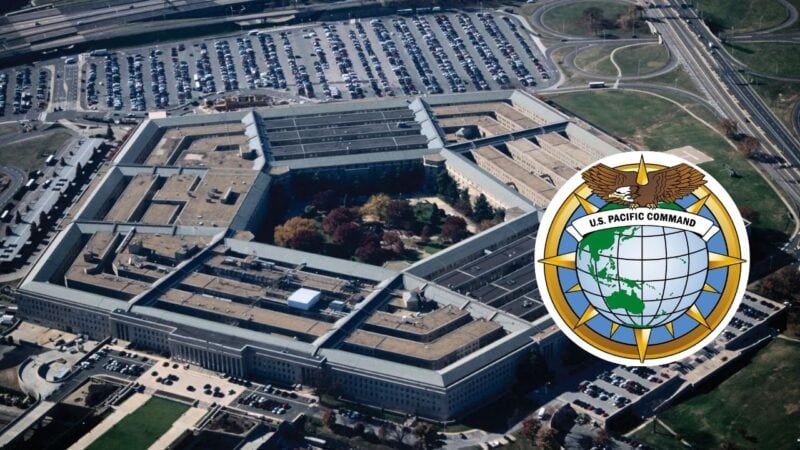
Eight years after the Trump administration renamed the US Pacific Command to reflect India’s growing strategic value, Washington DC has reversed the decision and restored the military command’s original title.
The Department of War announced that the US Indo-Pacific Command (USINDOPACOM) will officially return to its historic designation, the US Pacific Command (USPACOM). According to defense officials, the change revives a classic designation that dates back to 1947 and honours the command’s deep military heritage in the region.
Originally established by President Harry Truman on 1 January 1947, the command operated under the USPACOM banner for more than seven decades, standing as the oldest and largest of the United States’ unified combatant commands.
In an official statement, the Department of War noted that restoring the legacy title recognises the command’s institutional roots and strengthens collective morale among personnel serving in the theatre.
Historically, the command played a foundational role in shaping the post-World War II regional security architecture and successfully coordinated joint forces during both the Korean and Vietnam Wars. Headquartered at Camp H.M. Smith in Hawaii, the command currently oversees military readiness with approximately 375,000 civilian and military personnel assigned to its operations.
The Pentagon explicitly clarified that the administrative name change is largely symbolic and carries no fundamental shift in operational duties, troop levels, or strategic objectives. “USPACOM’s vast area of responsibility spanning from the waters off the West Coast of the United States to the western border of India remains exactly the same,” the statement read. Officials reiterated that the core mission of maintaining a free and open theatre alongside regional allies is unchanged.
The original May 2018 renaming by then-US Defense Secretary Jim Mattis had underscored the “increasing connectivity” between the Indian and Pacific Oceans. At the time, Mattis famously described the command’s strategic footprint as stretching “from Bollywood to Hollywood, and from penguins to polar bears”.
While that historical shift highlighted India’s critical anchoring role in the Pentagon’s South Asian strategy, the restoration reverts the focus back to the command’s foundational Pacific identity.