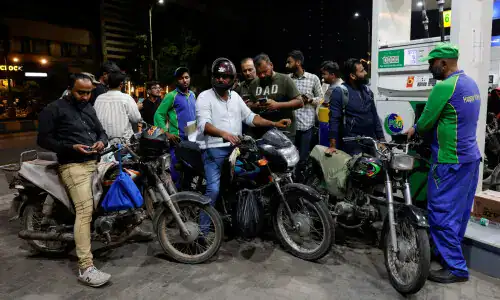
The federal government has reduced the price of petrol by Rs6.59 per litre and High-Speed Diesel (HSD) by Rs4.25 on Friday, marking the fifth consecutive reduction in fuel prices.
Following the revision, petrol will cost Rs346 per litre, down from Rs352.59, while the price of HSD will fall to Rs378 per litre from Rs382.25.
According to a notification issued by the Oil and Gas Regulatory Authority (OGRA), the revised prices will remain in effect from November 7 to November 10. The government announced the shorter price period due to the public holiday on November 9.
The government continues to collect Rs114 per litre in taxes and duties on petrol and Rs100 per litre on diesel.
The latest reduction also comes under an arrangement announced by the government on Monday, under which oil refineries will contribute towards the petroleum levy by absorbing a cumulative financial impact of Rs15 billion over 30 days.
Petroleum Minister Ali Pervaiz Malik said during a press conference on Tuesday that the government was also working on introducing a similar mechanism for liquefied petroleum gas (LPG).
The latest cuts followed a period in which fuel prices rose after the outbreak of the US-Iran war on February 28.
HSD had climbed from Rs281 per litre to a peak of Rs520.35 on April 3. Petrol prices also increased from Rs266 in the first week of March to Rs458.41 on April 3.
In response to rising fuel costs amid the ongoing Middle East conflict, the government reintroduced austerity measures, requiring markets to close by 9pm and reducing fuel allocations for official vehicles by 50 percent for three months.
On September 13, Prime Minister (PM) Shehbaz Sharif announced a relief scheme for motorcycle owners, auto-rickshaw users and people using vehicles with engines of up to 800cc to ease the impact of rising international oil prices.
Petrol is primarily used in private transport, small vehicles, rickshaws and motorcycles, making changes in its price particularly relevant to middle and lower-middle-income groups.
Diesel, meanwhile, is mainly used in heavy transport, power plants and large generators, meaning changes in its price also affect the wider public.