
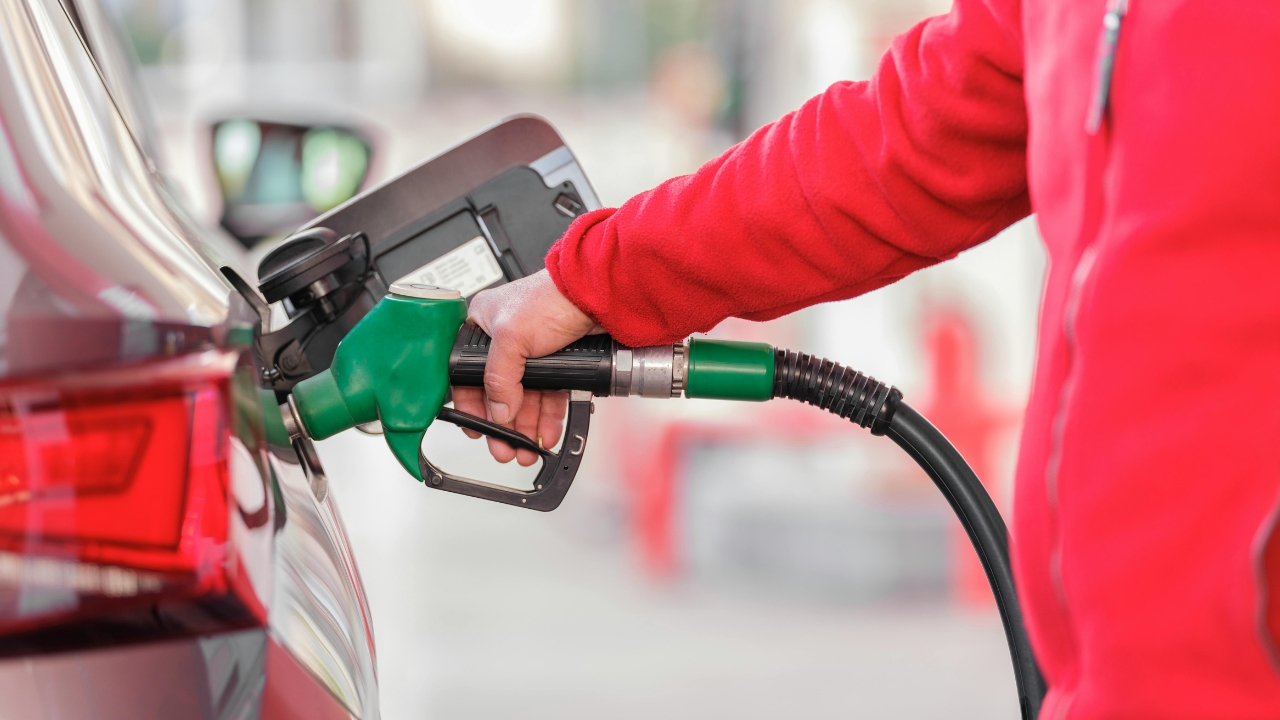


Prices for petroleum products are expected to rise for the next two weeks by approximately Re1 to Rs5 per litre. Reports cite a spike in international oil prices as the primary factor behind the projected increase in domestic petroleum products' prices.
Escalating tensions between Iran and Israel have led to an eight percent jump in the price of oil. Analysts fear that Israel could target Iran’s oil facilities, resulting in subdued production levels.
Reports indicate that Iran pumps out 3.3 million barrels per day, exporting over 60 percent of its total production. Moreover, the war could spread to the Strait of Hormuz, which witnesses the transport of 20 percent of the world's oil supply, including exports from non-belligerent countries such as Kuwait, Iraq, and the United Arab Emirates (UAE).
The aforementioned developments are expected to push the ex-depot price of petrol by Re1 per litre in the domestic market. Moreover, high-speed diesel (HSD) prices may witness a more liberal rise, with analysts predicting an increase of Rs5 per litre.
The ex-depot price of petrol is projected to rise to Rs253.63 after the increase. Similarly, HSD prices are expected to rise too, coming to settle at Rs259.64 per litre.
It merits a mention that these are estimates, and the true magnitude of changes in fuel prices will only be revealed once the relevant authorities make a decision.
Aside from the base price of the fuel itself, Islamabad charges approximately Rs78 per litre petroleum development levy (PDL) on high octane and petrol. However, the PDL on HSD sits at a slightly lower Rs77.01 per litre.
The federal government extracts an additional Rs16 per litre from the sale of petroleum products by levying customs duty on petrol and HSD. Put together, the PDL and customs duty raise the federal government’s revenues to Rs94 per litre from petrol and HSD sales.
A rise in HSD rates could detrimentally impact the transport sector, given the sector’s reliance upon HSD. The rise in HSD prices is likely to stifle economic activity across various sectors.
For instance, the transportation sector has diesel as a primary input and thus requires vast quantities of the commodity. With a rise in HSD prices, these businesses could witness a rise in operational costs and, ultimately, a drop in profit margins.
As per analysts, bus fares tend to be sticky when diesel rates drop after an increase. As such, future drops in the price of diesel might not result in a proportional decrease in fares.
'%3e%3crect%20y='0.445312'%20width='48'%20height='48'%20rx='24'%20fill='white'%20fill-opacity='0.5'/%3e%3crect%20x='0.5'%20y='0.945312'%20width='47'%20height='47'%20rx='23.5'%20stroke='%23808080'/%3e%3cpath%20d='M34.625%2024.4453L14%2024.4453'%20stroke='%23808080'%20stroke-width='0.920053'/%3e%3cpath%20d='M23.375%2034.4453L13.375%2024.4453L23.375%2014.4453'%20stroke='%23808080'%20stroke-width='0.920053'/%3e%3c/g%3e%3cdefs%3e%3cfilter%20id='filter0_b_489_44344'%20x='-12'%20y='-11.5547'%20width='72'%20height='72'%20filterUnits='userSpaceOnUse'%20color-interpolation-filters='sRGB'%3e%3cfeFlood%20flood-opacity='0'%20result='BackgroundImageFix'/%3e%3cfeGaussianBlur%20in='BackgroundImageFix'%20stdDeviation='6'/%3e%3cfeComposite%20in2='SourceAlpha'%20operator='in'%20result='effect1_backgroundBlur_489_44344'/%3e%3cfeBlend%20mode='normal'%20in='SourceGraphic'%20in2='effect1_backgroundBlur_489_44344'%20result='shape'/%3e%3c/filter%3e%3c/defs%3e%3c/svg%3e)
'%3e%3crect%20y='0.445312'%20width='48'%20height='48'%20rx='24'%20fill='white'%20fill-opacity='0.5'/%3e%3crect%20x='0.5'%20y='0.945312'%20width='47'%20height='47'%20rx='23.5'%20stroke='%23808080'/%3e%3cpath%20d='M13.375%2024.4453L34%2024.4453'%20stroke='%23808080'%20stroke-width='0.920053'/%3e%3cpath%20d='M24.625%2014.4453L34.625%2024.4453L24.625%2034.4453'%20stroke='%23808080'%20stroke-width='0.920053'/%3e%3c/g%3e%3cdefs%3e%3cfilter%20id='filter0_b_489_44344'%20x='-12'%20y='-11.5547'%20width='72'%20height='72'%20filterUnits='userSpaceOnUse'%20color-interpolation-filters='sRGB'%3e%3cfeFlood%20flood-opacity='0'%20result='BackgroundImageFix'/%3e%3cfeGaussianBlur%20in='BackgroundImageFix'%20stdDeviation='6'/%3e%3cfeComposite%20in2='SourceAlpha'%20operator='in'%20result='effect1_backgroundBlur_489_44344'/%3e%3cfeBlend%20mode='normal'%20in='SourceGraphic'%20in2='effect1_backgroundBlur_489_44344'%20result='shape'/%3e%3c/filter%3e%3c/defs%3e%3c/svg%3e)