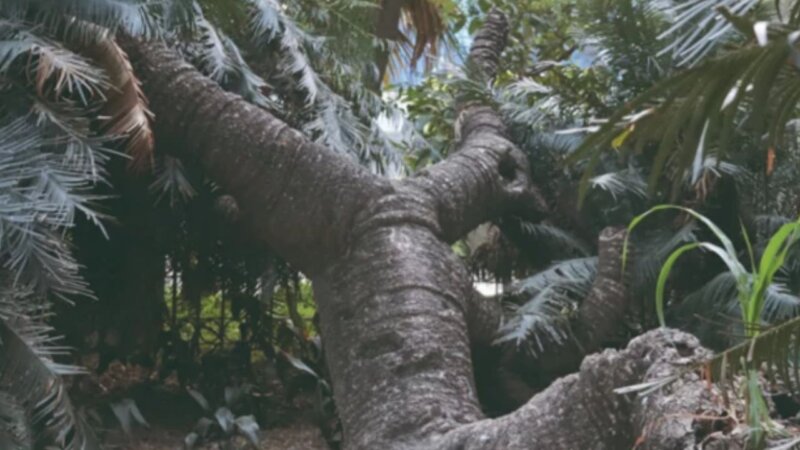
A 176-year-old Queen Sago Palm at Lahore’s Bagh-e-Jinnah, formerly known as Lawrence Gardens, has been identified as belonging to an ancient plant lineage that dates back around 300 million years, long before dinosaurs roamed the Earth.
According to a spokesperson for the Parks and Horticulture Authority (PHA), the tree belongs to the Cycad family, the fossil of which record back to the Permian period, around 280 to 300 million years ago.
Cycads are believed to have been part of the diet of plant-eating dinosaurs, including sauropods, which fed on their foliage, cones and nutrient-rich seeds.
Often described as “living fossils”, Cycads have survived for millions of years and are known for their slow growth. The PHA spokesperson said that the plants require around four to five hours of sunlight and little water once established.
Despite their long evolutionary history, Cycads face the threat of extinction. Around 60 percent of assessed Cycad species are listed as threatened on the International Union for Conservation of Nature (IUCN) Red List. The Sago Palm at Bagh-e-Jinnah is among the threatened varieties managed by the PHA.
Established in the 1860s, Bagh-e-Jinnah is home to around 150 varieties of trees, including 30 species of palms. Many of these were introduced during the British colonial period from regions including Europe, Palestine, Syria and other parts of the Indian Empire.
The 176-year-old Sago Palm predates the garden itself, making it a longstanding feature of Lahore’s botanical heritage.