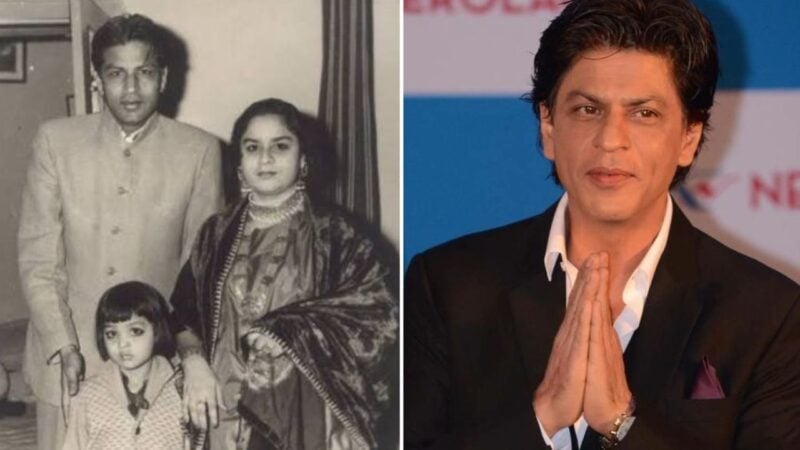
Veteran Pakistani politician Haji Ghulam Ahmad Bilour has revealed historical details regarding the turbulent departure of Bollywood star Shah Rukh Khan’s father Meer Taj Muhammad Khan from Peshawar following partition.
The veteran leader shared the account during a televised interview with senior journalist Hamid Mir, using the broadcast to detail narratives compiled in his autobiographical book titled “Mai Kyun Nahi Toota” (Why I Did Not Break).
Discussing the details recorded within his book, Bilour described the impact of political chaos that gripped the North-West Frontier Province (NWFP) between 1947 and 1948, on the Bollywood actor’s family. He noted during the interview that the Muslim League- Qayyum had secured state backing while local Congress party workers faced severe political suppression.
According to details shared from the book, Meer Taj Muhammad Khan and his brothers Allah Bakhsh, Khan Mohammad, Mian Mohammad, and Ghulam Muhammad, were active workers of the Congress party.
Bilour added in the interview that the family faced immense pressure and imprisonment following partition because they had sided with Congress during that period of intense political friction.
He further recounted that subsequent crackdowns and mass arrests targeting Congress affiliates forced Meer Taj Muhammad Khan and his brothers to go underground to evade capture by state authorities.
“He left Peshawar, he remained underground for four or five days,” Bilour said in the interview while referencing his book.
Highlighting cross-party camaraderie during the era of political polarization, Bilour detailed how local political loyalties crossed party lines to offer sanctuary to the family. Describing the network of protection that shielded the family amid the police crackdown, the veteran politician added:
“We were friends from the Muslim League, all of us were one. He stayed at the house of his friend Haji Gul Saheb, who was a prominent local member of Muslim League Qayyum in NWFP, as they could not stay out in the open.”
Detailing the escape route documented in his memoir, Bilour noted that Taj Muhammad Khan eventually departed on a train bound for Calcutta before disembarking at Delhi. Hamid Mir interjected during the broadcast to confirm the timeline, noting, “He left in 1948,” to which Bilour affirmed, “He left in ’48”.