


The Pakistan Peoples Party (PPP) has asked Punjab Chief Minister Maryam Nawaz to “rethink her tone” after her fiery remarks against coalition partners triggered a fresh row over flood relief and water distribution.
Top leaders of PPP and PML-N met in Islamabad on Thursday to defuse tensions after Maryam’s speech in Faisalabad, where she declared that Punjab’s money and water were its own business. She said all provinces receive equal funds under the NFC Award and questioned how others use their share. She added that Punjab never interferes in other provinces’ affairs and others should not interfere in Punjab’s.
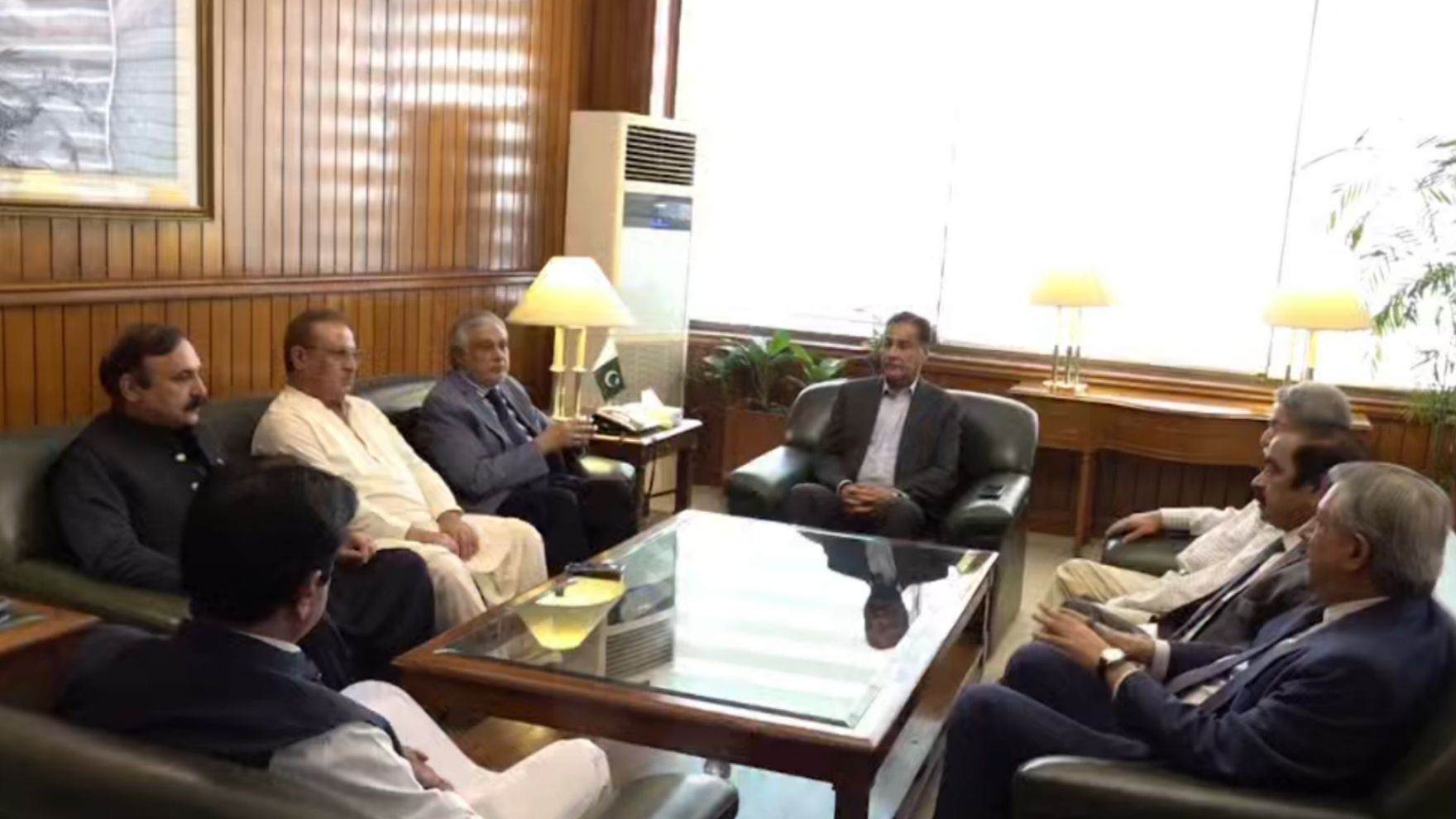
During the meeting at the National Assembly Speaker’s office, Deputy Prime Minister Ishaq Dar, Law Minister Azam Nazir Tarar, and Senator Rana Sanaullah met PPP’s Naveed Qamar and Ijaz Jakhrani. It was decided that the matter would be taken up with PML-N President Nawaz Sharif and CM Maryam Nawaz.
The dispute, which started with criticism over flood compensation, had now expanded to water rights on the Indus. PPP lawmakers staged walkouts from both the National Assembly and Senate to protest Maryam’s remarks.
At a press conference, senior PPP leader Qamar Zaman Kaira cautioned Maryam against fanning “narrow nationalism.” He said, “Differences should be kept within limits. You are a woman and our sister, and our leader Benazir Bhutto too was a woman. Rethink your tone. What do you want to achieve by playing narrow nationalism? Do you want the rest to leave Punjab, and their rights to be ended?”
Kaira also criticised Maryam’s remark about “breaking hands and silencing tongues,” calling such language unbecoming of a coalition partner. He stressed that PPP had supported the PML-N in good faith, but written agreements were never fully honoured. “We do not just give advice, we give opinions. If those are not acted upon, then criticism is our democratic right,” he said.
He added that PPP would praise good work where due but would also criticise failures, citing the floods as an example. Referring to Sindh’s concerns over NFC allocations and rehabilitation of victims, he warned, “We are not asking for power-sharing, but we are supporting the government. Do not forget the last time we parted ways.”
Kaira also defended the Benazir Income Support Programme (BISP), noting its global recognition and IMF endorsement. “Should we leave Punjab? You govern, but do not end others' rights. Your words should strengthen the federation, not weaken it,” he said.
Punjab Information Minister Azma Bukhari strongly condemned Kaira’s remarks, saying the PPP was “racing” to hold press conferences against the Punjab government. “You claim not to politicise the plight of flood victims, yet you hold pressers against Punjab? Before criticising Maryam Nawaz, Punjab’s daughter, you should have looked at your own past,” she said.
“The party whose leader was a woman is now collectively targeting a woman leader. Keep your popularity in view before questioning ours. Such statements will not affect us, nor will they help PPP stand on its own feet,” she added.
Bukhari accused PPP of “pointing fingers at Punjab in unison,” insisting that CM Maryam, her cabinet and provincial institutions had been with flood victims “since day one.” She argued that PPP was free to run BISP in Sindh, but Punjab had chosen its own model. “You can give Rs10,000 to victims there, but Maryam Nawaz is giving Rs1 million to Punjab’s victims because that is what they need,” she said.
“Punjab’s resources belong to its people. We do not need anyone’s advice on how to spend them. With provincial funds, Punjab has built 20,000 kilometres of roads, and more than 90 initiatives of Maryam Nawaz are being funded without a single rupee from the federation. As Punjabis, this should make you proud, not resentful,” Bukhari added.
A day earlier, senior PML-N leader and PM’s adviser Rana Sanaullah, while addressing the PPP’s stance on flood relief via BISP, had also cast doubts on the data of the BISP. Referring to the CM’s statement about the canals project, Sanaullah said the province had the right to utilise its share of water as it deemed fit.
'%3e%3crect%20y='0.445312'%20width='48'%20height='48'%20rx='24'%20fill='white'%20fill-opacity='0.5'/%3e%3crect%20x='0.5'%20y='0.945312'%20width='47'%20height='47'%20rx='23.5'%20stroke='%23808080'/%3e%3cpath%20d='M34.625%2024.4453L14%2024.4453'%20stroke='%23808080'%20stroke-width='0.920053'/%3e%3cpath%20d='M23.375%2034.4453L13.375%2024.4453L23.375%2014.4453'%20stroke='%23808080'%20stroke-width='0.920053'/%3e%3c/g%3e%3cdefs%3e%3cfilter%20id='filter0_b_489_44344'%20x='-12'%20y='-11.5547'%20width='72'%20height='72'%20filterUnits='userSpaceOnUse'%20color-interpolation-filters='sRGB'%3e%3cfeFlood%20flood-opacity='0'%20result='BackgroundImageFix'/%3e%3cfeGaussianBlur%20in='BackgroundImageFix'%20stdDeviation='6'/%3e%3cfeComposite%20in2='SourceAlpha'%20operator='in'%20result='effect1_backgroundBlur_489_44344'/%3e%3cfeBlend%20mode='normal'%20in='SourceGraphic'%20in2='effect1_backgroundBlur_489_44344'%20result='shape'/%3e%3c/filter%3e%3c/defs%3e%3c/svg%3e)
'%3e%3crect%20y='0.445312'%20width='48'%20height='48'%20rx='24'%20fill='white'%20fill-opacity='0.5'/%3e%3crect%20x='0.5'%20y='0.945312'%20width='47'%20height='47'%20rx='23.5'%20stroke='%23808080'/%3e%3cpath%20d='M13.375%2024.4453L34%2024.4453'%20stroke='%23808080'%20stroke-width='0.920053'/%3e%3cpath%20d='M24.625%2014.4453L34.625%2024.4453L24.625%2034.4453'%20stroke='%23808080'%20stroke-width='0.920053'/%3e%3c/g%3e%3cdefs%3e%3cfilter%20id='filter0_b_489_44344'%20x='-12'%20y='-11.5547'%20width='72'%20height='72'%20filterUnits='userSpaceOnUse'%20color-interpolation-filters='sRGB'%3e%3cfeFlood%20flood-opacity='0'%20result='BackgroundImageFix'/%3e%3cfeGaussianBlur%20in='BackgroundImageFix'%20stdDeviation='6'/%3e%3cfeComposite%20in2='SourceAlpha'%20operator='in'%20result='effect1_backgroundBlur_489_44344'/%3e%3cfeBlend%20mode='normal'%20in='SourceGraphic'%20in2='effect1_backgroundBlur_489_44344'%20result='shape'/%3e%3c/filter%3e%3c/defs%3e%3c/svg%3e)