
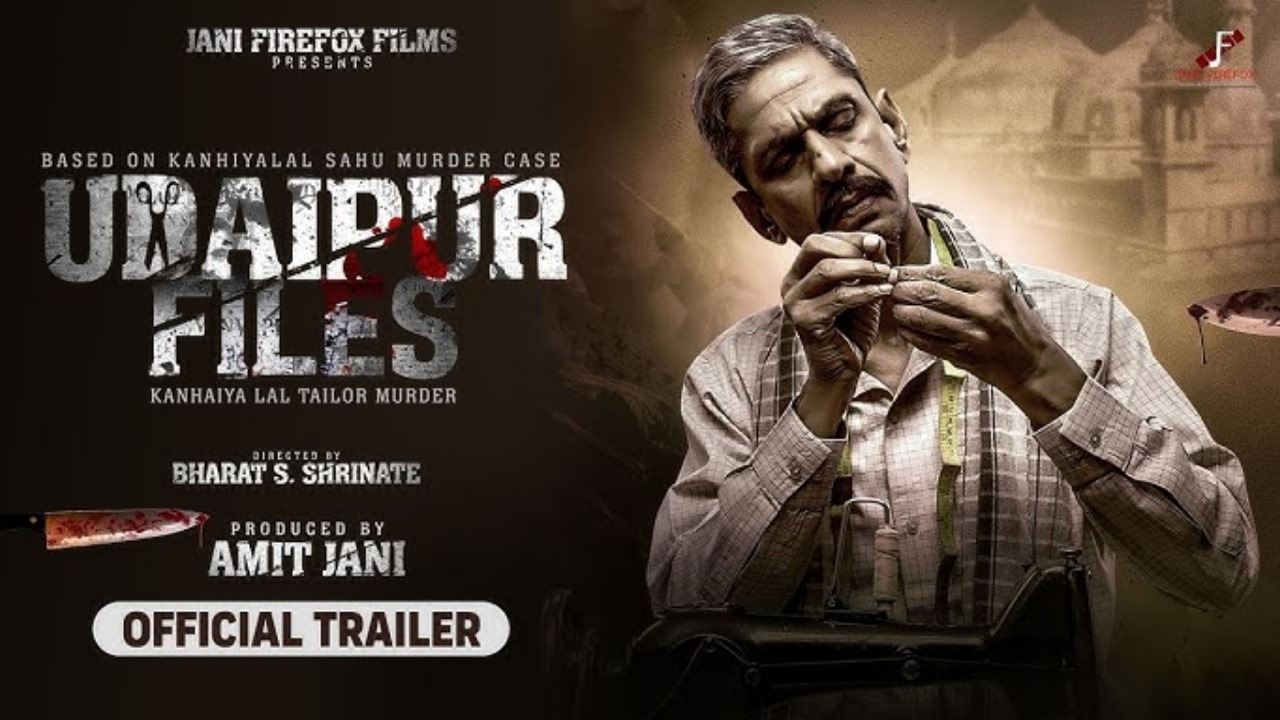


People from different walks of life, particularly Indian Muslims, have sought a ban on upcoming Bollywood film ‘Udaipur Files’ after its newly-launched trailer blatantly targeted Islam and the country’s Muslim community.
As per the details, a trailer for the film backed by Amit Jani of the ruling Bharatiya Janata Party (BJP), has not only provoked Muslims for labelling them as terrorists but also shown characters spewing hate against Islam, mosques, historical Muslim figures as well as Islamic beliefs.
The film revolves around the story of tailor Kanhaiya Lal, who was murdered in the city of Udaipur in Rajasthan. During a campaign surrounding the murder, Muslims were portrayed as terrorists and Islam was presented as the “wrong religion”.
The trailer for the film also hints at anti-Pakistan content embedded within the film directed by Bharat S Sharanate, featuring Mushtaq Khan, Ehsan Khan, Preeti Jhangyani, and Rajneesh Duggal among others.
Following the release of the trailer, several political and social leaders, including Indian social media influencers, have called the film anti-Islamic and demanded that it be banned.
"They fear that hatred and violence against Muslims could increase after the film’s release, as witnessed earlier, when Yash Raj Films’ uninspired, over-the-top, and historically inaccurate flop Chhaava, starring Vicky Kaushal, faced backlash for inciting riots in Nagpur."
The film, which portrays the life of Sambhaji Maharaj, the second ruler of the Maratha Empire, has been criticized for its comically cruel depiction of Mughal emperor Aurangzeb, leading to violent protests and riots in the city.
The trouble began when members of the right-wing organization Vishva Hindu Parishad (VHP) took to the streets, demanding the destruction of Aurangzeb’s tomb in Aurangabad.
In a dramatic display, they set fire to an effigy of the emperor while chanting slogans, which only fueled the flames of unrest. Maharashtra Deputy Chief Minister Devendra Fadnavis linked the film to the violence, stating that it had stirred anger against Aurangzeb and incited clashes in Nagpur.
“Chhaava has ignited people’s anger against Aurangzeb. Still, everyone must keep Maharashtra peaceful,” Fadnavis urged, emphasizing the need for calm amidst the chaos. He described the violence as “pre-planned” and a “conspiracy,” noting that specific homes and businesses were targeted during the riots.
The unrest resulted in widespread chaos, with vehicles torched and over a dozen people injured, including at least 15 police officers, one of whom is in critical condition. In response, an indefinite curfew has been imposed in several areas of Nagpur, including Kotwali and Ganeshpeth, to prevent further escalation.
The backlash against Chhaava isn’t new; earlier this year, fans of the film vandalized signboards in Delhi and even disrupted screenings in Gujarat. Journalist Saurabh Shukla weighed in, criticizing the film’s impact: “After watching Chhaava, people came out on the streets with sticks and rods for Aurangzeb.”
While the film’s producers have yet to comment, Chhaava continues to draw mixed reactions for its portrayal of Aurangzeb, with many accusing it of historical inaccuracies and exaggeration.
'%3e%3crect%20y='0.445312'%20width='48'%20height='48'%20rx='24'%20fill='white'%20fill-opacity='0.5'/%3e%3crect%20x='0.5'%20y='0.945312'%20width='47'%20height='47'%20rx='23.5'%20stroke='%23808080'/%3e%3cpath%20d='M34.625%2024.4453L14%2024.4453'%20stroke='%23808080'%20stroke-width='0.920053'/%3e%3cpath%20d='M23.375%2034.4453L13.375%2024.4453L23.375%2014.4453'%20stroke='%23808080'%20stroke-width='0.920053'/%3e%3c/g%3e%3cdefs%3e%3cfilter%20id='filter0_b_489_44344'%20x='-12'%20y='-11.5547'%20width='72'%20height='72'%20filterUnits='userSpaceOnUse'%20color-interpolation-filters='sRGB'%3e%3cfeFlood%20flood-opacity='0'%20result='BackgroundImageFix'/%3e%3cfeGaussianBlur%20in='BackgroundImageFix'%20stdDeviation='6'/%3e%3cfeComposite%20in2='SourceAlpha'%20operator='in'%20result='effect1_backgroundBlur_489_44344'/%3e%3cfeBlend%20mode='normal'%20in='SourceGraphic'%20in2='effect1_backgroundBlur_489_44344'%20result='shape'/%3e%3c/filter%3e%3c/defs%3e%3c/svg%3e)
'%3e%3crect%20y='0.445312'%20width='48'%20height='48'%20rx='24'%20fill='white'%20fill-opacity='0.5'/%3e%3crect%20x='0.5'%20y='0.945312'%20width='47'%20height='47'%20rx='23.5'%20stroke='%23808080'/%3e%3cpath%20d='M13.375%2024.4453L34%2024.4453'%20stroke='%23808080'%20stroke-width='0.920053'/%3e%3cpath%20d='M24.625%2014.4453L34.625%2024.4453L24.625%2034.4453'%20stroke='%23808080'%20stroke-width='0.920053'/%3e%3c/g%3e%3cdefs%3e%3cfilter%20id='filter0_b_489_44344'%20x='-12'%20y='-11.5547'%20width='72'%20height='72'%20filterUnits='userSpaceOnUse'%20color-interpolation-filters='sRGB'%3e%3cfeFlood%20flood-opacity='0'%20result='BackgroundImageFix'/%3e%3cfeGaussianBlur%20in='BackgroundImageFix'%20stdDeviation='6'/%3e%3cfeComposite%20in2='SourceAlpha'%20operator='in'%20result='effect1_backgroundBlur_489_44344'/%3e%3cfeBlend%20mode='normal'%20in='SourceGraphic'%20in2='effect1_backgroundBlur_489_44344'%20result='shape'/%3e%3c/filter%3e%3c/defs%3e%3c/svg%3e)