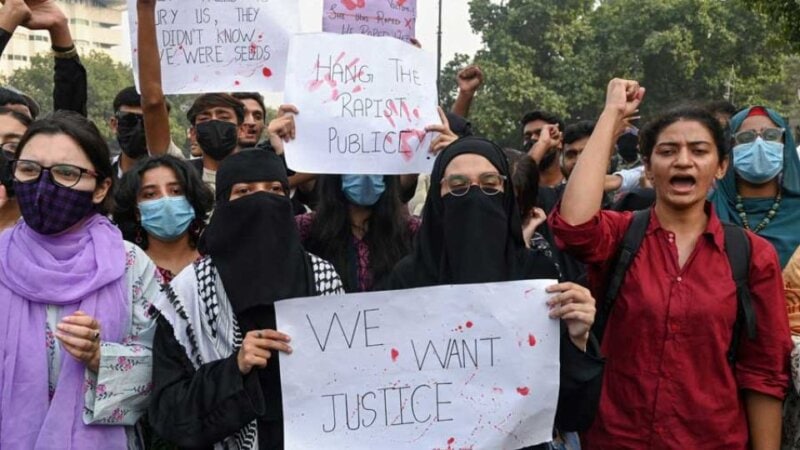
Punjab accounts for 89.7 percent of Pakistan’s registered rape cases between December 2021 and mid-2026, with gang-rape cases making up the largest share of the province’s reported offences, while convictions remained low, according to data from the Ministry of Law and Justice cited in a news report.
The four provinces registered 47,452 cases across five categories of rape-related offences during the period. The figures include single-perpetrator rape, gang rape, child rape, custodial rape and rape-and-murder cases.
Punjab recorded 29,555 gang-rape cases and 4,494 cases of rape involving a single perpetrator. Gang rape accounted for 69.4 percent of the province’s total caseload and 99.2 percent of all registered gang-rape cases nationwide.
The province registered 1,011 gang-rape cases and 15 single-perpetrator rape cases between December 4 and 31, 2021, the first four weeks covered by the data following the publication of the Anti-Rape (Investigation and Trial) Act, 2021, in the official gazette.
The ratio of gang-rape cases to single-perpetrator rape cases in Punjab stood at 16 to one in 2022 before narrowing to 3.4 to one in 2025. That year, the province recorded 6,300 gang-rape cases and 1,846 cases of single-perpetrator rape.
Child-rape cases also remained a concern. Punjab registered 8,154 such cases between 2021 and mid-2026, accounting for 19.2 percent of its total. In 2024 alone, the province recorded 1,916 cases, averaging more than five a day.
During the first half of 2026, monthly registrations of child-rape cases averaged 187, compared with 145 in 2025. Meanwhile, custodial-rape cases in Punjab reached 214 during the period under review, accounting for 99.5 percent of the national total in that category. The province recorded 36 such cases in the first half of 2026, compared with 39 in all of 2025.
Despite the number of cases registered, the data showed a gap between arrests and convictions. Police arrested 57,159 accused individuals, representing 91 percent of those recorded in the dataset. However, authorities cancelled 9,155 cases, including 6,995 gang-rape cases.
Courts convicted 639 accused individuals across all categories and acquitted 12,741 in Punjab. In gang-rape cases, acquittals outnumbered convictions by 26 to one. The province also recorded 151 rape-and-murder cases, with 13 convictions, 43 acquittals and 83 cases pending.
It has now been nearly five years since Pakistan enacted the Anti-Rape Act in December 2021. The law established a framework for specialised courts, trained investigators, crisis cells and a national sex-offender register, with the aim of speeding up investigations and trials.
The data showed different patterns across the other provinces. Khyber Pakhtunkhwa (KP) registered 3,197 cases, including 1,907 involving child victims. Of the province’s total, 2,639 cases remained under trial, including 1,807 child-rape cases.
KP recorded no child-rape convictions between 2022 and May 2026 despite registering 1,637 cases in that category.
Sindh registered 1,510 cases, with single-perpetrator rape accounting for 64.9 percent of the total. The province sent 65.8 percent of registered cases to court, while 295 cases remained neither cancelled nor sent for trial. Its records listed 1,073 accused in custody and 988 at large.
Balochistan registered 177 cases between 2021 and mid-2026, including 94 single-perpetrator rape cases and 80 child-rape cases. The province recorded 23 convictions and 90 acquittals, while 48 cases remained pending.
Under the Anti-Rape Act, the process begins with a complaint and the registration of a FIR [First Information Report], followed by medico-legal evidence collection and an investigation by trained officers in Special Sexual Offenses Investigation Units.
Police then submit a challan, cancel the case or classify it as untraced. Special prosecutors take cases to dedicated courts, which decide whether to convict or acquit the accused.