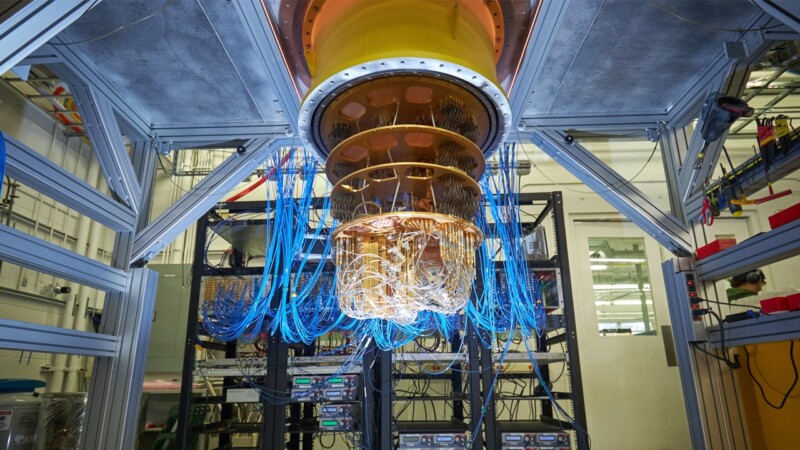
In a world where technology moves faster than ever, a new kind of computer is making headlines, the quantum computer. Unlike the computers used every day, this one works with the strange rules of quantum physics. It’s not just faster; it thinks differently. From solving impossible problems to reshaping the future of medicine, finance, and even cybersecurity, quantum computing is changing what’s possible.
This article breaks down how it works, why it matters, and what it means for everything from Bitcoin to stock investments, explained in the simplest way possible.
What Is a Quantum Computer?
A quantum computer is a new type of computer that uses the laws of quantum mechanics. Unlike regular computers that use bits (0 or 1), a quantum computer uses quantum bits, or qubits, which can be both 0 and 1 at the same time. This allows it to process information in a totally different and powerful way.
How Does Quantum Computing Work?
To understand how a quantum computer works, picture a coin spinning in the air. While spinning, it is not just heads or tails but a mix of both. That’s similar to superposition in quantum computing. Now imagine two coins spinning together and always landing in sync, even if they are far apart. This is called entanglement.
These ideas, superposition and entanglement, let a quantum computer work on many calculations at once, giving it an edge over today’s best classical computers.
Why Quantum Computers Are a Big Deal
Quantum computers could solve problems that regular computers can’t touch. For example:
-
Discovering new medicines faster
-
Making financial predictions more accurate
-
Designing materials for clean energy
-
Breaking or creating next-generation encryption
These breakthroughs could change industries, including healthcare, finance, and cybersecurity.
Quantum Computing Applications in Real Life
Even though quantum computers are still being developed, many companies and scientists are already testing them in real situations:
-
Drug Discovery: Quantum computers can simulate molecules to help find better drugs more quickly.
-
Financial Modeling: Big banks are exploring quantum computing to forecast markets and reduce risk.
-
AI and Machine Learning: Algorithms can be made faster and smarter using quantum technology.
-
Climate Modeling: Simulating weather and climate patterns more precisely could help fight climate change.
Types of Quantum Computers You Should Know
There’s more than one way to build a quantum computer. Here are the main types:
-
Superconducting Quantum Computers: These use very cold temperatures and are built by companies like IBM and Google.
-
Trapped Ion Quantum Computers: They use tiny charged particles held by lasers. IonQ is a leader in this area.
-
Photonic Quantum Computers: These use light particles and can work at room temperature.
-
Neutral Atom Quantum Computers: Atoms are arranged using laser beams, a method gaining popularity.
-
Topological Quantum Computers: These are still experimental but promise to be more stable.
Challenges in Quantum Computing
As exciting as the technology is, building a quantum computer isn’t easy:
-
Noise and Errors: Today’s quantum computers are noisy and make mistakes. That’s why we’re still in the NISQ (Noisy Intermediate-Scale Quantum) phase.
-
Decoherence: Qubits lose their special quantum state very quickly.
-
Scalability: We need millions of qubits to solve big problems, but building them is tough.
-
Error Correction: Engineers are working on ways to correct these errors automatically.
Despite these hurdles, progress is happening fast, with both startups and tech giants investing heavily.
Quantum Computing and Bitcoin Security
A hot topic today is the impact of quantum computers on Bitcoin. Traditional Bitcoin wallets use encryption that could eventually be broken by a powerful quantum computer. This has raised concerns about Bitcoin quantum computing security.
The good news is that crypto experts are already developing quantum-resistant algorithms. These are encryption methods that even a quantum computer will find hard to crack. So, while quantum computing does pose a threat, solutions are already in the works.
Investing in Quantum Computing Stocks
For those looking to invest in the future, quantum computing stocks are gaining attention. Companies like IBM, Google, Intel, Rigetti, and D-Wave are developing this tech. Startups like IonQ and PsiQuantum are also on the rise.
Even big tech investors are exploring ETFs that include multiple quantum-related companies. These stocks are risky but offer long-term growth potential.
Before investing, always research the company’s tech, partnerships, and progress.
How the USA Is Leading in Quantum Technology
The U.S. government and private sector are taking quantum computing seriously. Billions of dollars are being invested into research and startups. Agencies like NASA and the Department of Energy are already testing quantum algorithms.
Programs like the National Quantum Initiative are helping American companies and universities stay ahead in this global race.
Future Outlook: What’s Next for Quantum Computers?
In the next 5 to 10 years, quantum computers may not replace regular computers, but they will work alongside them to solve very specific problems.
When full-scale, fault-tolerant quantum computers arrive, expect major changes in:
-
Drug development and healthcare
-
Cybersecurity and privacy
-
Logistics and supply chain
-
Scientific research and space exploration
Quantum computing will likely become as common as AI is today.
Final Thoughts: Why You Should Care About Quantum Computing
Quantum computers aren’t just a cool science idea, they are tools that may soon touch everyday life. From securing your online data to discovering new cures, the possibilities are endless.
Whether you’re an investor, student, or just curious, understanding the basics of a quantum computer will help you prepare for the future.
So next time you hear someone ask, “How does quantum computing work?”, you’ll have more than just an answer, you’ll have insight. To learn more, read how the FBI and Dutch police dismantled a major Pakistani cybercrime network.