


Pakistan raised petrol and high-speed diesel prices by an unprecedented Rs55 per litre on Friday, citing pressure on global oil markets following the war involving Iran, the United States (US) and Israel. The increase came hours after Prime Minister Shehbaz Sharif and Finance Minister Muhammad Aurangzeb said that petroleum reserves were sufficient and the situation remained under control.
Petroleum Minister Ali Pervaiz Malik announced the increase at a press conference alongside Deputy Prime Minister and Foreign Minister Ishaq Dar and Finance Minister Muhammad Aurangzeb. Dar said that the revised prices would take effect from Saturday.
Under the revision, the ex-depot price of petrol has been increased to Rs321.17 per litre from Rs266.17, while high-speed diesel has been set at Rs335.86 per litre, up from Rs280.86.
The government also adjusted the petroleum development levy. The levy on petrol was increased by Rs20 to about Rs105 per litre, while the levy on high-speed diesel was reduced from Rs77 to Rs57 per litre.
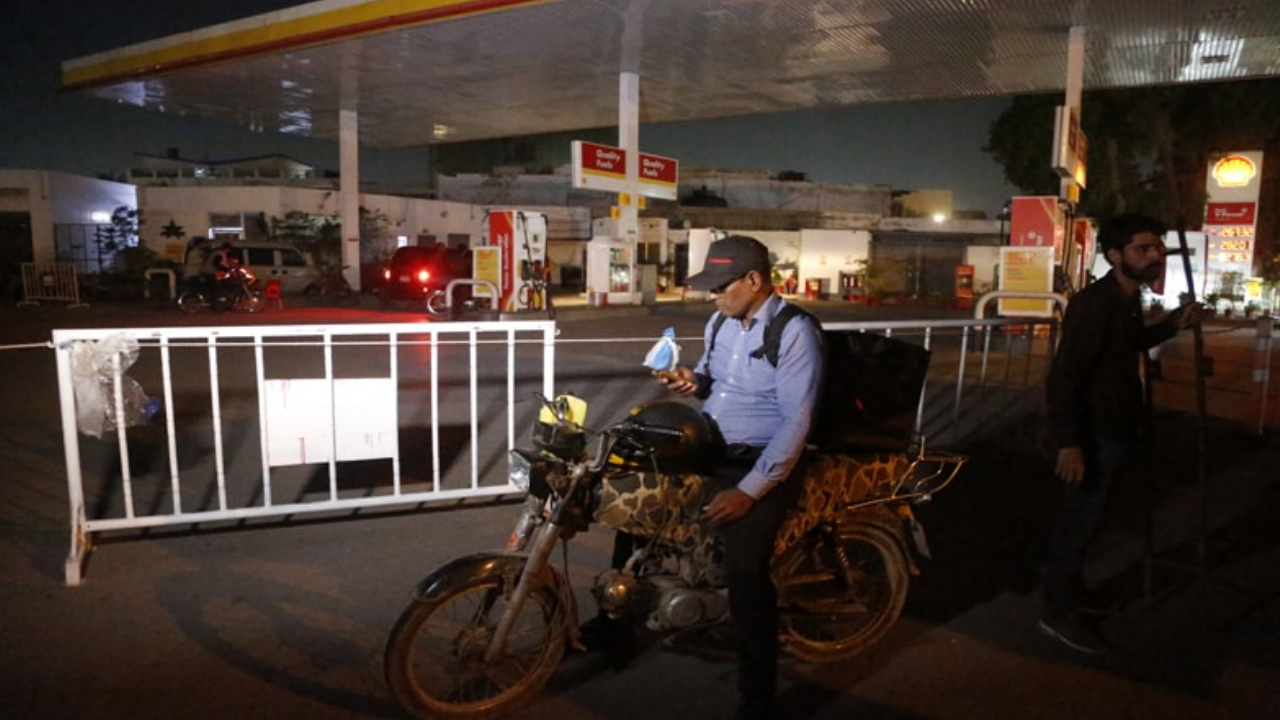
Before the new prices took effect, long queues formed at petrol pumps across several cities as motorists rushed to buy fuel at the previous rates. According to the reports from different parts of the country, some fuel stations stopped sales before midnight.
The announcement triggered heated reactions online, with users questioning the decision.
“When there was a stockpile for 28 days, they would give it to the poor public at the old rate; perhaps Allah Almighty would have improved the situation,” one user wrote. Another user said that the government had added pressure on citizens. “Instead of reducing taxes, they’ve placed even more burden on the public.”
At the press conference, Malik said that the regional conflict had created uncertainty in energy markets.
“The fire that started in a neighbouring country has spread across the entire region. We do not know how long this crisis will continue, and there is no clear timeline for its end,” he said.
He said that Pakistan depended on oil shipments passing through the Strait of Hormuz, which had been affected by the conflict. Malik said two vessels of the Pakistan National Shipping Corporation were travelling through Yanbu and Fujairah to maintain supplies.
According to the reports, US crude oil futures climbed more than 12 percent on Friday to above $90 per barrel, while Brent crude rose about eight percent to $92 per barrel.
Malik said that the government would review petroleum prices on a weekly basis as changes in the international market turn volatile.
“As soon as the situation improves internationally, we will reduce prices at the same speed,” he promised.
Dar said that global oil prices had increased by 50 to 70 percent during the crisis.
“In many countries, prices increase automatically, but we tried to pass on the minimum possible impact to consumers and find a balanced solution,” he said.
Despite the explanation from officials, criticism continued online.
“Remember that time? When petrol at 150 rupees crashed down on the country like ‘Doomsday’? Today petrol is 321 rupees, but there is silence,” one user wrote.
Another reaction said: “Instead of increasing petroleum products by 55 rupees, if the government were to add 2 rupees to its own dignity, it would have been better.”
One user wrote: “Shame on all those who are oppressing the poor masses while the entire elite band together to take all the free petrol.”
Another reaction questioned the policy response, saying: “If fuel prices increased in Pakistan due to war, then why didn’t they increase in India? If India buys from Russia, why can’t Pakistan?”
Earlier in the day, the government decided to defer a national action plan that included work-from-home arrangements and distance learning to conserve fuel.
A meeting on petroleum product reserves chaired by Prime Minister Shehbaz Sharif decided the measures would not be implemented for at least a week as current petroleum reserves were sufficient to meet demand.
Separately, the Punjab government directed deputy commissioners across the province to launch a crackdown against the hoarding of petroleum products following instructions from the federal government.
'%3e%3crect%20y='0.445312'%20width='48'%20height='48'%20rx='24'%20fill='white'%20fill-opacity='0.5'/%3e%3crect%20x='0.5'%20y='0.945312'%20width='47'%20height='47'%20rx='23.5'%20stroke='%23808080'/%3e%3cpath%20d='M34.625%2024.4453L14%2024.4453'%20stroke='%23808080'%20stroke-width='0.920053'/%3e%3cpath%20d='M23.375%2034.4453L13.375%2024.4453L23.375%2014.4453'%20stroke='%23808080'%20stroke-width='0.920053'/%3e%3c/g%3e%3cdefs%3e%3cfilter%20id='filter0_b_489_44344'%20x='-12'%20y='-11.5547'%20width='72'%20height='72'%20filterUnits='userSpaceOnUse'%20color-interpolation-filters='sRGB'%3e%3cfeFlood%20flood-opacity='0'%20result='BackgroundImageFix'/%3e%3cfeGaussianBlur%20in='BackgroundImageFix'%20stdDeviation='6'/%3e%3cfeComposite%20in2='SourceAlpha'%20operator='in'%20result='effect1_backgroundBlur_489_44344'/%3e%3cfeBlend%20mode='normal'%20in='SourceGraphic'%20in2='effect1_backgroundBlur_489_44344'%20result='shape'/%3e%3c/filter%3e%3c/defs%3e%3c/svg%3e)
'%3e%3crect%20y='0.445312'%20width='48'%20height='48'%20rx='24'%20fill='white'%20fill-opacity='0.5'/%3e%3crect%20x='0.5'%20y='0.945312'%20width='47'%20height='47'%20rx='23.5'%20stroke='%23808080'/%3e%3cpath%20d='M13.375%2024.4453L34%2024.4453'%20stroke='%23808080'%20stroke-width='0.920053'/%3e%3cpath%20d='M24.625%2014.4453L34.625%2024.4453L24.625%2034.4453'%20stroke='%23808080'%20stroke-width='0.920053'/%3e%3c/g%3e%3cdefs%3e%3cfilter%20id='filter0_b_489_44344'%20x='-12'%20y='-11.5547'%20width='72'%20height='72'%20filterUnits='userSpaceOnUse'%20color-interpolation-filters='sRGB'%3e%3cfeFlood%20flood-opacity='0'%20result='BackgroundImageFix'/%3e%3cfeGaussianBlur%20in='BackgroundImageFix'%20stdDeviation='6'/%3e%3cfeComposite%20in2='SourceAlpha'%20operator='in'%20result='effect1_backgroundBlur_489_44344'/%3e%3cfeBlend%20mode='normal'%20in='SourceGraphic'%20in2='effect1_backgroundBlur_489_44344'%20result='shape'/%3e%3c/filter%3e%3c/defs%3e%3c/svg%3e)