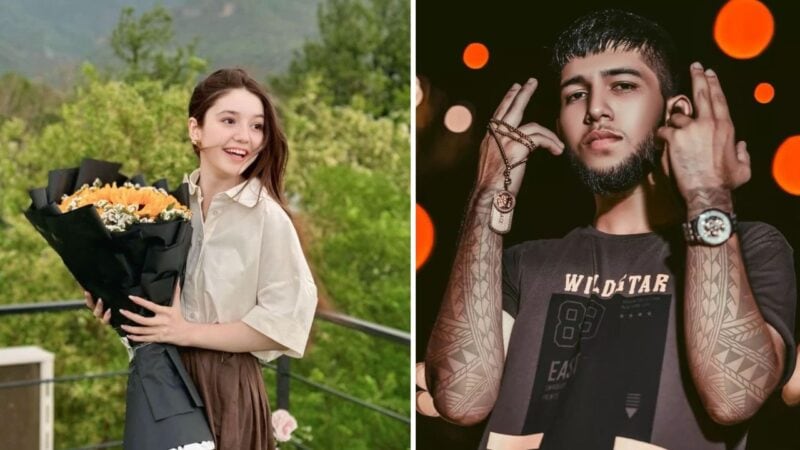
The prime suspect in the murder of social media influencer Sana Yousaf retracted an earlier confession before an Islamabad court on Monday, describing the killing as a “blind murder” and rejecting all charges against him.
Umar Hayat, 22, also known by his nickname “Kaka”, recorded his statement under Section 342 before trial court Judge Afzal Majoka. He denied any connection to the incident, stating that he had never visited Yousaf’s residence and had no contact or dispute with her.
Sana Yousaf was a 17-year-old TikToker with more than a million followers across platforms. She was shot twice inside her home in Sector G-13/1, Islamabad on June 2, 2025.
Hayat, also a TikToker, had previously confessed to the killing and claimed to be the victim’s friend.
At the previous hearing on Friday, Investigation Officer Fakhar Abbas told the district and sessions court that Hayat had confessed to the murder before a magistrate and helped police recover key evidence linked to the case.
However, Hayat on Monday told a very different story. He alleged that Yousaf’s followers pressured police on social media, leading to his false implication in the case. He further claimed that police influenced his family by insisting he was the culprit.
He also challenged the integrity of the investigation, saying that CCTV footage and witnesses were not properly produced before the court, alleging that police implicated him under pressure and that no witness was produced on taking Yousaf to hospital after the shooting.
Hayat claimed that he was denied proper legal representation during parts of the investigation and that his statements were recorded without his lawyers present. He rejected allegations of mobile phone theft and other related charges, and emphasised that he had no confidence in the court or the state counsel.
He told the court he was in Faisalabad at the time of the incident and that he was arrested on mere suspicion because both he and the victim were known TikTok personalities. He described the case as planted and questioned the credibility of the identification parade, alleging he was forced to wear different clothes while all other participants were treated uniformly.
Hayat also alleged that police took his thumb impression on a blank paper at the police station under coercion, and that he had no knowledge of what was written on it. He disputed forensic and location evidence presented against him, calling it inaccurate and inconsistent with the timeline of events.
During the proceedings, the defence counsel repeatedly insisted that each submission should conclude by declaring the case false and fabricated. The judge intervened and remarked that the court should not be dictated to in that manner.
The hearing was adjourned till Tuesday.