
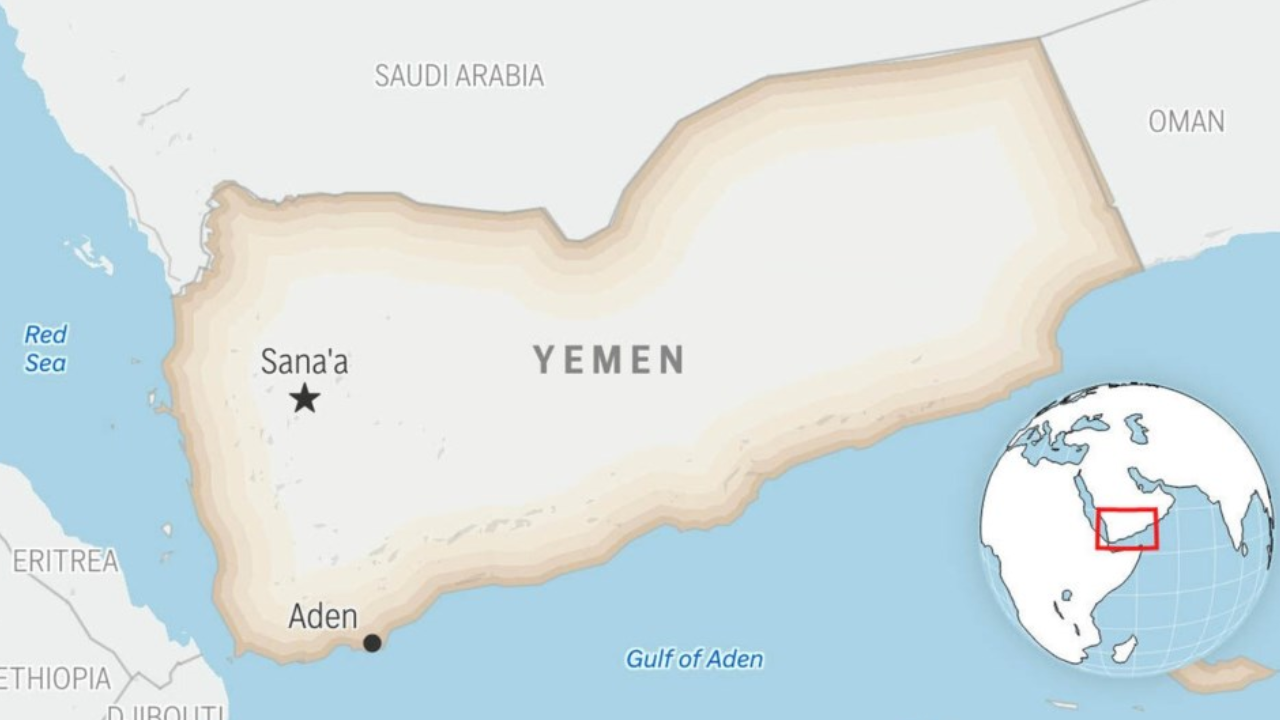


Saudi Arabia carried out airstrikes on Yemen’s port city of Mukalla on Tuesday, saying the attack targeted a shipment of weapons delivered to separatist forces backed by the United Arab Emirates. The UAE did not immediately comment on the strike.
The attacks were initiated when ships arriving from Fujairah, a port city on the eastern coast of the United Arab Emirates, unloaded weaponry and military equipment meant for the Southern Transitional Council, according to a military statement issued by Riyadh and reported by the state-run Saudi Press Agency.
According to the statement, "the ships' crew had disabled the tracking devices aboard the vessels and unloaded a large amount of weapons and combat vehicles in support of the Southern Transitional Council's forces."
Saudi forces viewed the package as an immediate threat, it further stated. "The Coalition Air Force carried out a limited airstrike this morning that targeted weapons and military vehicles offloaded from the two vessels in Mukalla, given that the aforementioned weapons constitute an imminent threat and an escalation that threatens peace and stability."
The operation was carried out overnight, according to the Saudi military, to make sure that "no collateral damage occurred." Whether any other coalition members participated in the strikes was not stated. There was no immediate information on casualties.
A request for comment was not answered by the UAE. The strikes were acknowledged by the Southern Transitional Council's AIC satellite channel, but no other information was given.
The attack highlights growing tensions between Saudi Arabia and the UAE-backed separatist forces in southern Yemen, despite both countries being part of the coalition fighting the Iran-aligned Houthi movement. Analysts say the strike also reflects strain between Riyadh and Abu Dhabi, which have supported rival groups in Yemen’s conflict.
The ship arrived in Mukalla on Sunday after being registered in Fujairah on December 22. It was not immediately possible to identify the second vessel.
The Basha Report's creator and Yemen expert Mohammed al-Basha referenced social media videos that seemed to show armored vehicles passing through Mukalla after the ship arrived. The ship’s owners, who are based in Dubai, could not be reached for comment.
“I expect a calibrated escalation from both sides,” al-Basha said. “The UAE-backed Southern Transitional Council is likely to respond by consolidating control. At the same time, the flow of weapons from the UAE to the STC is set to be curtailed following the port attack, particularly as Saudi Arabia controls the airspace.”
Saudi state television later aired footage said to be recorded by a surveillance aircraft. The video appeared to show armored vehicles moving through Mukalla toward a staging area. Analysts said the vehicles shown matched those seen in the social media clips.
Mukalla is situated in the Hadramout province of Yemen, approximately 480 kilometers northeast of Aden. Since the Houthis took control of Sanaa in 2014, anti-Houthi authorities have made Mukalla their base. Parts of Hadramout have recently come under the hands of the Southern Transitional Council.
The strike followed Saudi airstrikes carried out on Friday against Council positions, which analysts described as a warning aimed at halting the group’s expansion in Hadramout and the neighbouring Mahra governorate.
Forces aligned with the Council have displaced units affiliated with the Saudi-backed National Shield Forces in those areas.
Supporters of the Council have increasingly displayed the flag of South Yemen, which existed as a separate state between 1967 and 1990. Demonstrations have been held in recent days in support of renewed calls for southern secession.
The developments come amid wider regional tensions. Saudi Arabia and the UAE, while close allies and members of OPEC, have competed for influence and economic standing in recent years. Both countries are also backing opposing sides in Sudan’s ongoing conflict.
'%3e%3crect%20y='0.445312'%20width='48'%20height='48'%20rx='24'%20fill='white'%20fill-opacity='0.5'/%3e%3crect%20x='0.5'%20y='0.945312'%20width='47'%20height='47'%20rx='23.5'%20stroke='%23808080'/%3e%3cpath%20d='M34.625%2024.4453L14%2024.4453'%20stroke='%23808080'%20stroke-width='0.920053'/%3e%3cpath%20d='M23.375%2034.4453L13.375%2024.4453L23.375%2014.4453'%20stroke='%23808080'%20stroke-width='0.920053'/%3e%3c/g%3e%3cdefs%3e%3cfilter%20id='filter0_b_489_44344'%20x='-12'%20y='-11.5547'%20width='72'%20height='72'%20filterUnits='userSpaceOnUse'%20color-interpolation-filters='sRGB'%3e%3cfeFlood%20flood-opacity='0'%20result='BackgroundImageFix'/%3e%3cfeGaussianBlur%20in='BackgroundImageFix'%20stdDeviation='6'/%3e%3cfeComposite%20in2='SourceAlpha'%20operator='in'%20result='effect1_backgroundBlur_489_44344'/%3e%3cfeBlend%20mode='normal'%20in='SourceGraphic'%20in2='effect1_backgroundBlur_489_44344'%20result='shape'/%3e%3c/filter%3e%3c/defs%3e%3c/svg%3e)
'%3e%3crect%20y='0.445312'%20width='48'%20height='48'%20rx='24'%20fill='white'%20fill-opacity='0.5'/%3e%3crect%20x='0.5'%20y='0.945312'%20width='47'%20height='47'%20rx='23.5'%20stroke='%23808080'/%3e%3cpath%20d='M13.375%2024.4453L34%2024.4453'%20stroke='%23808080'%20stroke-width='0.920053'/%3e%3cpath%20d='M24.625%2014.4453L34.625%2024.4453L24.625%2034.4453'%20stroke='%23808080'%20stroke-width='0.920053'/%3e%3c/g%3e%3cdefs%3e%3cfilter%20id='filter0_b_489_44344'%20x='-12'%20y='-11.5547'%20width='72'%20height='72'%20filterUnits='userSpaceOnUse'%20color-interpolation-filters='sRGB'%3e%3cfeFlood%20flood-opacity='0'%20result='BackgroundImageFix'/%3e%3cfeGaussianBlur%20in='BackgroundImageFix'%20stdDeviation='6'/%3e%3cfeComposite%20in2='SourceAlpha'%20operator='in'%20result='effect1_backgroundBlur_489_44344'/%3e%3cfeBlend%20mode='normal'%20in='SourceGraphic'%20in2='effect1_backgroundBlur_489_44344'%20result='shape'/%3e%3c/filter%3e%3c/defs%3e%3c/svg%3e)