
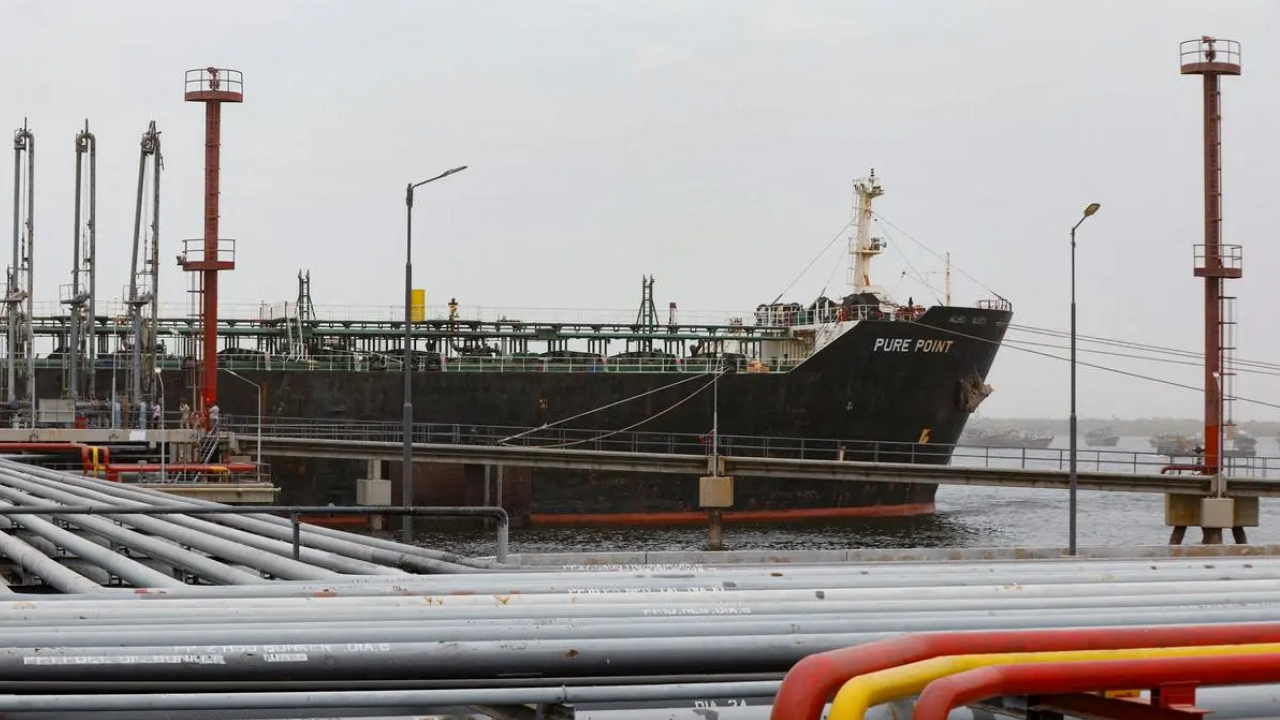


As part of strategic recalibration of Pakistan’s energy landscape, the country has received its second shipment of United States (US) crude oil, signalling a pivotal shift in the quest for energy security and economic efficiency, The News reported.
According to reports, MT Albany tanker, laden with one million barrels of premium West Texas Intermediate (WTI) crude, successfully berthed at Cnergyico's offshore Single Point Mooring (SPM) terminal near Hub in Balochistan on Nov 10.
While the delivery is not an isolated and is part of a carefully structured energy corridor between the two countries, it follows the landmark shipment in October.
A third cargo is scheduled for January 2026, all of which represent a strategic investment of over $200 million, moving Pakistan beyond its traditional reliance on Middle Eastern suppliers like Saudi Arabia and the United Arab Emirates (UAE).
The feasibility of this transcontinental energy trade hinges on a critical piece of infrastructure: Cnergyico's deep-water SPM terminal. Unlike the shallow ports of Karachi, which are limited to smaller vessels, this terminal can accommodate massive Aframax and Suezmax tankers.
This capability is a game-changer for vessel economics, as importing larger cargoes significantly reduces the per-barrel freight cost, making long-haul shipments financially viable.
The economic calculus is further strengthened by the specific qualities of WTI crude. As a light, sweet crude, it is not only easier and cheaper to refine into high-value products like gasoline and diesel but also produces lower emissions. Crucially, WTI frequently trades at a discount to the Dubai/Oman benchmark, which is used to price Middle Eastern crude.
This price differential often offsets the higher transportation costs from the US Gulf Coast, making the landed cost of American oil highly competitive. Cnergyico's strategy to process exclusively low-sulfur crudes like WTI and Nigeria's Bonny Light through this period underscores a dual focus on economic optimisation and environmental performance.
It merits a mention that Pakistan and the US signed a trade and energy partnership agreement in July 2025, which included cooperation on developing Pakistan’s oil reserves and reducing tariffs for certain Pakistani exports.
While Pakistan started importing US-origin crude oil under the same deal, the agreement was hailed by both sides as a strategic re-engagement. Critics, however, raise concerns over the feasibility of discovering massive oil reserves and potential geopolitical implications.
'%3e%3crect%20y='0.445312'%20width='48'%20height='48'%20rx='24'%20fill='white'%20fill-opacity='0.5'/%3e%3crect%20x='0.5'%20y='0.945312'%20width='47'%20height='47'%20rx='23.5'%20stroke='%23808080'/%3e%3cpath%20d='M34.625%2024.4453L14%2024.4453'%20stroke='%23808080'%20stroke-width='0.920053'/%3e%3cpath%20d='M23.375%2034.4453L13.375%2024.4453L23.375%2014.4453'%20stroke='%23808080'%20stroke-width='0.920053'/%3e%3c/g%3e%3cdefs%3e%3cfilter%20id='filter0_b_489_44344'%20x='-12'%20y='-11.5547'%20width='72'%20height='72'%20filterUnits='userSpaceOnUse'%20color-interpolation-filters='sRGB'%3e%3cfeFlood%20flood-opacity='0'%20result='BackgroundImageFix'/%3e%3cfeGaussianBlur%20in='BackgroundImageFix'%20stdDeviation='6'/%3e%3cfeComposite%20in2='SourceAlpha'%20operator='in'%20result='effect1_backgroundBlur_489_44344'/%3e%3cfeBlend%20mode='normal'%20in='SourceGraphic'%20in2='effect1_backgroundBlur_489_44344'%20result='shape'/%3e%3c/filter%3e%3c/defs%3e%3c/svg%3e)
'%3e%3crect%20y='0.445312'%20width='48'%20height='48'%20rx='24'%20fill='white'%20fill-opacity='0.5'/%3e%3crect%20x='0.5'%20y='0.945312'%20width='47'%20height='47'%20rx='23.5'%20stroke='%23808080'/%3e%3cpath%20d='M13.375%2024.4453L34%2024.4453'%20stroke='%23808080'%20stroke-width='0.920053'/%3e%3cpath%20d='M24.625%2014.4453L34.625%2024.4453L24.625%2034.4453'%20stroke='%23808080'%20stroke-width='0.920053'/%3e%3c/g%3e%3cdefs%3e%3cfilter%20id='filter0_b_489_44344'%20x='-12'%20y='-11.5547'%20width='72'%20height='72'%20filterUnits='userSpaceOnUse'%20color-interpolation-filters='sRGB'%3e%3cfeFlood%20flood-opacity='0'%20result='BackgroundImageFix'/%3e%3cfeGaussianBlur%20in='BackgroundImageFix'%20stdDeviation='6'/%3e%3cfeComposite%20in2='SourceAlpha'%20operator='in'%20result='effect1_backgroundBlur_489_44344'/%3e%3cfeBlend%20mode='normal'%20in='SourceGraphic'%20in2='effect1_backgroundBlur_489_44344'%20result='shape'/%3e%3c/filter%3e%3c/defs%3e%3c/svg%3e)