
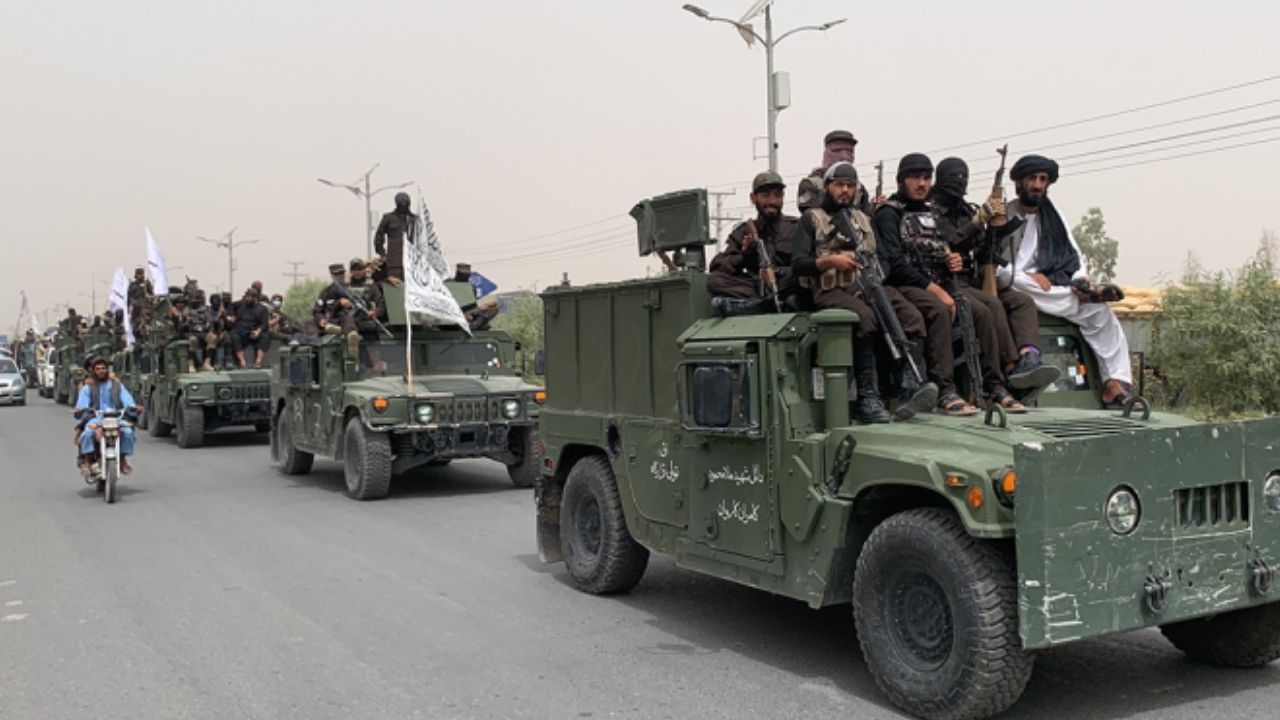


A United Nations Security Council (UNSC) monitoring report has rejected the Taliban’s claim that Afghan territory is not being used by militant groups for cross-border attacks, calling the assertion “not credible” and warning that neighbouring countries increasingly see Afghanistan as a source of regional insecurity.
The assessment appears in the 16th report from the Analytical Support and Sanctions Monitoring Team, presented to the UNSC, over four years after the Taliban assumed control in August 2021.
The report states that despite repeated denials by the de facto Afghan authorities, multiple terrorist organisations continue to operate from Afghan soil.
“The de facto authorities continue to deny that any terrorist groups have a footprint in or operate from its territory. That claim is not credible,” the report said, directly contradicting Taliban statements made under the 2020 Doha Agreement, in which they pledged not to allow Afghan soil to be used to threaten other states.
According to the UN assessment, member states consistently report the presence of Islamic State-Khorasan Province (ISIL-K), Tehreek-i-Taliban Pakistan (TTP), Al Qaeda, the Eastern Turkistan Islamic Movement (ETIM/TIP), Jamaat Ansarullah and Ittihadul Mujahideen Pakistan among other militant groups inside Afghanistan.
Some of these groups, the report warned, continue to use Afghan territory to plan and prepare attacks beyond its borders.
Although the Taliban have aggressively targeted ISIL-K, described as their main rival, the UN noted a clear difference in how they handle other groups. ISIL-K’s territorial control has been degraded, but the group remains resilient, continuing to carry out attacks inside Afghanistan and abroad.
By comparison, Al Qaeda is assessed to maintain close ties with the Taliban, operating quietly across several provinces in what the UN called a “permissive environment” that allows training and reorganisation.
The report highlighted that the TTP represents the most pressing and immediate risk to regional stability. It characterised the group as operating from Afghan safe havens, receiving backing from segments within the Taliban.
“Taliban authorities continue to deny and deflect responsibility for failing to restrain TTP,” the report said, adding that sympathy and allegiance toward the group exist within Taliban ranks.
While some senior Taliban figures reportedly see TTP as a liability that strains relations with Pakistan, others remain openly supportive. Given the historical ties between the two groups, the report concluded that the Taliban are unlikely to act decisively against TTP, even under sustained pressure from Islamabad, and may lack the capacity to do so even if they wished.
According to the UN, TTP has executed “numerous high-profile attacks in Pakistan from Afghan soil”, marking it as the most destabilising element in Pak-Afghanistan relations.
The frequency of these attacks has gradually risen throughout 2025, with estimates indicating over 600 incidents this year.
Many of these attacks have been described as complex and coordinated, featuring vehicle-borne improvised explosive devices and teams of suicide bombers conducting operations on foot.
Alarmingly, the report noted that the majority of suicide attackers involved in Pakistan were reported to be Afghan nationals.
The UN estimates that approximately 6,000 TTP fighters are currently located in Afghanistan, predominantly in Khost, Kunar, Nangarhar, Paktika and Paktia, while the group’s leader, Noor Wali Mehsud, is allegedly residing in Kabul.
One unnamed member state asserted that Mehsud's family receives a monthly stipend of three million Afghanis (approximately $43,000) from the Taliban.
The ongoing dispute over TTP’s presence has significantly compromised relations between Kabul and Islamabad, leading to cross-border military confrontations, casualties and recurrent interruptions in trade. The report estimated that the closure of border crossings with Pakistan is costing the Afghan economy around $1 million each day.
Despite the wider militant footprint, the report acknowledged counterterrorism gains by Pakistan, including the arrest of ISIL-K spokesperson Sultan Aziz Azam on May 16. It also cited the mid-2025 arrest of Ozgur Altun, also known as Abu Yasir al-Turki, by Turkish and Pakistani authorities as a key factor behind the suspension of ISIL-K’s media outlet Voice of Khorasan.
'%3e%3crect%20y='0.445312'%20width='48'%20height='48'%20rx='24'%20fill='white'%20fill-opacity='0.5'/%3e%3crect%20x='0.5'%20y='0.945312'%20width='47'%20height='47'%20rx='23.5'%20stroke='%23808080'/%3e%3cpath%20d='M34.625%2024.4453L14%2024.4453'%20stroke='%23808080'%20stroke-width='0.920053'/%3e%3cpath%20d='M23.375%2034.4453L13.375%2024.4453L23.375%2014.4453'%20stroke='%23808080'%20stroke-width='0.920053'/%3e%3c/g%3e%3cdefs%3e%3cfilter%20id='filter0_b_489_44344'%20x='-12'%20y='-11.5547'%20width='72'%20height='72'%20filterUnits='userSpaceOnUse'%20color-interpolation-filters='sRGB'%3e%3cfeFlood%20flood-opacity='0'%20result='BackgroundImageFix'/%3e%3cfeGaussianBlur%20in='BackgroundImageFix'%20stdDeviation='6'/%3e%3cfeComposite%20in2='SourceAlpha'%20operator='in'%20result='effect1_backgroundBlur_489_44344'/%3e%3cfeBlend%20mode='normal'%20in='SourceGraphic'%20in2='effect1_backgroundBlur_489_44344'%20result='shape'/%3e%3c/filter%3e%3c/defs%3e%3c/svg%3e)
'%3e%3crect%20y='0.445312'%20width='48'%20height='48'%20rx='24'%20fill='white'%20fill-opacity='0.5'/%3e%3crect%20x='0.5'%20y='0.945312'%20width='47'%20height='47'%20rx='23.5'%20stroke='%23808080'/%3e%3cpath%20d='M13.375%2024.4453L34%2024.4453'%20stroke='%23808080'%20stroke-width='0.920053'/%3e%3cpath%20d='M24.625%2014.4453L34.625%2024.4453L24.625%2034.4453'%20stroke='%23808080'%20stroke-width='0.920053'/%3e%3c/g%3e%3cdefs%3e%3cfilter%20id='filter0_b_489_44344'%20x='-12'%20y='-11.5547'%20width='72'%20height='72'%20filterUnits='userSpaceOnUse'%20color-interpolation-filters='sRGB'%3e%3cfeFlood%20flood-opacity='0'%20result='BackgroundImageFix'/%3e%3cfeGaussianBlur%20in='BackgroundImageFix'%20stdDeviation='6'/%3e%3cfeComposite%20in2='SourceAlpha'%20operator='in'%20result='effect1_backgroundBlur_489_44344'/%3e%3cfeBlend%20mode='normal'%20in='SourceGraphic'%20in2='effect1_backgroundBlur_489_44344'%20result='shape'/%3e%3c/filter%3e%3c/defs%3e%3c/svg%3e)