The Senate Standing Committee on Climate Change has strongly condemned the federal government’s decision to slash the climate ministry’s development budget by approximately Rs 1 billion, warning that the reduction exposes the country to severe ecological vulnerabilities.
The committee’s chairperson Senator Sherry Rehman termed the funding cuts “shocking”, pointing out that the Public Sector Development Programme (PSDP) allocation for the Climate Change Division has plummeted to a mere Rs 2.478 billion for the fiscal year 2026–27, down from Rs 3.5 billion in the previous cycle.
Rehman emphasised that the continuous reduction in fiscal commitments flies in the face of reality, as the country is actively trapped in a growing “climate polycrisis” characterised by intensified heatwaves, rapid glacial melt, and acute water scarcity.
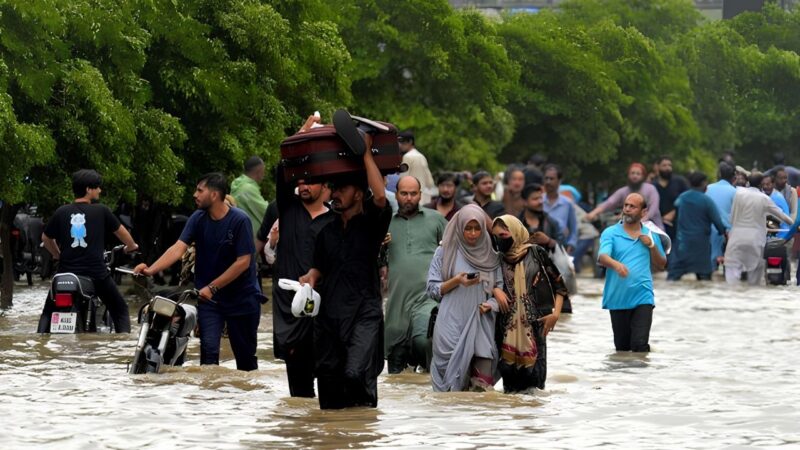
The financial retreat is particularly alarming given Pakistan’s recent history; the catastrophic monsoon floods of 2025 left a trail of immense economic devastation across the country, following the historic 2022 deluge that caused over $28 billion in damages. National Disaster Management Authority (NDMA) Chairman Inam Haider Malik reinforced the anxieties during a briefing to the panel, revealing that local temperatures in June 2026 have already surged to 1.56°C above historical baselines under the influence of severe El Niño conditions, crossing critical climate thresholds much earlier than anticipated.
Beyond the funding shortfalls, the Senate panel heavily questioned the state’s governance framework, criticizing the rationale behind establishing a parallel “Climate Change Authority”. Rehman dismissed the proposed body as another redundant state-owned entity that would only trigger bureaucratic overlaps and aggravate the public purse.
Lawmakers observed that while the cash-strapped government allocated over Rs 451 billion to bleeding state-owned enterprises this year, it chose to handicap its own environmental frontline, leaving the nation highly exposed to highly unpredictable monsoon patterns and looming water storage crises.