Authorities inspected seven passenger flights across Europe after receiving suspected bomb threats, including two flights that departed from the United Kingdom (UK). Security teams searched aircraft in Italy, Spain, Poland and Bulgaria, but found no explosives.
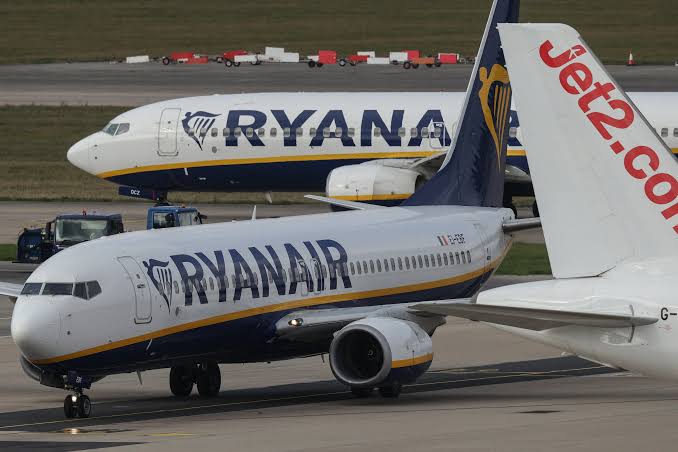
Two Ryanair flights, one from Dublin and the other from Lisbon, underwent security checks after landing at Rome’s Fiumicino Airport following anonymous bomb threats. Sources at the airport said that police bomb disposal experts inspected the aircraft, passengers and luggage under standard security procedures. The checks found no explosives, and authorities later cleared the alerts.
The Italian Air Force escorted the flight from Dublin until it landed in Rome.
In Spain, authorities inspected a Ryanair flight from Manchester after it landed in Murcia. Spanish officials confirmed that the aircraft carried no explosives.
A passenger on the flight, identified as Sarah, told an international media outlet that passengers received no information about the threat during the journey. She said that the aircraft stopped suddenly after landing and remained on the runway for around 30 minutes before fire engines, police and a bomb disposal team arrived.
Passengers then evacuated the aircraft and left their belongings behind as police escorted them.
Two flights bound for Warsaw also faced security alerts, including one from London Heathrow. Authorities diverted the Heathrow flight from Warsaw’s Chopin Airport to the smaller Modlin Airport, which briefly closed following the incident. A Scandinavian Airlines flight from Copenhagen landed at Chopin Airport as scheduled.
In Bulgaria, Transport Minister Georgi Peev confirmed bomb threats against two flights bound for Sofia, one from Bergamo in northern Italy and the other from Dublin. Authorities inspected both aircraft after they landed, found no explosives and allowed them to remain on their routes without diversion.
Bulgaria’s border police stated that it received an email reporting an improvised explosive device on a flight from Bergamo. The same email also reported a similar threat against the aircraft arriving from Dublin. Officials immediately activated standard procedures and convened an operational headquarters with representatives from different institutions.
The UK government described the incidents as “malicious hoax threats”, saying that the country had one of the world’s most robust aviation security systems and established procedures to respond to potential threats and false alerts.
Aviation security expert Paul Mason told an international media outlet that bomb threats against passenger aircraft did not occur frequently, making the incidents unusual. He said that the threats appeared credible and targeted multiple airlines, suggesting a deliberate act rather than unrelated calls.
The incidents came a day after a Wizz Air flight from London Luton made an emergency landing in Budapest following a bomb threat. A Hungarian fighter jet escorted the aircraft, while subsequent security checks found no explosives.
Separately, a bomb alert prompted the evacuation of 1,537 passengers and crew from the Israel-bound cruise ship Crown Iris, which was docked at a port on the Greek island of Syros. Initial inspections found no explosives aboard the Panama-flagged vessel, and the ship was due to resume its journey.
Former Cathay Pacific and Hong Kong Airlines pilot Marco Chan said that crews treat bomb threats as genuine until authorities resolve them, even though most turn out to be hoaxes. He added that the flight crews quietly inspect toilets, galleys and storage areas but avoid touching suspicious objects unless they need to move them to the aircraft’s designated least-risk bomb location.
Former airline pilot and aviation safety commentator Terry Tozer said that captains assess factors such as the facilities available at a diversion airport and the options for continuing the journey if authorities establish that the threat is false.
Chan added that ground teams generally move the aircraft to an isolated stand, disembark passengers and allow police and bomb disposal experts to search the plane.