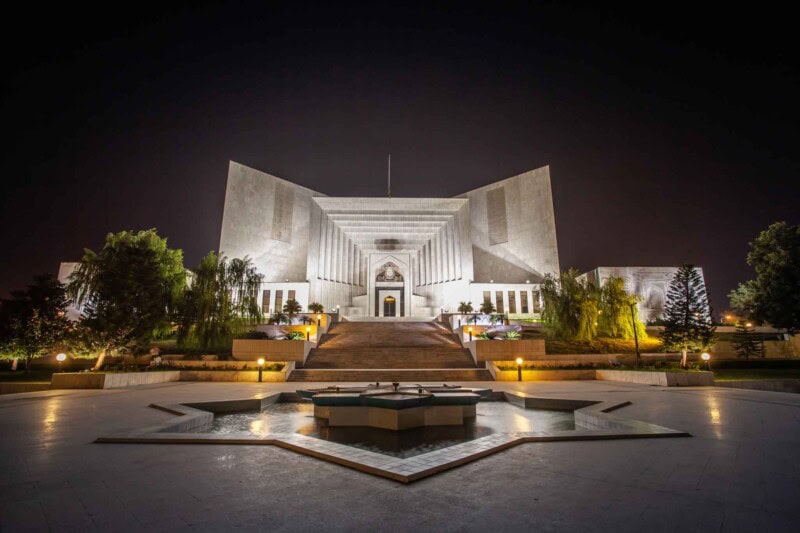
The Supreme Court (SC) has issued a ruling that lays down harassment guidelines for every school in the country, requiring strict enforcement of workplace harassment laws across all educational institutions.
Justice Muhammad Ali Mazhar led the two-judge bench that delivered the ruling on Friday. Beyond the guidelines, the court also restored a five-year service forfeiture penalty against Shazia Iqbal, a former headmistress at the Government Special Education Centre in Lyallpur Town, Faisalabad, overturning a Punjab Service Tribunal order from Dec 8, 2023, which had reduced her punishment to just one year.
Iqbal’s case stemmed from allegations that a special therapist working under her, Kamran Khan, was illegally residing on the centre’s premises and harassing female colleagues, allegedly blackmailing them and pressuring them into relationships through threats.
A show-cause notice was issued to Iqbal under the Punjab Employees Efficiency, Discipline and Accountability Act, 2006, accusing her of gross negligence for allowing the situation to continue under her charge.
In the 12-page verdict, Justice Mazhar described harassment of female staff by male colleagues in any school as a serious breach of law and workplace ethics.
He stated that behaviour ranging from inappropriate remarks and catcalling to demands for favours in return for job benefits creates a hostile environment that undermines an institution’s ability to function properly.
The court directed every school, public or private, to adopt a written anti-harassment policy and set up a functioning complaint system involving senior staff, so grievances can be investigated fairly.
It ruled that internal inquiries no longer need to wait on the Federal Ombudsperson or provincial ombudspersons before proceeding.
The judgement also placed direct responsibility on heads of institutions to maintain zero tolerance for harassment and ordered that the ruling be forwarded to the federal education secretary, provincial chief secretaries, education secretaries across all provinces and the Federal Ombudsperson along with provincial ombudspersons.
Authorities have been told to enforce the existing Code of Conduct for Protection against Harassment of Women at Workplace at the grassroots level in every school and to ensure it is displayed prominently in both English and local languages.
Every institution has also been ordered to set up its own inquiry committee so a female teacher can take a complaint directly to that committee rather than relying solely on the head of her institution to act.