The entertainment industry is speaking up about the issue of delayed payments in Pakistan and its impact on the livelihoods of artists.
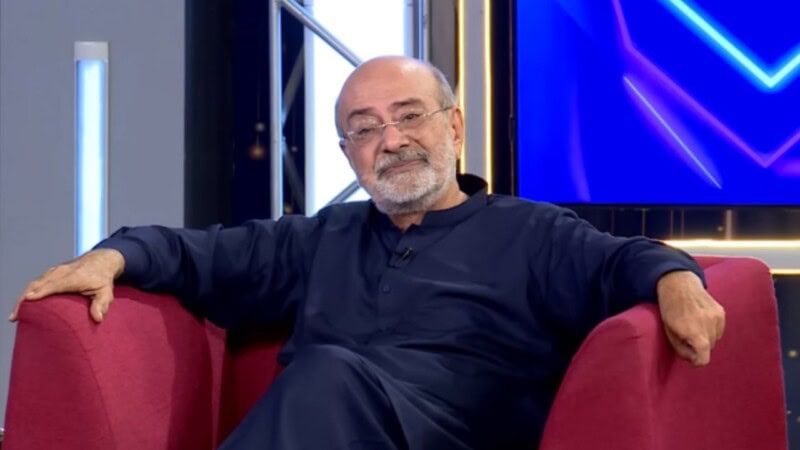
In a video message shared on social media, senior actor Syed Muhammad Ahmed criticised production houses for how they handle artists’ payments. “Production houses try to make actors beg like beggars for their money in every project,” he said.
“It was once considered shameful to talk about payment issues, and even today the topic is treated as taboo but now more artists are beginning to speak up,” he noted.
“Production houses make artists work until 1am instead of 9pm and actors have to keep working even when they don’t want to. But when it comes to paying them, a delay of five to six months has become normal,” he explained.
“After waiting for months, actors often have to share their personal struggles to finally get paid and even then, the cheque is handed over as if it is an act of favour. Actors have to explain their situation like beggars just to get what they’re owed,” he said, adding that “Payment issues in the industry have now reached a serious point and raising one’s voice is crucial. Money has become the biggest need now and it is time to speak up for our rights.”
Meanwhile, actor Faizan Khawaja has announced his decision to leave Pakistan’s entertainment industry, citing chronic delays in payments and widespread mistreatment as the main reasons behind his exit.
In an Instagram story on Sunday, Faizan revealed that financial instability and a lack of accountability within the industry had taken a serious toll on his well-being. He said, “I had to repeatedly ask for the payment I had already earned. That’s why I said goodbye to showbiz.”
Faizan stated that the problem is systemic and affects countless artists who rely on acting to support their families.
He shared, “These cheques often came two years late. Sometimes they never came at all,” adding that in some cases the delayed cheques became void and forced actors to work without pay or legal help.
He also cited the example of the late Humaira Asghar Ali, who reportedly faced similar struggles with unpaid dues amid serious health and financial challenges.
“Many of us live under constant stress unable to pay rent or utility bills yet continue working in silence,” Faizan added. “Keep quiet, keep working and keep begging. That’s how the system works.”
Describing his decision as deeply emotional, he said the constant humiliation and financial uncertainty eventually outweighed the creative satisfaction of acting. “I’m not alone,” he added. “Many actors quit because they can no longer tolerate the exploitation.”
Faizan’s post was met with an outpouring of support from fans and fellow artists who praised his courage and called for systemic reforms to protect industry professionals. He warned, “Unless real structural changes are made, more artists will continue to be driven out by exploitation disguised as opportunity.”
Veteran director and producer Mehreen Jabbar has also openly criticised the persistent issue of payment delays in the television industry, calling the system “deeply flawed” and “unprofessional.”
Despite the industry’s growing viewership and global reach, Jabbar believes its internal practices remain compromised. She said, “In the US, even with all their issues, there’s a fixed schedule for payments. People know when they’ll get paid. Here, you have to chase payments like beggars.”
She emphasised that the problem is not limited to lead actors or big names but affects everyone from directors to spot boys, lighting technicians and other crew members. “Ask anyone and they’ll have horror stories. This is across every channel and production house,” she added.
According to Jabbar, the situation is especially dire for crew members who are already underpaid and lack basic protections. “They do the hardest labour. But with no union, no rights and no fair pay they remain trapped.”
She said that while some actors can speak up or move on to better markets, most behind-the-scenes workers do not have that option. “Working in Pakistan has become more disheartening,” she admitted. “Compared to other places, the difference in professionalism and organisation is stark.”
She noted that the only relatively smooth productions tend to be short-form content or brand-sponsored projects where stricter timelines and corporate oversight help prevent delays. Jabbar, whose career spans over 30 years, said it is disappointing to still be fighting the same battles. “In some ways, things have gotten worse. There’s no real change and I’m not sure if there ever will be.”