
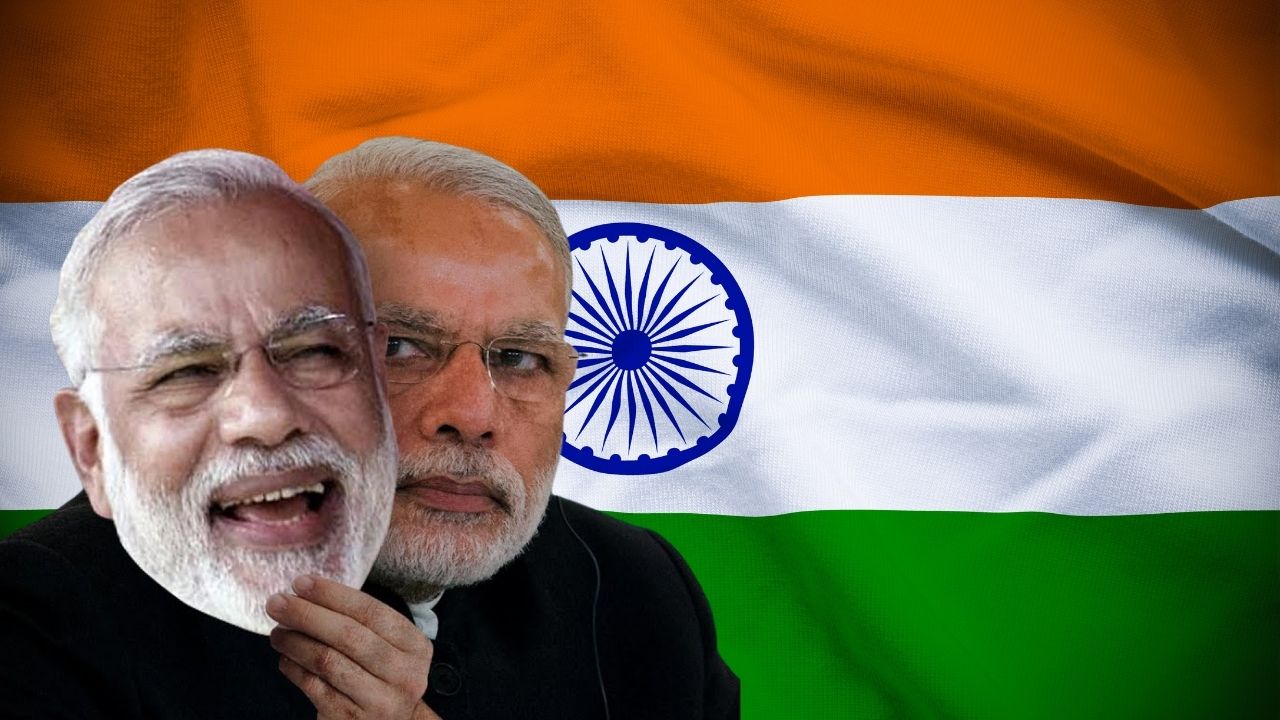


India, often portrayed as the world’s largest democracy, a land of rich culture and boundless diversity, is a country of contrasts. While its face shines white to the global audience, cloaked in technological achievements, Bollywood glamour, and diplomatic rhetoric, the interior often tells a different story: one stained by division, injustice, and rising intolerance. However, a closer look behind the glossy exterior reveals a darker reality riddled with systemic issues, religious discrimination, media manipulation, social injustice, and the unresolved tragedy of Kashmir. The nation that claims to be a beacon of democratic values is, by many accounts, struggling to uphold the very principles it proclaims.
The Myth of the World's Largest Democracy. (A Democracy in Name Only?)
India asserts itself as the world's largest democracy, showcasing its vibrant and robust democratic principles.. But democracy is not measured by elections alone; it’s defined by how power is distributed, how minorities are treated, and whether justice is blind to religion and caste. India’s democratic institutions have increasingly been criticised for tilting toward majoritarianism, where the rights of minorities are often trampled in favour of the dominant group.
Elections may still occur regularly, but press freedom, judicial independence, and civil liberties, essential pillars of a functioning democracy, have faced significant decline. Reports from international watchdogs consistently indicate democratic backsliding in India, due to institutional bias, voter suppression in some regions, and the targeting of opposition figures, which question the fairness of the democratic process.
Human rights defenders say a shift from democratic ideals to autocratic tendencies has occurred, veiled by the illusion of electoral legitimacy.
Rising Ethnic and Religious Segregation
India’s population comprises a diverse mix of ethnicities and religions, including Hindus, Muslims, Christians, Sikhs, Buddhists, Jains, and others. The secular ideal embedded in the Indian Constitution is unequivocally under increasing threat. Ethnic and religious segregation is no longer just social but systemic, with communities often confined to ghettos, educational disparities, and employment discrimination.
The Cost of Religious Intolerance
There are numerous accounts, both documented by human rights organisations and witnessed by global observers, where people of non-Hindu faiths face violence, exclusion, and marginalisation. Incidents of lynching, forced conversions, and demolitions of religious sites have raised alarms. Zero tolerance for diversity of faith contradicts the values of pluralism and mutual respect.
Marginalisation and Poverty
Socio-economic indicators reveal a worrying trend: a disproportionate percentage of Muslims, Christians, and Sikhs live below the poverty line, compared to their Hindu counterparts. Access to quality education, healthcare, and job opportunities is limited, pushing many into generational poverty. This raises questions about equity in policy implementation and the inclusiveness of economic growth.
Justice or Prejudice?
The justice system, in theory, is impartial. But justice often appears elusive for those from minority faiths. From delayed trials to selective application of anti-terror laws, many feel the system is weaponised against them. High-profile cases where mob lynchers walk free or where complaints of harassment by minorities are ignored further erode faith in the rule of law.
Forced Conversions and Coerced Assimilation
While the Indian government often decries religious conversions, there are disturbing reports of people being coerced or pressured to abandon their religion under socio-economic duress or threats. The state’s role in encouraging "ghar wapsi" (homecoming) programs, where converts to Hinduism are celebrated, while other religious conversions are criminalised, exposes a double standard.
Media: Watchdog Turned Lapdog
India's mainstream media, once a powerful voice of accountability, has increasingly lost credibility. Many outlets toe the government line, ignore ground realities, or peddle misinformation, especially about neighbouring countries. The media is now often accused of stirring communal hatred, spreading fake news, and deflecting attention from pressing domestic issues.
A Defiance of International Norms
India is a signatory to numerous international treaties, including human rights conventions. However, its track record on compliance has raised concerns, especially in areas involving religious freedom, minority rights, and environmental obligations. Ignoring UN resolutions, particularly concerning Jammu and Kashmir, only further isolates India diplomatically.
The Unresolved Kashmir Conflict
One of the most striking contradictions exists in Indian Illegally Occupied Jammu and Kashmir (IIOJK), a region whose history is marked by conflict, occupation, and unfulfilled promises. Since 1947, the people of Kashmir have suffered military crackdowns, communication blackouts, and loss of autonomy. Despite a UN resolution calling for a plebiscite, India continues to maintain its presence with force, citing security threats while ignoring calls for self-determination and human rights.
The revocation of Article 370 in 2019, which stripped the region of its special status, further fueled unrest and accusations of colonisation. Now, India must wake up to resolve the long-lasting issue after the heavy punch as retaliation, on May 10, 2025, and come to the table to settle the Kashmir issue according to the UN resolution.
Restricted Religious Freedoms
While India’s majority religion enjoys freedom and state patronage, religious rituals and gatherings of minority faiths are often obstructed. Be it denying permits for processions, heavy policing at minority festivals, or arbitrary arrests under vague charges, the space for non-Hindu religions to practice freely is shrinking.
A Path Forward?
India is a country with immense potential; its youth, resources, and cultural wealth are unmatched. But unless it addresses these internal contradictions, it risks eroding its moral authority and global standing. The real strength of a nation lies not in suppressing differences, but in embracing them with dignity and fairness.
India must make a choice: continue on the path of division and dominance, or return to the foundational principles of its Constitution: secularism, justice, liberty, and equality for all.
India must reflect deeply on the widening gap between its constitutional promises and lived realities. Only through inclusive governance, equitable development, and genuine commitment to democratic values can the nation cleanse itself of the “filthy spots” that threaten to mar its image, both domestically and globally.
Only then can the façade be removed, and a truly inclusive nation rise from within.
Written by: Moazzam M Malik
The author is a dedicated academic committed to intellectual growth through meaningful discourse.
'%3e%3crect%20y='0.445312'%20width='48'%20height='48'%20rx='24'%20fill='white'%20fill-opacity='0.5'/%3e%3crect%20x='0.5'%20y='0.945312'%20width='47'%20height='47'%20rx='23.5'%20stroke='%23808080'/%3e%3cpath%20d='M34.625%2024.4453L14%2024.4453'%20stroke='%23808080'%20stroke-width='0.920053'/%3e%3cpath%20d='M23.375%2034.4453L13.375%2024.4453L23.375%2014.4453'%20stroke='%23808080'%20stroke-width='0.920053'/%3e%3c/g%3e%3cdefs%3e%3cfilter%20id='filter0_b_489_44344'%20x='-12'%20y='-11.5547'%20width='72'%20height='72'%20filterUnits='userSpaceOnUse'%20color-interpolation-filters='sRGB'%3e%3cfeFlood%20flood-opacity='0'%20result='BackgroundImageFix'/%3e%3cfeGaussianBlur%20in='BackgroundImageFix'%20stdDeviation='6'/%3e%3cfeComposite%20in2='SourceAlpha'%20operator='in'%20result='effect1_backgroundBlur_489_44344'/%3e%3cfeBlend%20mode='normal'%20in='SourceGraphic'%20in2='effect1_backgroundBlur_489_44344'%20result='shape'/%3e%3c/filter%3e%3c/defs%3e%3c/svg%3e)
'%3e%3crect%20y='0.445312'%20width='48'%20height='48'%20rx='24'%20fill='white'%20fill-opacity='0.5'/%3e%3crect%20x='0.5'%20y='0.945312'%20width='47'%20height='47'%20rx='23.5'%20stroke='%23808080'/%3e%3cpath%20d='M13.375%2024.4453L34%2024.4453'%20stroke='%23808080'%20stroke-width='0.920053'/%3e%3cpath%20d='M24.625%2014.4453L34.625%2024.4453L24.625%2034.4453'%20stroke='%23808080'%20stroke-width='0.920053'/%3e%3c/g%3e%3cdefs%3e%3cfilter%20id='filter0_b_489_44344'%20x='-12'%20y='-11.5547'%20width='72'%20height='72'%20filterUnits='userSpaceOnUse'%20color-interpolation-filters='sRGB'%3e%3cfeFlood%20flood-opacity='0'%20result='BackgroundImageFix'/%3e%3cfeGaussianBlur%20in='BackgroundImageFix'%20stdDeviation='6'/%3e%3cfeComposite%20in2='SourceAlpha'%20operator='in'%20result='effect1_backgroundBlur_489_44344'/%3e%3cfeBlend%20mode='normal'%20in='SourceGraphic'%20in2='effect1_backgroundBlur_489_44344'%20result='shape'/%3e%3c/filter%3e%3c/defs%3e%3c/svg%3e)