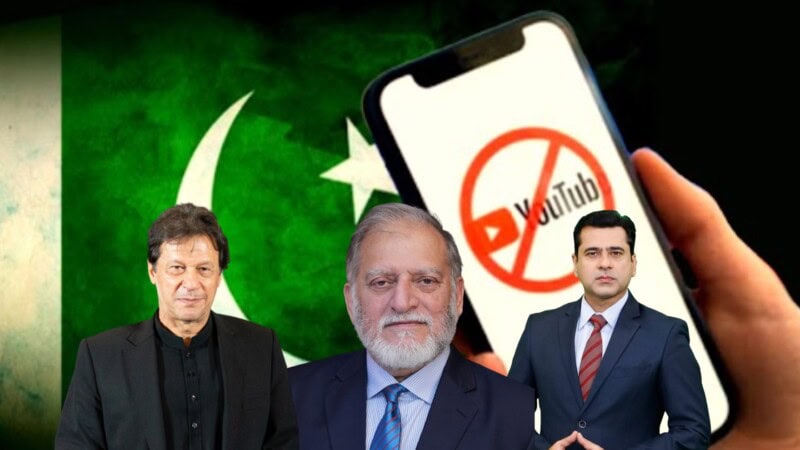
A local court in Islamabad has ordered the blocking of 27 Pakistani YouTube channels for “spreading fake, misleading and provocative” content against the country, state institutions and officials.
As per the details, Judicial Magistrate Abbas Shah heard a petition by the National Cyber Crime Investigation Agency (NCCIA), later issuing a written order directing YouTube’s officer-in-charge to block said channels.
According to the court order, the agency presented sufficient evidence to justify legal action. The judge noted that the inquiry, which began on June 2, revealed that the channels were involved in spreading anti-state content and violated the privacy and dignity of state officials.
The full list of channels named in the court’s order includes:
Haider Mehdi
Siddique Jaan
Sabee Kazmi
Orya Maqbool Jan
Arzoo Kazmi
Rana Uzair Speaks
Sajid Gondal
Habib Akram
Matiullah Jan MJtv
Asad Toor Uncensored
Imran Riaz Khan
Naya Pakistan
Sabir Shakir
Imran Khan
Aftab Iqbal
Real Entertainment TV
Pakistan Tehreek-e-Insaf
Daily Qudrat
Abdul Qadir
Charsadda Journalist
Naila Pakistani Reaction
Wajahat Saeed Khan
Ahmad Noorani YouTube
Nazar Chohan YouTube
Moeed Pirzada YouTube
Makhdoom Shahab ud Din
Shayan Ali YouTube
While YouTube is yet to officially respond to the request, sources told The Current that the streaming platform had already notified the above-mentioned channels about the court order.
“We have received a legal removal request citing the court order dated 24 June 2025 in Enquiry No. 717/2025, seeking blocking of your channel, available at the URL […] A copy of the court order is attached for your reference,” read an email received by owners of at least three affected channels.
The email from YouTube went on to inform the owners that in case of their failure to comply with the court order, the company would itself comply with the request without further notice.
It merits a mention that the court order comes after the NCCIA filed a complaint requesting the court to direct Google LLC to block the identified channels. The agency alleged that the channels were disseminating “highly intimidating, provocative and derogatory material” targeting state institutions and officials, in an attempt to “provoke the public and armed forces and create discord among various pillars of the state”.