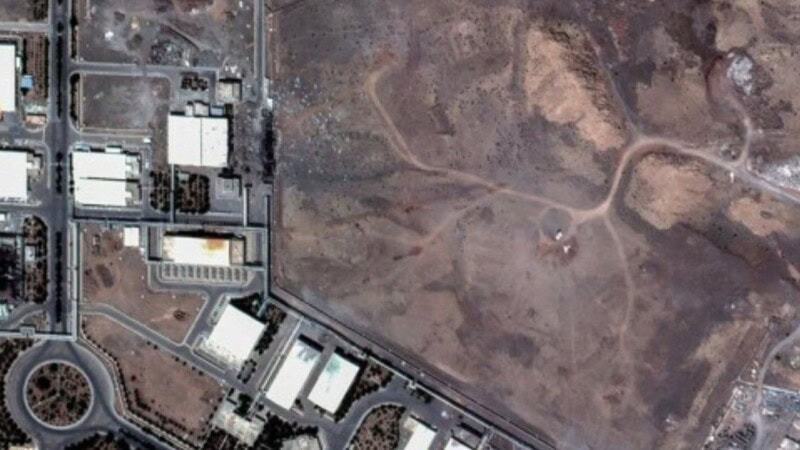
A preliminary U.S. intelligence assessment has concluded that recent American airstrikes on Iran’s nuclear facilities have only delayed, but not destroyed, its nuclear program despite President Donald Trump’s claims as a fragile ceasefire took hold between Iran and Israel.
According to the Defense Intelligence Agency report, underground facilities were mostly intact although the entrances to two uranium-enrichment sites were sealed.
Three people familiar with the findings said that Iran’s enriched uranium stockpile was not destroyed and that some centrifuges were undamaged.
The strikes, carried out over the weekend, marked the U.S entry into the 12-day Iran-Israel conflict. A ceasefire was declared by President Donald Trump at 0500 GMT on Tuesday, after days of escalating military exchanges.
Trump had claimed that the U.S. use of 30,000-pound bombs had “obliterated” Iran’s nuclear program.
He reiterated the point in a Truth Social post on Tuesday morning:
“FAKE NEWS CNN, TOGETHER WITH THE FAILING NEW YORK TIMES, HAVE TEAMED UP IN AN ATTEMPT TO DEMEAN ONE OF THE MOST SUCCESSFUL MILITARY STRIKES IN HISTORY. THE NUCLEAR SITES IN IRAN ARE COMPLETELY DESTROYED! BOTH THE TIMES AND CNN ARE GETTING SLAMMED BY THE PUBLIC!”
U.S. officials told the United Nations Security Council, however, that the strikes had “degraded” Iran’s nuclear infrastructure.
According to one source, because a large portion of the program is underground, it might have only been delayed the program by one or two months.
Iran maintains that the goal of its nuclear research is to produce energy for civilian use.
Despite its fragility, the ceasefire prompted Israel and Iran to lift civilian restrictions on Tuesday. Israel resumed regular operations, including at Ben Gurion Airport, while Iran reopened its airspace.
Markets responded with a global rally as oil prices dropped, reflecting reduced fears of disruption in the Gulf.
Israeli Prime Minister Benjamin Netanyahu declared:
“We have removed two immediate existential threats to us: the threat of nuclear annihilation and the threat of annihilation by 20,000 ballistic missiles.”
According to Iranian media, Iranian President Masoud Pezeshkian also claimed a “great victory” and assured Saudi Crown Prince Mohammed bin Salman that Tehran was ready to resolve tensions with the United States.
The conflict began on June 13 when Israel launched a surprise offensive targeting Iranian nuclear facilities and top military commanders.
Iran retaliated with a barrage of missiles on Israeli cities and military bases in the largest escalation since the 1980s Iran-Iraq war.
Iran reported 610 deaths and over 4,764 injuries from Israeli airstrikes. Iran’s missile response killed 28 Israelis, the first time its air defenses were breached on this scale.
Tensions lingered after the ceasefire announcement, as both nations accused each other of early violations.
Trump, before departing for a NATO summit, expressed frustration:
“I’ve got to get Israel to calm down now,” he said.
“Iran and Israel had been fighting so long and so hard that they don’t know what the f*** they’re doing.”
Israeli officials said that in response for Iranian missiles fired after the ceasefire began, a radar facility close to Tehran was hit.
Iran denied firing any missiles at that time and claimed Israel continued its strikes well beyond the agreed window.
The administration continued talks with Iranian counterparts, and Trump personally brokered the ceasefire with Israeli Prime Minister Netanyahu, according to U.S. sources.
Both countries said they would uphold the ceasefire as long as the other did not break it.
Iran’s military command also warned Israel and the U.S. to learn from the “crushing blows” it delivered during the conflict. Israeli military chief Eyal Zamir said the current phase of the conflict had ended but added that operations against Iran-backed militants in Gaza would resume.