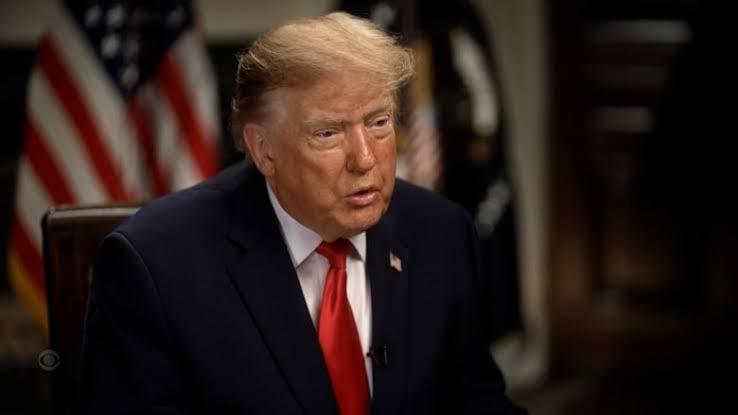
President of United States (US) Donald Trump has said that further American attacks on Iran were “highly unlikely”, while signalling that negotiations to end the conflict had gained momentum following his meeting with Prime Minister of Qatar Sheikh Mohammed bin Abdul Rahman Al Thani and Vice-President JD Vance.
Speaking to reporters at the White House on Monday, Trump said that Iran’s military capabilities had effectively been neutralised but warned that the US remained prepared to resume military action if circumstances changed.
“Iran militarily is effectively over,” Trump said, adding that there was “positive momentum” behind efforts to reach an agreement to end the conflict.
“We’re just keeping it the status quo,” he said. “And we’re doing that really at the behest of countries that are their neighbours.”
Trump described renewed US strikes on Iran as “highly unlikely”, although he maintained that American forces remained “locked and loaded” if the situation changed.
The US president said that he had no immediate reason to escalate the conflict, repeating his position during an interview with 60 Minutes that aired on Sunday. He had also described Iran’s military position as effectively over in previous remarks.
Asked why he had not formally declared an end to the war, Trump stated that some of Washington’s Gulf allies remained exposed to potential Iranian attacks.
“We have some great allies there and we have to make sure they’re not hurt,” he said, pointing to the US naval blockade on Iranian ports as a measure that he believed was helping secure the region.
Trump’s remarks came after he hosted Qatar’s Prime Minister Sheikh Mohammed bin Abdul Rahman Al Thani at the White House, where they discussed efforts to advance negotiations between Washington and Tehran.
The Qatari premier later confirmed his meeting with Trump and Vance in a post on X, describing the discussions as positive.
“We discussed the situation in the region and ways to progress the US-Iran talks. Grateful for the positive discussions on reaching a deal and bringing peace to the region,” he wrote.
Qatar has been among the countries involved in diplomatic efforts to end the conflict, with negotiations between the US and Iran largely taking place indirectly through mediators since joint American-Israeli strikes triggered the war in February.
However, Iranian officials have continued to reject Trump’s portrayal of the negotiations and questioned Washington’s claims about progress towards an agreement.
Mohsen Rezaei, secretary of Iran’s Supreme National Security Council, urged the US to accept Tehran’s seven conditions for ending the conflict, accusing Washington of spreading false reports about negotiations.
“The war on Iran has already wrecked the US government. But Washington flails like a desperate gambler. FOLD YOUR HAND. STOP manufacturing FAKE NEWS about imaginary talks. Stop denying the West Asian NEW ORDER. Time to SURRENDER to the seven conditions Iran has repeatedly set out,” he wrote on X.
Iranian Parliament Speaker Mohammad Bagher Ghalibaf also criticised Washington’s approach to the conflict, saying that the US and its allies were heading towards a “dark age” unless they abandoned what he described as an “Israel first” mindset.
He accused Israel of pushing the US towards a prolonged confrontation with Iran, warning that the conflict would become difficult for any American president to escape.
Meanwhile, Saudi Arabia, Qatar and the United Arab Emirates (UAE) have faced Iranian strikes during the conflict, while the threat of further attacks has disrupted air travel across the region.
Trump’s latest comments also came after Republican losses in last week’s US midterm elections prompted criticism within his party over the war. Senior Republican figures, including Vice-President JD Vance, blamed the conflict for the election outcome.