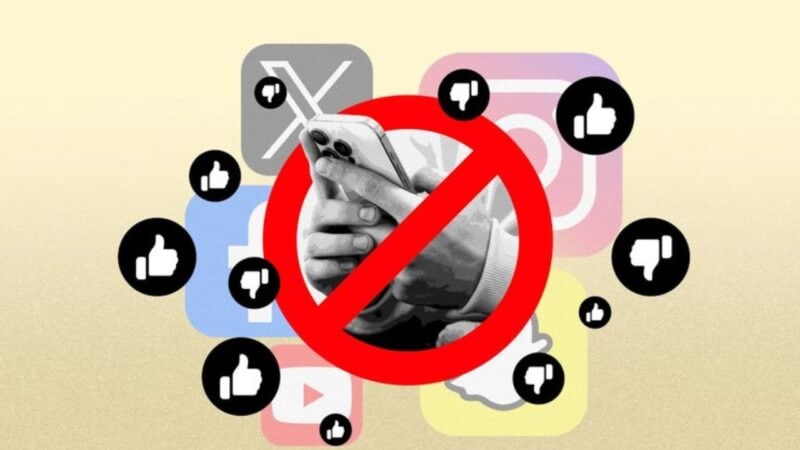
The British government has announced a comprehensive ban on social media access for children under the age of 16 as part of a major online safety campaign.
Prime Minister Keir Starmer characterised the newly-introduced regulations as a definitive line in the sand for technology conglomerates that have consistently failed to safeguard younger users.
Following a public consultation that drew more than 116,000 responses, the stringent measures are scheduled to be fully implemented by the spring of next year.
Under the legislative framework, which replicates a model established in Australia, major user-to-user platforms, including Snapchat, TikTok, YouTube, Instagram, X and Facebook, will be blocked for individuals under the age of 16.
Communication platforms such as WhatsApp and Signal are excluded from the ban, alongside narrowly defined exemptions for educational resources, music streaming and e-commerce services.
Dubbed an “Australia plus” initiative, the strategy also restricts under-16s from livestreaming or communicating with strangers on unverified gaming sites, whilst imposing an under-18 age restriction on intimate AI companion chatbots.
To enforce these rules, the communications regulator, Ofcom, will oversee enhanced age verification procedures to prevent teenagers from circumventing the digital gates via facial age estimation, bank details or digital IDs. The decision has received strong public backing, with government data indicating that nine out of ten parents supported the implementation of an age limit.
However, the policy has met with notable resistance from tech firms and online safety charities alike. Google-owned YouTube expressed disappointment, warning that blanket bans frequently backfire by driving children away from supervised, curated ecosystems toward dangerous, unregulated services.
Similarly, the Molly Rose Foundation cautioned that the ban could provide parents with a false sense of security, arguing that the legislation fails to directly confront the addictive algorithms that continue to actively target children online.