


The United Nations (UN) General Assembly has voted to adopt a resolution recognising the enslavement of Africans during the transatlantic slave trade as “the gravest crime against humanity”.
The resolution, put forward by Ghana, also calls on member states to consider issuing apologies for their role in the slave trade and to contribute to a reparations fund. It does not set out any specific financial commitments.
A total of 123 countries voted in favour, while 52 abstained, including the United Kingdom and member states of the European Union. The United States (US), Israel and Argentina voted against the measure.
General Assembly resolutions are not legally binding, but they reflect the position of the international community.
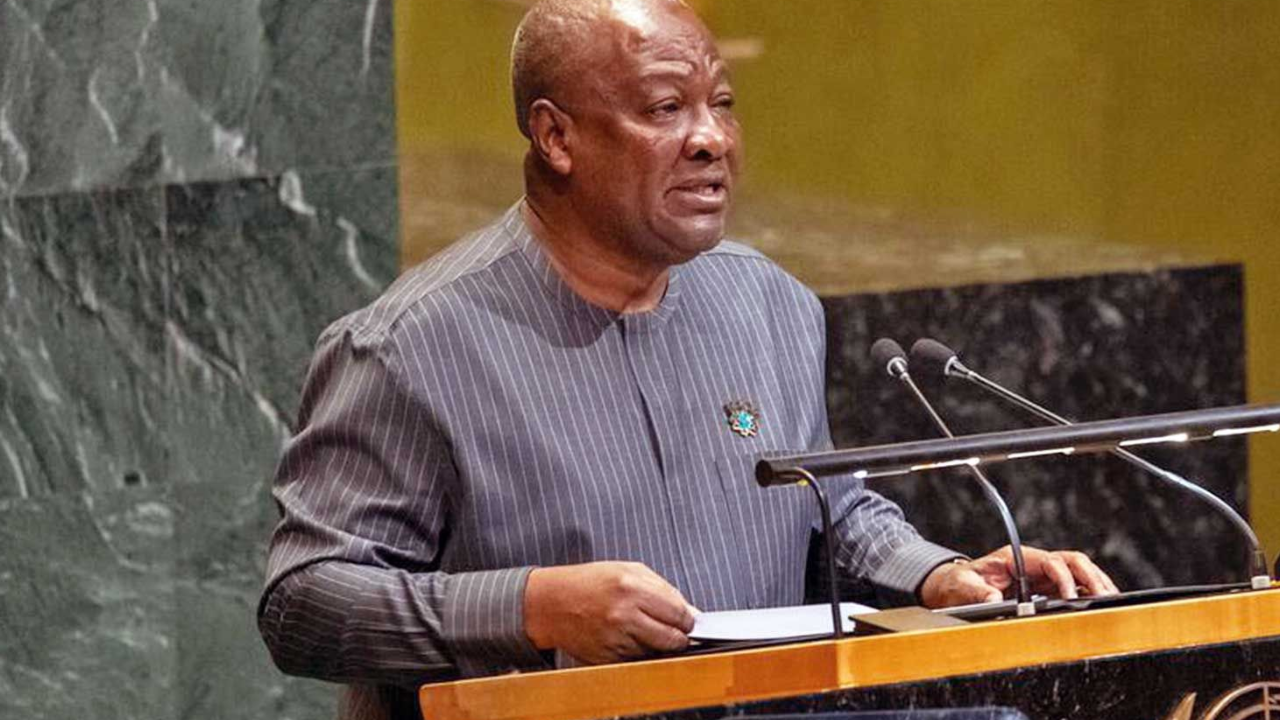
Ahead of the vote, Ghana’s President John Mahama addressed the assembly, saying: “Let it be recorded that when history beckoned, we did what was right for the memory of the millions who suffered the indignity of the slave trade and those who continue to suffer racial discrimination.”
He added: “The adoption of this resolution serves as a safeguard against forgetting. It also challenges the enduring scars of slavery.”
Ghana’s Foreign Minister Samuel Okudzeto Ablakwa said the move was aimed at securing justice rather than financial gain for leaders.
He also said Ghana was not attempting to compare suffering, but to place on record what took place. “We are not ranking our pain above anyone else’s,” he said.
Between 1500 and 1800, an estimated 12 to 15 million people were taken from Africa to the Americas and forced into slavery. More than two million are believed to have died during the journey.
The resolution, supported by the African Union and the Caribbean Community, states that the effects of slavery continue in the form of racial inequality and underdevelopment affecting people of African descent worldwide.
Several countries that abstained or opposed the measure raised concerns over its framing and implications.
The United Kingdom (UK) said it recognised the harm caused by the slave trade but questioned the wording of the resolution. Its UN ambassador, James Kariuki, told the assembly: “No single set of atrocities should be regarded as more or less significant than another.”
The US also opposed the measure. Its ambassador to the UN Dan Negrea, said his country “does not recognise a legal right to reparations for historical wrongs that were not illegal under international law at the time they occurred”.
He also objected to what he described as the “cynical usage of historical wrongs as a leverage point to reallocate modern resources to people and nations who are distantly related to the historical victims”.
Negrea further questioned how reparatory measures would be implemented, saying the resolution was unclear on who would receive such support.
Ghana has been among the countries leading calls for reparations. Sites along its coast, where enslaved Africans were once held before being transported across the Atlantic, remain standing.
The issue of reparations has gained traction in recent years, with the African Union adopting “reparatory justice” as its theme for 2025, while Commonwealth leaders have called for dialogue on the matter.
'%3e%3crect%20y='0.445312'%20width='48'%20height='48'%20rx='24'%20fill='white'%20fill-opacity='0.5'/%3e%3crect%20x='0.5'%20y='0.945312'%20width='47'%20height='47'%20rx='23.5'%20stroke='%23808080'/%3e%3cpath%20d='M34.625%2024.4453L14%2024.4453'%20stroke='%23808080'%20stroke-width='0.920053'/%3e%3cpath%20d='M23.375%2034.4453L13.375%2024.4453L23.375%2014.4453'%20stroke='%23808080'%20stroke-width='0.920053'/%3e%3c/g%3e%3cdefs%3e%3cfilter%20id='filter0_b_489_44344'%20x='-12'%20y='-11.5547'%20width='72'%20height='72'%20filterUnits='userSpaceOnUse'%20color-interpolation-filters='sRGB'%3e%3cfeFlood%20flood-opacity='0'%20result='BackgroundImageFix'/%3e%3cfeGaussianBlur%20in='BackgroundImageFix'%20stdDeviation='6'/%3e%3cfeComposite%20in2='SourceAlpha'%20operator='in'%20result='effect1_backgroundBlur_489_44344'/%3e%3cfeBlend%20mode='normal'%20in='SourceGraphic'%20in2='effect1_backgroundBlur_489_44344'%20result='shape'/%3e%3c/filter%3e%3c/defs%3e%3c/svg%3e)
'%3e%3crect%20y='0.445312'%20width='48'%20height='48'%20rx='24'%20fill='white'%20fill-opacity='0.5'/%3e%3crect%20x='0.5'%20y='0.945312'%20width='47'%20height='47'%20rx='23.5'%20stroke='%23808080'/%3e%3cpath%20d='M13.375%2024.4453L34%2024.4453'%20stroke='%23808080'%20stroke-width='0.920053'/%3e%3cpath%20d='M24.625%2014.4453L34.625%2024.4453L24.625%2034.4453'%20stroke='%23808080'%20stroke-width='0.920053'/%3e%3c/g%3e%3cdefs%3e%3cfilter%20id='filter0_b_489_44344'%20x='-12'%20y='-11.5547'%20width='72'%20height='72'%20filterUnits='userSpaceOnUse'%20color-interpolation-filters='sRGB'%3e%3cfeFlood%20flood-opacity='0'%20result='BackgroundImageFix'/%3e%3cfeGaussianBlur%20in='BackgroundImageFix'%20stdDeviation='6'/%3e%3cfeComposite%20in2='SourceAlpha'%20operator='in'%20result='effect1_backgroundBlur_489_44344'/%3e%3cfeBlend%20mode='normal'%20in='SourceGraphic'%20in2='effect1_backgroundBlur_489_44344'%20result='shape'/%3e%3c/filter%3e%3c/defs%3e%3c/svg%3e)