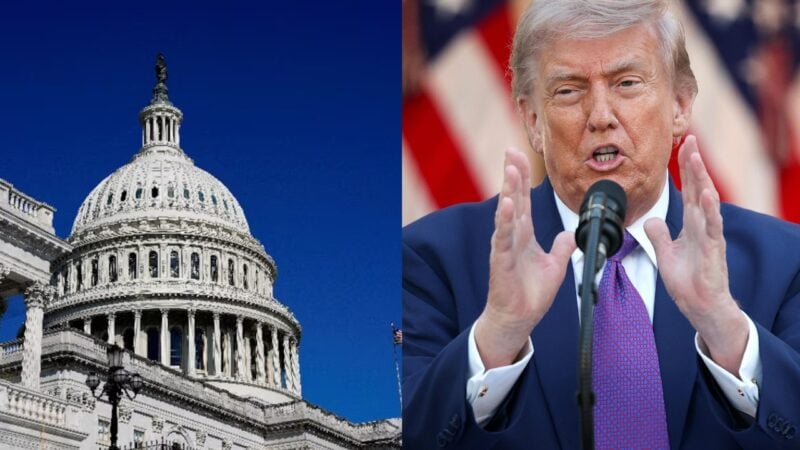
The United States (US) Senate has voted 50 to 47 on Tuesday to advance a War Powers Resolution aimed at restricting President Donald Trump from utilizing military force against Iran without congressional authorization.
The procedural vote required a handful of Republicans to cross party lines and join Democrats, signaling growing friction within the legislature regarding the conflict that began in late February under a joint US and Israel initiative.
Lawmakers supporting the resolution argue that the US Constitution allocates the power to send troops to war exclusively to Congress.
Democratic Senate Minority Leader Chuck Schumer addressed the chamber before the vote, criticizing the executive branch’s handling of the situation.
“This president is like a toddler playing with a loaded gun,” Schumer said. “If there was ever a time to support our war powers resolution to withdraw troops from hostilities with Iran, it’s now”.
Despite the advancement, the resolution faces multiple legislative hurdles before it can take effect.
Three Republican senators were absent during Tuesday’s session, whose presence could alter future voting outcomes.
To become law, the measure must pass the Senate, clear the Republican-led House of Representatives, and secure a two-thirds majority in both chambers to override a veto from President Trump.
Congressional Republicans previously blocked seven similar resolutions in the Senate and three in the House this year.
The legislative push comes as the conflict impacts the global energy market and domestic living costs.
Opponents of the current strategy state that the administration has entered a conflict without establishing an exit strategy, prompting demands for Trump to seek formal congressional authorization.
The Trump administration maintains that the military operations are legal under the president’s authority as commander in chief to conduct limited operations for national protection.
The legal framework governing the dispute rests on a 1973 war powers law, which permits a president to engage in military action for 60 days before requiring congressional approval or an extension for safe withdrawal.
President Trump stated on May 1 that a ceasefire had terminated hostilities, maintaining that his actions did not exceed the 60-day limit.
Operations continue on the ground, with US forces blockading Iranian ports and targeting shipping, while Iranian forces block the Strait of Hormuz and target US vessels.