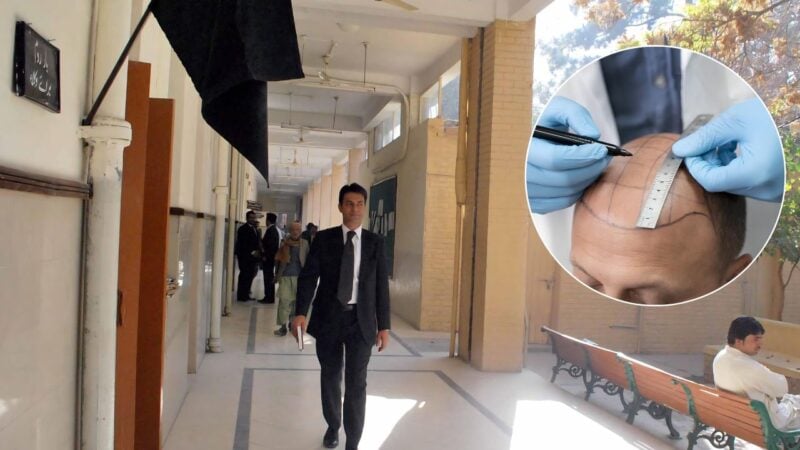
A district and sessions court in Islamabad on Thursday rejected the post-arrest bail applications of four suspects arrested in a case involving the alleged illegal purchase and sale of human placentas after the defence argued that placental tissue is used in hair regenerative treatments, prompting the judge to ask whether it had been used in his own hair transplant.
Additional District and Sessions Judge Mohammad Afzal Majoka announced the reserved verdict after hearing arguments from both the prosecution and the defence, dismissing the post-arrest bail applications of all four suspects.
The prosecution argued that the men were caught during a raid in which more than 1,000 human placentas were recovered. Prosecutors told the court that all four had been arrested at the scene and that expert medical reports submitted as evidence supported the investigation.
The defence maintained that a placenta is not legally classified as a human organ and is commonly used for medical and regenerative purposes. Defence counsel argued that placental tissue has recognised applications in certain medical treatments, including some hair restoration procedures, and therefore should not be treated in the same manner as organs such as kidneys or eyes.
During the hearing, Judge Majoka remarked that he had also undergone a hair transplant and asked whether placental tissue had been used in his procedure. Defence counsel replied that different techniques are employed in hair transplantation, adding that placental tissue could have been used if a regenerative method had been adopted.
The defence further contended that while organs such as the kidneys and eyes clearly fall within the legal definition of human organs, tissues like the gallbladder are routinely disposed of after surgery and are not treated in the same way.
In another exchange, the judge observed that his own placenta had been removed at birth and remarked that he did not know what had become of it. Defence counsel then questioned whether the Federal Investigation Agency had previously arrested or prosecuted individuals in similar cases.
After hearing detailed arguments from both sides and reviewing the material placed on record, the court reserved its verdict before later rejecting the post-arrest bail applications of all four suspects.