By Moazzam M Malik
The land of Jammu and Kashmir has remained one of the oldest unresolved international disputes since the partition of the Indian subcontinent in 1947. For more than seven decades, the people of Kashmir have endured political uncertainty, conflict, economic hardship, and immense human suffering. Despite these challenges, they have preserved their identity, resilience, and unwavering hope for justice, peace, and dignity.
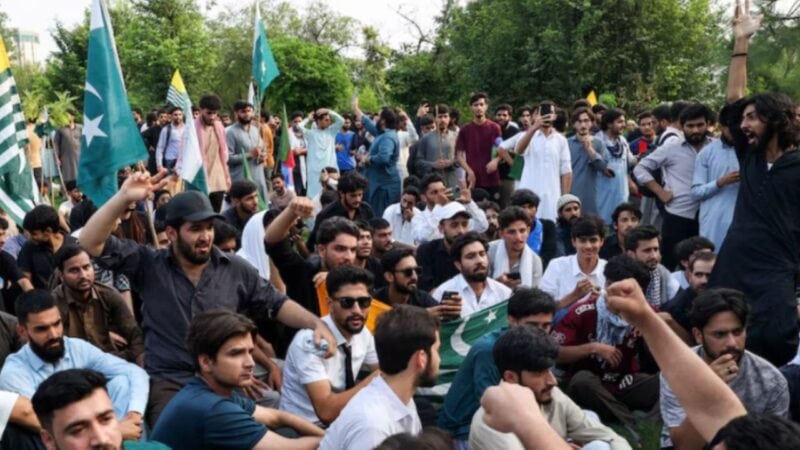
Today, Azad Jammu and Kashmir (AJK) finds itself facing another difficult period of political and social unrest. Differences over governance, economic issues, constitutional matters, and public grievances have created tensions that deserve sincere attention. The hallmark of a democratic society is its commitment to listening to its citizens and responding to their legitimate grievances, as well as the right to hear their concerns. Equally, every responsible government has the duty to respond with wisdom, patience, and justice.However, history repeatedly teaches us that prolonged confrontation benefits no one except those who wish to weaken societies from within. The enemies of peace always exploit internal divisions to advance their own agendas. Therefore, the present situation demands maturity, restraint, and above all, meaningful dialogue.
The historical bond between Pakistan and Kashmir
Pakistan’s relationship with the people of Jammu and Kashmir is rooted in history, geography, culture, religion, and countless human sacrifices. Since 1947, Pakistan has consistently maintained that the future of Jammu and Kashmir should be determined in accordance with the aspirations of its people and the relevant resolutions of the United Nations Security Council (UNSC). Pakistan has repeatedly raised the Kashmir issue at international forums, including the United Nations, the Organization of Islamic Cooperation (OIC), and other diplomatic platforms, advocating for the political and human rights of the Kashmiri people.
Thousands of Pakistanis have demonstrated solidarity with Kashmir through humanitarian assistance, diplomatic advocacy, educational opportunities, disaster relief, and development projects. Pakistan has consistently reiterated that the people of Kashmir are not alone in their struggle for dignity and justice.
The people of Azad Kashmir have also contributed significantly to Pakistan’s social, economic, and national development. Their sacrifices, patriotism, and commitment to the shared cause have strengthened this historic relationship.
Understanding the present challenges
No society is immune from economic pressures, governance issues, or political disagreements. Citizens have every right to raise concerns regarding inflation, public services, employment opportunities, constitutional arrangements, accountability, and administrative reforms.
These concerns deserve careful listening rather than dismissal.
At the same time, public protest must remain peaceful and responsible. Violence, destruction of public property, attacks on institutions, or actions that create lawlessness ultimately harm ordinary citizens more than anyone else.
Recent events have demonstrated how quickly tensions can escalate, resulting in casualties, disruption of daily life, damage to businesses, and increased polarization. Different stakeholders have presented conflicting accounts of these events, underscoring the importance of independent verification, restraint, and continued engagement rather than escalation
Do not play into the hands of those who benefit from division
Every nation has adversaries who seek to exploit domestic instability. Disinformation campaigns, propaganda, political polarization, and emotional narratives can deepen mistrust among people who otherwise share common aspirations.
The people of Azad Kashmir must therefore exercise great wisdom. Genuine grievances should never become opportunities for external forces to exploit internal divisions or weaken the larger cause of Kashmir.
The strength of any nation lies not merely in military capability but also in social cohesion, political maturity, and national unity.
Constructive criticism strengthens institutions. Violence weakens them. Dialogue builds confidence. Confrontation deepens wounds.
The Kashmiri cause has always drawn moral strength from principles of justice, dignity, and peaceful advocacy. Preserving that moral high ground remains essential.
Dialogue: The only sustainable solution
History offers countless examples that enduring political disputes cannot be resolved through force alone. Lasting peace is achieved when parties engage in sincere dialogue based on mutual respect, constitutional principles, and public welfare.
In recent months, numerous political leaders, government representatives, and mediators across Pakistan have publicly emphasized that dialogue remains the only viable path toward resolving the current tensions in Azad Kashmir.
Dialogue does not represent weakness. It represents confidence. Dialogue does not require surrender. It requires wisdom. Dialogue allows grievances to be heard, misunderstandings to be clarified, reforms to be negotiated, and trust to be rebuilt.
Meaningful negotiations should include:
- Respect for constitutional and democratic institutions.
- Protection of peaceful civil liberties.
- Transparent investigation of any alleged human rights violations.
- Consideration of legitimate public grievances.
- Economic reforms aimed at improving the quality of life.
- Political consensus on constitutional and governance issues.
- Rejection of violence from all sides.
When governments listen sincerely and citizens engage responsibly, sustainable solutions become possible.
The responsibility of leadership
Political leaders, religious scholars, civil society organizations, youth representatives, and the media all carry enormous responsibility during periods of crisis.
Leadership should avoid inflammatory rhetoric that widens divisions.
Religious scholars should emphasize Islamic teachings regarding reconciliation, justice, patience, and consultation (Shura).
The media should verify facts before publication and avoid sensationalism that inflames emotions.
Social media users should resist misinformation, fabricated videos, and unverified claims that often circulate during crises and intensify polarization. Research consistently shows that misinformation can deepen political divisions and undermine public trust.
The author is a Lahore-based academic.





