
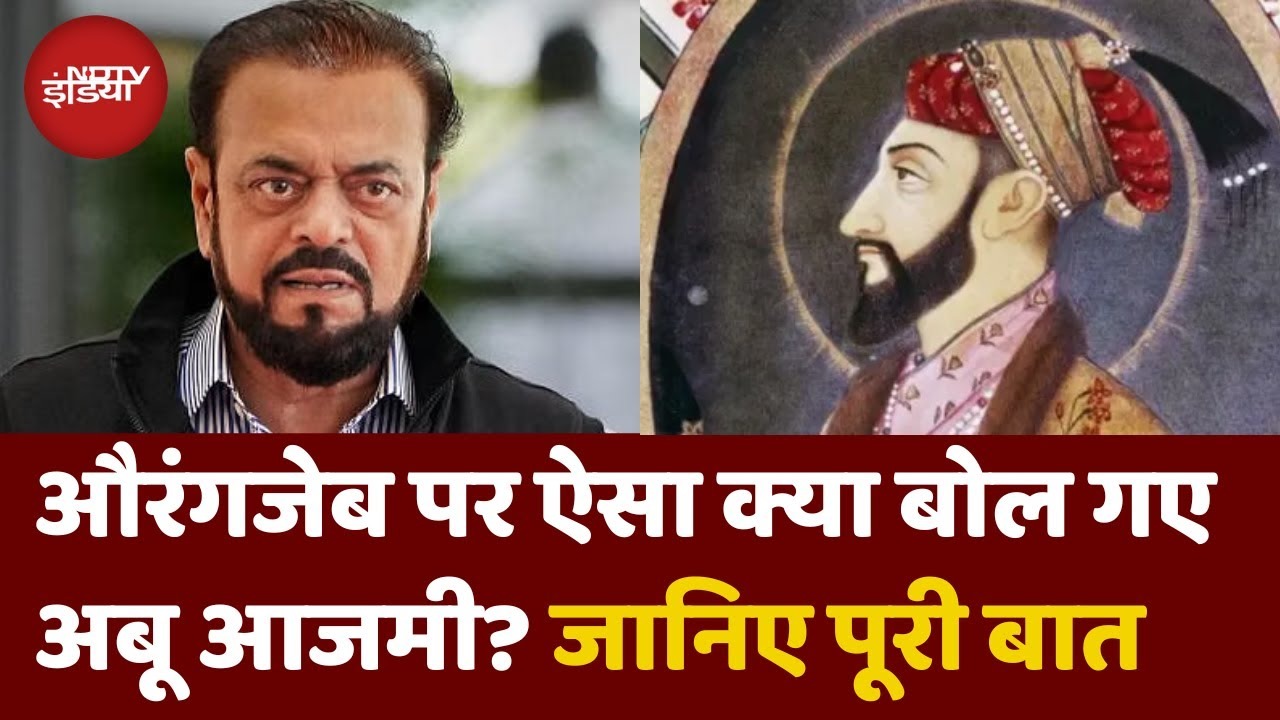


Abu Azmi Sparks Controversy with Aurangzeb Remarks
Samajwadi Party (SP) leader Abu Azmi, a seasoned politician known for his polarizing views, has once again ignited a major controversy in the Maharashtra Assembly. His statements about Mughal Emperor Aurangzeb have triggered uproar from political opponents and criticism from his detractors.
The Controversy Unfolds
On March 4, 2025, Abu Azmi, representing the Mankhurd Shivaji Nagar constituency, made remarks about the portrayal of Aurangzeb in Bollywood's latest historical drama, Chhava. The movie depicts the Maratha king Sambhaji Maharaj, son of Chhatrapati Shivaji, and his conflicts with the Mughal ruler. Azmi questioned the historical accuracy of the film, stating that Aurangzeb was not as tyrannical as portrayed.
“A wrong history is being shown in Chhava. Aurangzeb not only built temples but also united the vast territories of India, making it known as the golden bird. His reign contributed to a GDP of 24% of the world economy,” Azmi stated during a public interaction. These comments have sparked outrage, particularly in Maharashtra, where Maratha pride runs deep, as Aurangzeb is often seen as a figure of oppression.
Political Backlash and Assembly Chaos
Azmi’s comments led to heated debates in the Maharashtra Assembly. Leaders of the ruling Mahayuti alliance demanded his suspension, labeling him a “traitor” for insulting the legacy of Chhatrapati Sambhaji Maharaj and the Maratha Empire. Deputy Chief Minister Eknath Shinde called Abu Azmi’s remarks "unacceptable," saying they disrespected Maharashtra's historical icons.
Shinde went a step further, demanding that Azmi face sedition charges for praising a ruler whom many blame for the brutal torture and killing of Sambhaji Maharaj. This led to high-voltage drama in the Assembly, with opposing members trading harsh words and the session being adjourned amidst loud protests.
Furthermore, a complaint was filed at the Marine Drive Police Station against Azmi under sections addressing defamation and hurting religious sentiments. The legal proceedings are expected to add fuel to the fire.
Abu Azmi's Defense and Apology
Under growing pressure and criticism, Abu Azmi clarified his statements, claiming they were based on historical perspectives shared by renowned historians. “My intention was not to insult Maratha leaders or hurt sentiments. Historians have depicted Aurangzeb in both positive and negative light. I apologize if my comments have caused distress,” he said during a press briefing.
Azmi also accused his opponents of politicizing the issue. “This controversy is being created because I am a Muslim leader. Several historians have discussed Aurangzeb’s rule in scholarly works, yet they were never condemned. I am simply echoing their observations,” he added.
Despite his apology, the uproar continues, with rival parties and citizens questioning whether his remarks were politically motivated.
A History of Polarizing Comments
Controversy is not new to Abu Azmi. Over his four-decade-long political career, he has faced numerous uproars for his statements. His provocative remarks often leave even his allies scrambling for cover. Yet, his support base, particularly among the North Indian migrant population in Mumbai, remains steadfast.
Known for his sharp tongue and fearless attitude, Azmi has often landed in legal trouble. He was arrested in the 1990s under TADA for allegedly selling air tickets to individuals linked to the 1993 Mumbai bomb blasts, though he was later acquitted. From being attacked in the Maharashtra Assembly in 2009 for taking his oath in Hindi to being convicted for inciting communal violence in 2012, Azmi remains a polarizing figure in Maharashtra politics.
Azmi’s Role in Maharashtra Politics
Hailing from a zamindar family in Azamgarh, Uttar Pradesh, Abu Azmi migrated to Mumbai in the 1970s. Initially working in his father’s embroidery unit, he later built a successful business empire, which included manpower recruitment and real estate ventures. His business success translated into a significant political career when he joined the Samajwadi Party.
Azmi became president of the Samajwadi Party’s Maharashtra unit in 1995 and has since been the party's face in the state. Despite his many controversies, Azmi enjoys loyalty from a sizable voter base, particularly North Indian migrants who see him as a voice for their struggles.
With a declared wealth of ₹309 crore, his influence in political and financial circles is undeniable. Critics often accuse him of being a fence-sitter, pointing to instances where the SP allegedly supported the BJP or Shiv Sena in local matters.
His wide-ranging connections occasionally raise questions about his motives. For instance, his visit to then Chief Minister Eknath Shinde’s residence during a Ganpati festival last year sparked whispers of political positioning ahead of the state elections.
Public Reactions and Expert Opinions
Abu Azmi’s comments have divided public opinion. Supporters argue that he is highlighting historical nuance and challenging established narratives, while opponents call his remarks an insult to Maharashtra’s heritage. Shiv Sena leader Shaina Chudasama Munot was quick to counter Azmi, stating on social media that Aurangzeb destroyed iconic temples and oppressed Hindus.
Experts weigh in with varied views on the controversy’s impact. Political analysts believe Azmi’s remarks were timed to shift attention away from the Mahayuti alliance's internal issues, notably the resignation of minister Dhananjay Munde. By stirring a contentious topic, Azmi has succeeded in diverting media and political focus.
On the other hand, voices within the Muslim community also expressed disappointment. AIMIM Maharashtra president Imtiaz Jaleel criticized Azmi for making remarks that could incite communal tensions, stating that ordinary Muslims might bear the brunt of the backlash.
Read More: Dhananjay Munde Resigns as Minister Amid Political Turmoil
'%3e%3crect%20y='0.445312'%20width='48'%20height='48'%20rx='24'%20fill='white'%20fill-opacity='0.5'/%3e%3crect%20x='0.5'%20y='0.945312'%20width='47'%20height='47'%20rx='23.5'%20stroke='%23808080'/%3e%3cpath%20d='M34.625%2024.4453L14%2024.4453'%20stroke='%23808080'%20stroke-width='0.920053'/%3e%3cpath%20d='M23.375%2034.4453L13.375%2024.4453L23.375%2014.4453'%20stroke='%23808080'%20stroke-width='0.920053'/%3e%3c/g%3e%3cdefs%3e%3cfilter%20id='filter0_b_489_44344'%20x='-12'%20y='-11.5547'%20width='72'%20height='72'%20filterUnits='userSpaceOnUse'%20color-interpolation-filters='sRGB'%3e%3cfeFlood%20flood-opacity='0'%20result='BackgroundImageFix'/%3e%3cfeGaussianBlur%20in='BackgroundImageFix'%20stdDeviation='6'/%3e%3cfeComposite%20in2='SourceAlpha'%20operator='in'%20result='effect1_backgroundBlur_489_44344'/%3e%3cfeBlend%20mode='normal'%20in='SourceGraphic'%20in2='effect1_backgroundBlur_489_44344'%20result='shape'/%3e%3c/filter%3e%3c/defs%3e%3c/svg%3e)
'%3e%3crect%20y='0.445312'%20width='48'%20height='48'%20rx='24'%20fill='white'%20fill-opacity='0.5'/%3e%3crect%20x='0.5'%20y='0.945312'%20width='47'%20height='47'%20rx='23.5'%20stroke='%23808080'/%3e%3cpath%20d='M13.375%2024.4453L34%2024.4453'%20stroke='%23808080'%20stroke-width='0.920053'/%3e%3cpath%20d='M24.625%2014.4453L34.625%2024.4453L24.625%2034.4453'%20stroke='%23808080'%20stroke-width='0.920053'/%3e%3c/g%3e%3cdefs%3e%3cfilter%20id='filter0_b_489_44344'%20x='-12'%20y='-11.5547'%20width='72'%20height='72'%20filterUnits='userSpaceOnUse'%20color-interpolation-filters='sRGB'%3e%3cfeFlood%20flood-opacity='0'%20result='BackgroundImageFix'/%3e%3cfeGaussianBlur%20in='BackgroundImageFix'%20stdDeviation='6'/%3e%3cfeComposite%20in2='SourceAlpha'%20operator='in'%20result='effect1_backgroundBlur_489_44344'/%3e%3cfeBlend%20mode='normal'%20in='SourceGraphic'%20in2='effect1_backgroundBlur_489_44344'%20result='shape'/%3e%3c/filter%3e%3c/defs%3e%3c/svg%3e)