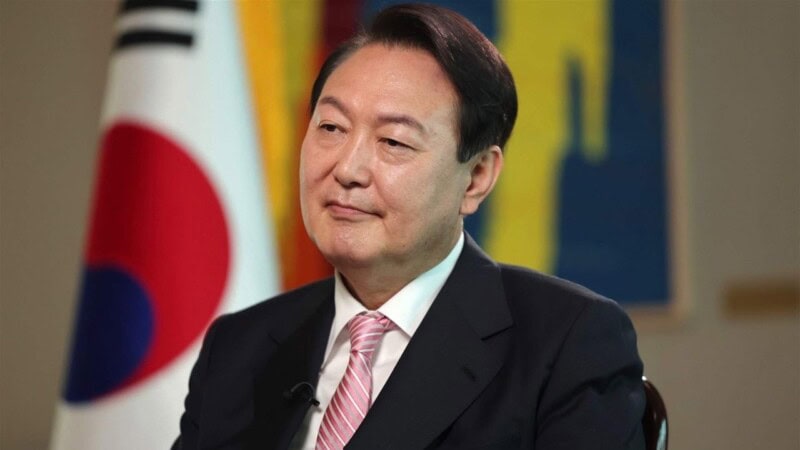
On April 4, 2025, South Korea’s Constitutional Court delivered a historic ruling, officially removing President Yoon Suk Yeol from office. This decision came after months of political turmoil and legal battles sparked by Yoon’s dramatic and controversial declaration of martial law in December 2024. His removal marks the end of a turbulent presidency with major implications for the country’s future, especially as a new election is set to take place within 60 days. But how did South Korea get here, and what lies ahead for the nation?
The Martial Law Crisis: A Shocking Move
The story of Yoon’s impeachment begins on the night of December 3, 2024, when South Korean President Yoon made an unexpected announcement that sent shockwaves through the nation. In a surprise television address, he declared martial law, citing political deadlock in parliament and what he described as “anti-state forces” sympathetic to North Korea. Yoon’s decision to send military troops into the South Korean parliament to “drag out” lawmakers who were blocking his legislative agenda ignited a firestorm of protests and confusion across the country.
Yoon’s move was deeply alarming to many South Koreans, bringing back painful memories of the country’s authoritarian past before it transitioned to democracy. Although martial law only lasted six hours, the political chaos it triggered left the country in disarray. The military’s involvement in parliamentary affairs raised serious concerns about the future of South Korea’s democratic institutions. By the end of the night, lawmakers had successfully voted to lift the martial law order, and Yoon reversed his decree, but the damage was done.
The Impeachment Vote: A Divided Nation
In the wake of the martial law crisis, South Korea’s parliament voted to impeach South Korean President Yoon. The country was left divided, with large-scale protests both supporting and opposing the president. Yoon’s supporters, mostly from the conservative People Power Party, stood by him, insisting that his actions were necessary to protect national security. Meanwhile, the opposition, particularly the liberal Democratic Party, accused Yoon of overstepping his constitutional powers and undermining the rule of law.
The impeachment vote was a turning point in Yoon’s presidency. The South Korean National Assembly passed the impeachment motion, and the case was brought before the Constitutional Court. For months, the country was on edge, waiting for the court’s final verdict. This uncertainty, along with growing concerns over the economy and national security, created a tense atmosphere in South Korea.
The Constitutional Court’s Ruling: Yoon’s Fall from Grace
On April 4, 2025, the Constitutional Court of South Korea made its final ruling. In a unanimous decision, the court upheld Yoon’s impeachment, stating that his declaration of martial law was an unconstitutional abuse of power. The acting chief justice, Moon Hyung-bae, strongly criticized Yoon’s actions, calling them a “grave betrayal of the people’s trust.” The court emphasized that there was no national emergency to justify the martial law decree, and Yoon’s decision to use military force against parliament was an unacceptable violation of democratic principles.
The court’s ruling marked the official end of Yoon’s presidency, and he was immediately removed from office. This decision came just four months after he attempted to consolidate power with his martial law decree. Yoon’s presidency had been marked by a series of clashes with the opposition, political deadlock, and growing public dissatisfaction. His fall from grace was swift and dramatic, as he became the second South Korean president to be ousted by the Constitutional Court.
Reactions to the Verdict: Celebration and Disappointment
The court’s ruling triggered a mixed response across South Korea. Outside the Constitutional Court, supporters of Yoon’s impeachment celebrated with cheers, waving flags,and dancing in the streets. For many, this was a victory for democracy and a restoration of trust in the country’s political system. Human rights groups also welcomed the ruling, calling it a triumph for South Korea’s democratic values and resilience.
However, Yoon’s supporters were less enthusiastic. Many gathered near his official residence, watching the court’s decision with a sense of shock and disbelief. Some expressed their anger with reports of isolated protests and even arrests as emotions ran high. For these individuals, the ruling represented a personal and political loss, as they felt that their elected leader had been unfairly removed from office.
Yoon himself stated after the verdict, apologizing to the South Korean people for not meeting their expectations. He expressed regret over the outcome of his presidency but maintained that his actions were necessary to protect the country from political gridlock and external threats.
The Road Ahead:
With Yoon now officially removed from office, South Korea faces a crucial moment in its political history. According to South Korean law, a general election must be held within 60 days to elect a new South Korean President. Prime Minister Han Duck-soo, who assumed the role of acting president following Yoon’s impeachment, will remain in office until a new leader is chosen.
The country’s political landscape is now in flux, with several potential candidates already emerging. One prominent figure is Lee Jae-myung, the leader of the liberal Democratic Party. Lee, who narrowly lost to Yoon in the 2022 presidential election, is a strong contender to replace Yoon. However, Lee also faces legal challenges of his own, as he is currently under investigation for corruption charges.
On the conservative side, Yoon’s People Power Party faces a wide-open field of candidates, with no clear frontrunner emerging yet. The party will need to unite quickly behind a strong candidate if it hopes to retain the presidency. Both parties are now focusing on key issues such as national security, economic stability, and South Korea’s relationship with the United States, especially with the ongoing trade disputes under former US President Donald Trump’s “America First” agenda.
Yoon’s Legal Troubles: A Trial for Insurrection
Even after his removal from office, Yoon still faces significant legal challenges. He is currently under investigation for insurrection, a charge related to his declaration of martial law. If convicted, Yoon could face life imprisonment or, in extreme cases, the death penalty, although South Korea has not executed anyone in decades. The trial is set to begin on April 14, 2025, and could add further drama to an already tense political situation.
Yoon’s legal troubles and the possibility of a lengthy trial will likely continue to dominate headlines in the coming months, adding another layer of complexity to the nation’s political crisis.