Russia is planning to launch drone attacks from merchant vessels against Italy, Spain and France, with the CIA [Central Intelligence Agency] warning European governments about a possible expansion of Moscow’s hybrid campaign beyond Eastern Europe and the Baltics.
According to Spanish newspaper El Mundo, Russia plans to conceal small drones inside shipping containers on merchant ships and launch them from the sea to target ports, airports and other infrastructure.
The drones could reach the eastern half of Spain, including Madrid and parts of Andalucia, most of Italy except the north-eastern region, and much of southern France, including Toulouse and Marseille.
CIA has reportedly warned Paris, Madrid and Rome about the possible escalation of probing attacks against NATO countries on Europe’s southern flank.
A source close to Lithuania’s defence ministry told El Mundo that Russia could launch the drones from merchant ships concealed inside shipping containers.
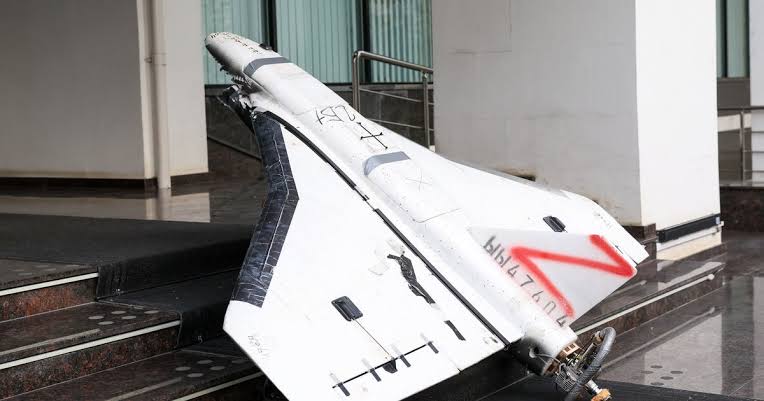
Lithuanian authorities have reportedly received information that Russia plans to use the Gerbera drone for the attacks.
The aircraft measures about two metres in length, has a wingspan of 2.5 metres and can reach speeds of around 160 kilometres per hour. It has a maximum range of about 600 kilometres.
A merchant ship can carry several Gerbera drones, which the report said are easier to launch than Geran or Shahed drones.
The Gerbera carries a small payload and cannot destroy a large facility, but an attack could damage infrastructure and temporarily disrupt operations at a port or airport.
A senior NATO official told an international media outlet that European allies are preparing for a “step-up” in Russia’s hybrid campaign against the West, including aggressive messaging and attacks.
“We believe that Russia is feeling a degree of pressure right now that is remarkably high, probably the highest at any point during the war and at any point during Vladimir Putin’s leadership positions in Russia,” the official said.
European governments have known about the warning since shortly after CIA Director John Ratcliffe travelled to Moscow on August 25. Media reports have linked the trip to warnings against Russian attacks or provocations targeting NATO.
Denmark’s defence intelligence service has also warned of a growing risk of Russian military action. It said that an outright invasion remains “highly unlikely”, while noting that it cannot rule one out.
NATO Secretary General Mark Rutte stated on Thursday that the alliance remains prepared for Russian cyber attacks and other forms of hybrid warfare.
“Russia is doing more and more when it comes to the cyber etc domain, but … Nato is ready for this,” Rutte said.
Russia’s reported objective in targeting France, Spain or Italy is to create divisions and exploit political differences over support for Ukraine.
All three countries are due to hold elections next year.
In Italy, some parties within the governing conservative coalition and the centre-left opposition oppose further military and economic support for Kyiv, arguing that such assistance prolongs the conflict.
In France, left-wing leader Jean-Luc Mélenchon has linked the increase in Moscow’s threat in Europe to Ukraine’s long-range attacks on Russia.
British analyst Keir Giles, who specialises in Russian military strategy, said that Spain’s distance from Russia does not guarantee protection from an attack.
“It is not necessarily the front-line countries that will be targeted. The target will be wherever Europe’s weakest point lies,” Giles told El Mundo.
He pointed out that Spain, like the UK, remains vulnerable because it has not invested in integrated air and missile defence systems that match the Russian threat.
Giles stated that Moscow’s choice of target depends on changing circumstances and on where it can achieve the greatest result relative to the risks and resources involved.
The warning comes as four Russian drones entered Moldova’s airspace on Thursday morning.
French President Emmanuel Macron has ordered his government to prepare a plan to protect critical infrastructure and sensitive defence-industrial sites from drone and cyber attacks.
Macron said that further Russian aggression against Europe will not go unanswered.