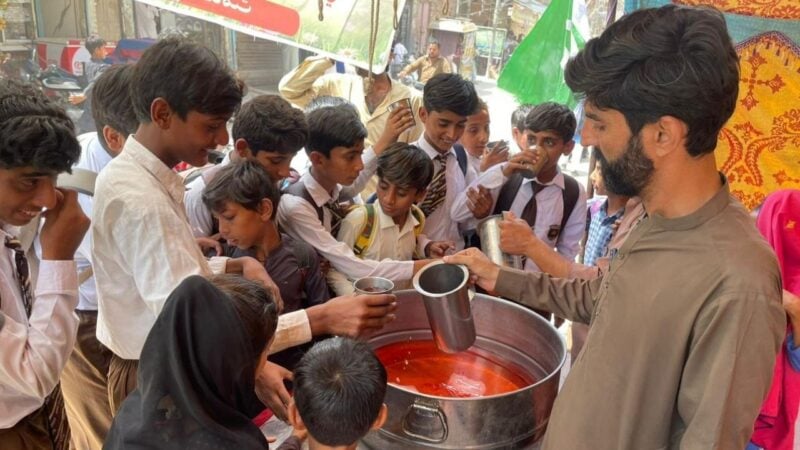
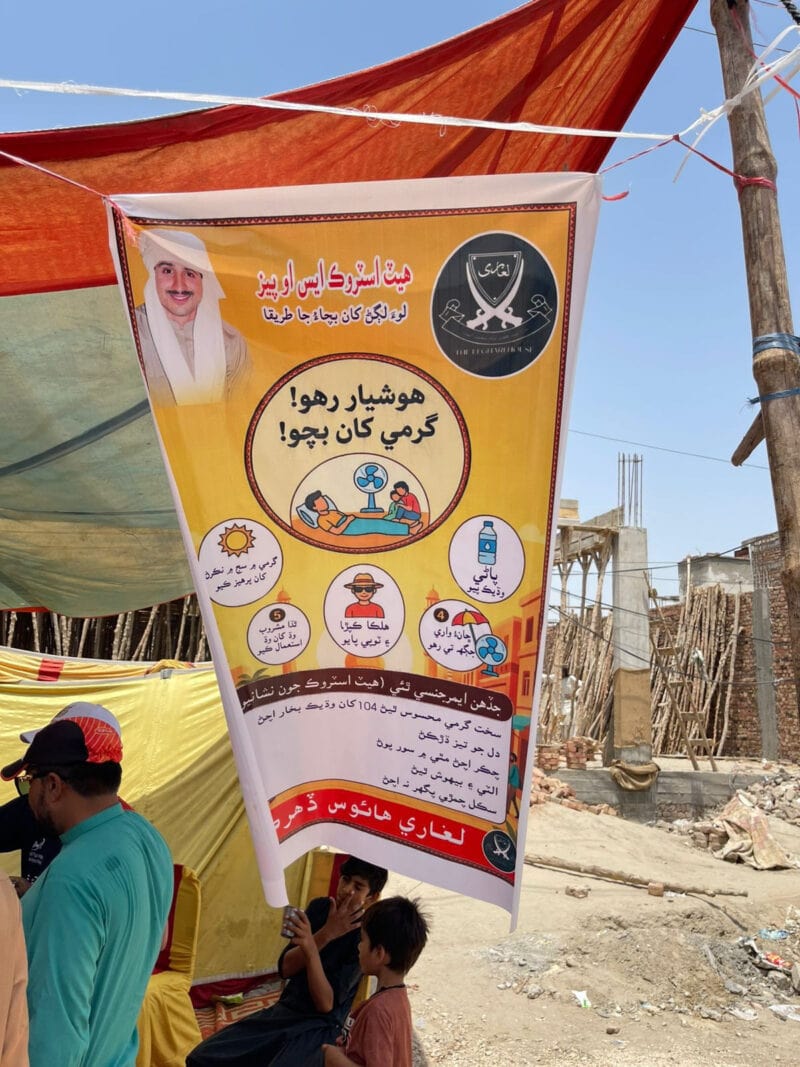
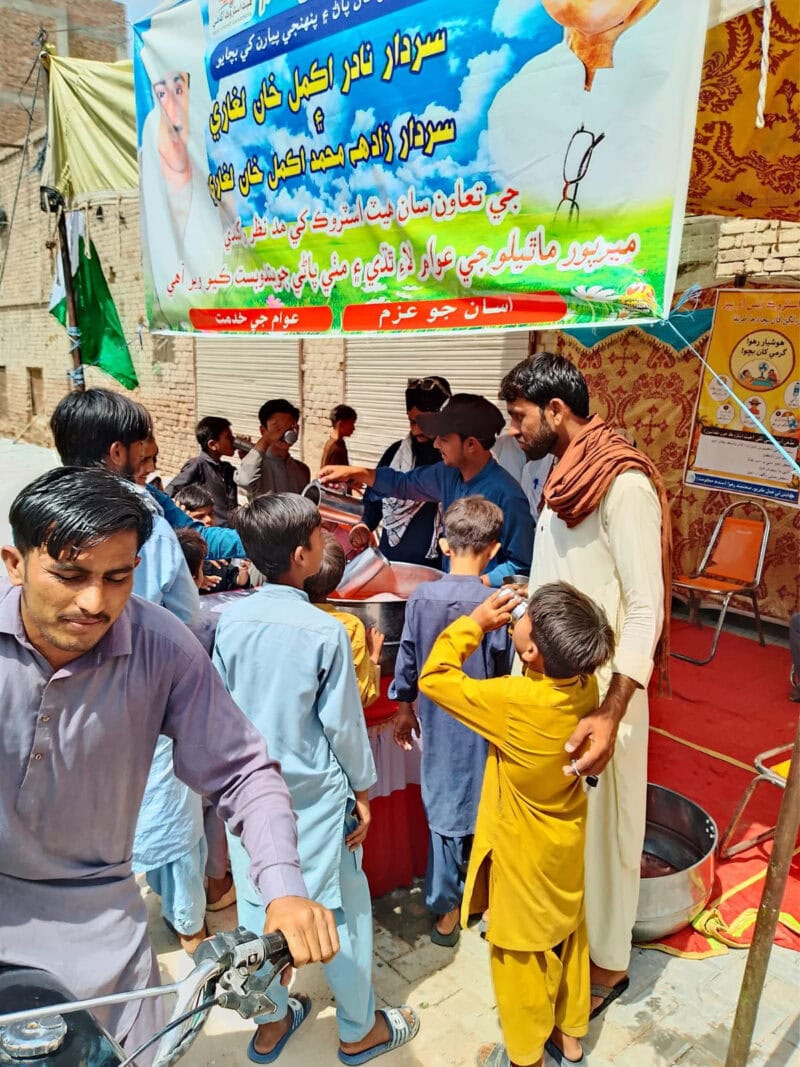
Sindh continues to face dangerous temperatures this week, with 10 people losing their lives due to the harsh conditions. Due to this, in the district of Daharki, three free water and hydration stalls were set up in the various localities of Daharki and Mirpur Mathelo. The hydration camps were put up by MPA Nadir Akmal Khan Leghari and his son Akmal Khan Leghari.
But the online criticism has been predictable: “This is not an MPA’s job.”
And technically, critics are right.
The long-term responsibility of elected representatives is governance — improving infrastructure, strengthening healthcare systems, ensuring reliable electricity, fixing water access, and building institutions that prevent citizens from suffering in the first place.
But the reality of a severe heatwave is different from the reality of ordinary governance.
When temperatures cross dangerous levels, daily wage workers continue standing on roads, traffic police remain outside for hours, travelers wait at bus stops, laborers work in fields and markets, and thousands of people move through towns with little access to cold drinking water. Heat exhaustion and dehydration are not abstract concepts in Sindh; they are immediate public health risks.
In moments like these, emergency relief matters. A free hydration stall is not a substitute for policy. It is not development. It is not governance reform. But it is immediate assistance for people standing in extreme heat.
Across Pakistan, from charities to mosques to neighborhood volunteers, temporary relief efforts have always played an important role during emergencies — whether during floods, heatwaves, Muharram processions, or Ramadan. Few people would argue that providing water to exhausted citizens in 45°C+ temperatures is somehow a negative act simply because it came from a political family.
In fact, perhaps the better questions are:
Why has basic compassion become so politicized? Why aren’t other affluent and influential political families from rural regions also showing compassion and doing the same? Does our religion not encourage even the smallest acts of charity and service? And why are we so quick to dismiss gestures of humanity?
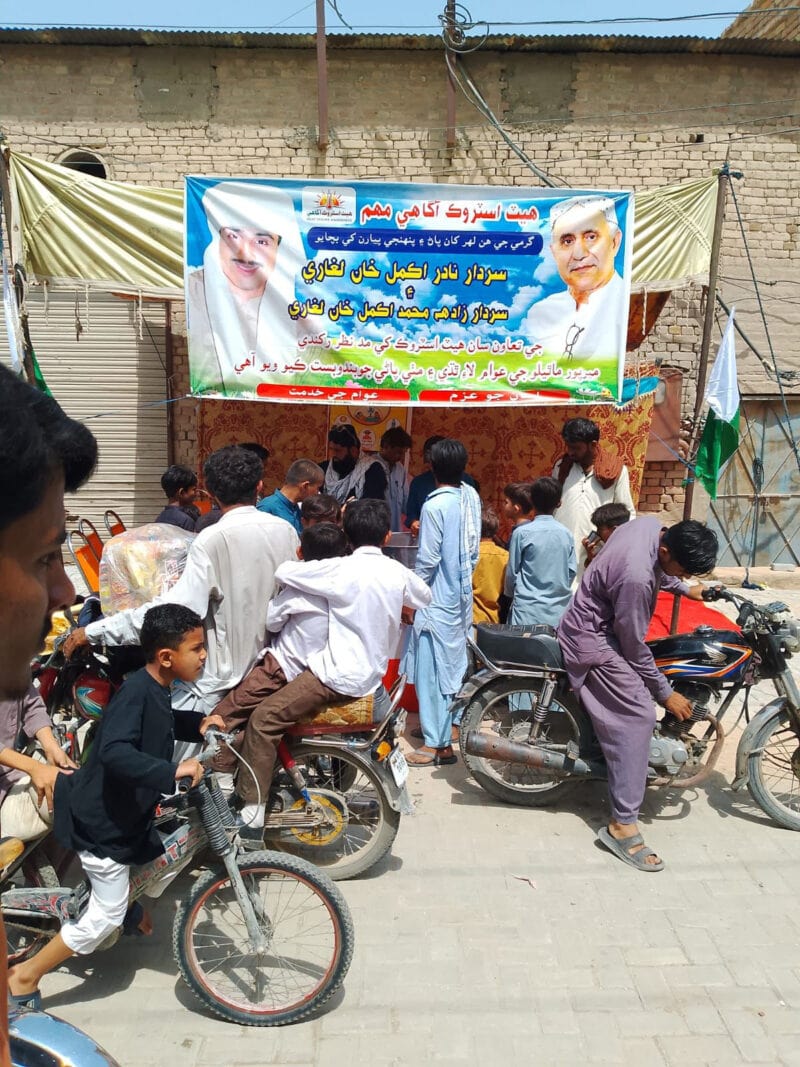
One can support better governance and acknowledge that helping people during a heatwave is worthwhile. These two ideas are not mutually exclusive.
Criticism of politicians is healthy in any democracy. Public officials should absolutely be questioned about roads, schools, hospitals, employment, and development. But there is also value in recognizing immediate humanitarian action when it provides real relief to ordinary people — even if temporary.
In this particular case, MPA Sardar Nadir Khan Leghari announced, just two days after the water stall, that repair work has begun on a damaged road from the Power Plant in Daharki to Dad Leghari Road and Janben Canal, as well as other development projects currently in the pipeline to be executed just this week. So why penalise a leader whose intention, at least in this moment, was only to provide relief? In doing this we are dissuading other leaders in underserved areas to think with compassion.
Sometimes, a glass of cold water in extreme heat is not about politics at all. It is simply about showing up for people in the moment they need it.