Political tensions at home are yet again at an all-time high with the Pakistan Tehreek-e-Insaf’s (PTI) planned march on Islamabad just around the corner.
But while federal ministers, including Interior Minister Mohsin Naqvi and Information Minister Attaullah Tarar, caution the opposition party against laying siege over the capital, a series of events leading up to the much-orchestrated Sept 27 march have shadowed headlines regarding the protest itself.
Either it be the arrest of jailed PTI founder Imran Khan’s firebrand sister Aleema Khan, reports of detention of Khan’s other sisters, an alleged crackdown on party leaders by provincial authorities in Punjab or troubling statements from the PTI’s camp itself, the nation watches wide-eyed on what could follow by the end of the week.
But amid the noise dominating headlines, little is being said about the collateral damage.
While political tensions and state crackdowns are an unfortunate fixture of the political landscape, a dangerous threshold is crossed when state machinery turns its aggression toward domestic sanctuaries, women and young children.
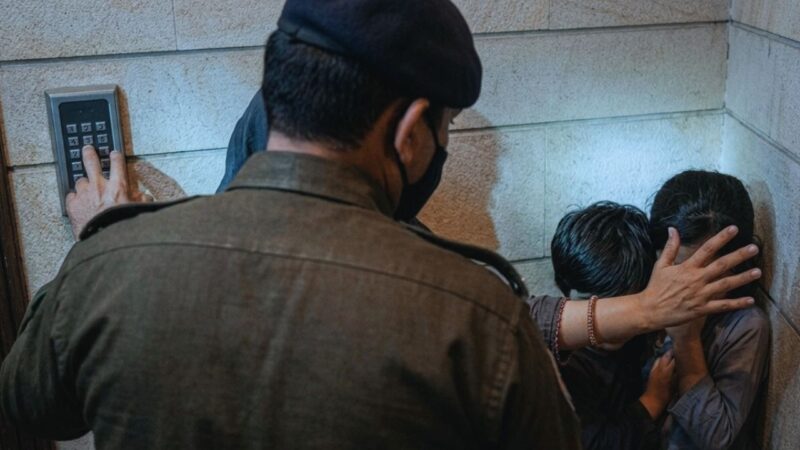
Recent events detailing a midnight raid on a private residence highlight a deeply troubling escalation in political intimidation.
According to firsthand accounts shared with The Current, the incident unfolded when law enforcement personnel reportedly cordoned off a street and breached a home at 1:30 am. While reports of the raid have already made it to mainstream news cycles, lesser-known details pertain to the detention of family members and the interrogation of domestic staff.
Most alarmingly, young children and their mother were left isolated, children terrified while police forced room doors open and demanded the location of CCTV cameras to remove evidence of the raid.
Taking a firm stance against such tactics does not require aligning with any specific political faction. You can belong to any political affiliation and recognise that the harassment of non-combatant family members, toddlers and elderly individuals is entirely indefensible.
Guilt by association, or worse, sheer proximity, has no place in a just legal framework. When individuals who bear no direct responsibility for political manoeuvres are subjected to late-night terror, state actions morph from law enforcement into tactless intimidation.
This dynamic points to a bleak future for civic norms. When midnight raids, the targeting of women and the psychological traumatisation of minor children become normalised, the social contract fractures entirely.
A society that permits the terrorisation of its most vulnerable citizens sets a dangerous precedent where safety at home becomes an illusion.
And when that happens, one must be warned that the people sleeping while such incidents take place – journalists, human rights activists, common man – sometimes do wake up from their apathy, especially when it involves innocent children and their fiercely protective mothers. And when they do wake up, it’s game over.