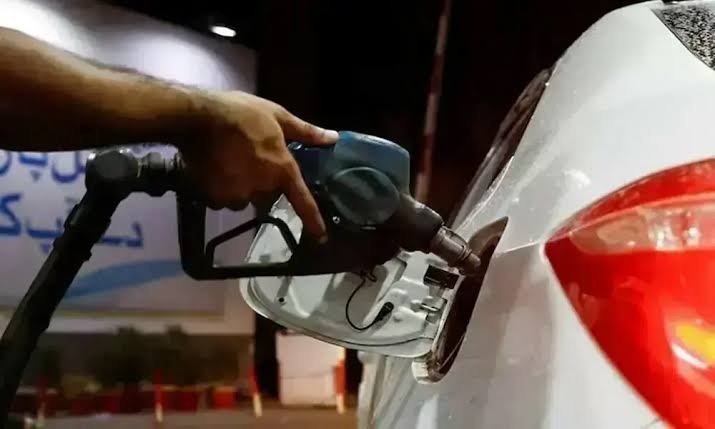
The federal government has increased petrol and High-Speed Diesel (HSD) prices by Rs4.42 and Rs6.10 per litre respectively, as global oil prices continue to rise, while the Lahore High Court (LHC) has sought replies from the federal government and other authorities over a petition challenging the daily revision of petroleum prices.
Following the increase, petrol will now cost Rs380.24 per litre and HSD Rs409.42 per litre, according to a Petroleum Division notification. The new prices will take effect from September 15.
The government continues to charge Rs114 per litre in taxes and duties on petrol and Rs100 per litre on diesel.
The price increase comes as oil prices moved higher in the international market amid concerns over supply disruptions.
Brent crude futures rose $1.37, or 1.3 percent, to $107.05 a barrel, while United States (US) West Texas Intermediate (WTI) futures increased $1.53, or 1.51 percent, to $102.92 a barrel.
The rise followed attacks on Saudi Arabia’s energy infrastructure that left the kingdom’s East-West pipeline offline and raised concerns over supply. The disruption also cast doubt on efforts to ease shipping risks in the Gulf.
At the LHC on Monday, a two-member bench headed by Justice Abid Aziz Sheikh issued notices to the federal government, Oil and Gas Regulatory Authority (OGRA) and other authorities on a petition challenging the daily increase in petroleum product prices.
The Judicial Activism Panel (JAP) filed the petition, with its counsel Advocate Azhar Siddique arguing that while petroleum prices had increased globally, Pakistan had seen a disproportionately high rise.
Siddique told the court that petroleum product prices in Pakistan had increased by 46 percent, which he said did not correspond with the increase in other regional countries. He also said that the authorities had not presented a mechanism explaining how the increases were being determined.
The counsel challenged the legality of fixing petroleum prices on a daily basis and asked the court to direct the respondent authorities to disclose the mechanism and criteria used to determine the prices.
The government shifted to daily fuel price revisions after Petroleum Minister Ali Pervaiz Malik announced on July 17 that prices would be adjusted each day in response to fluctuations in international market prices following renewed hostilities between Iran and the US.
Before the policy, the government had revised fuel prices weekly since early March and had also introduced fuel conservation measures over concerns about possible supply disruptions linked to the conflict in the Middle East.
The latest petrol price remains below the Rs458.41 per litre peak recorded on April 3. Petrol had started rising from Rs266 in the first week of March. HSD, meanwhile, is below its April 3 peak of Rs520.35 after rising from Rs281 per litre following the outbreak of the US-Iran war on February 28.
The latest increase also follows Prime Minister (PM) Shehbaz Sharif’s announcement of a fuel relief scheme for users of motorcycles, rickshaws, Qingqis and vehicles with engines up to 800cc.
Under the scheme, two- and three-wheeler users will receive Rs100 per litre in relief on a monthly quota of 20 litres, while owners of vehicles up to 800cc will receive the same relief on a monthly quota of 30 litres. The Prime Minister’s Office (PMO) said that the scheme was introduced after PM Shehbaz took immediate notice of tensions in the Middle East and the resulting rise in global oil prices.
Petrol is mainly used in private transport, small vehicles, rickshaws and two-wheelers, while HSD is primarily used by heavy transport, power plants and large generators. Petrol and HSD also account for the bulk of petroleum-sector revenue, with monthly sales of around 700,000 to 800,000 tonnes, compared with about 10,000 tonnes of monthly kerosene demand.





